
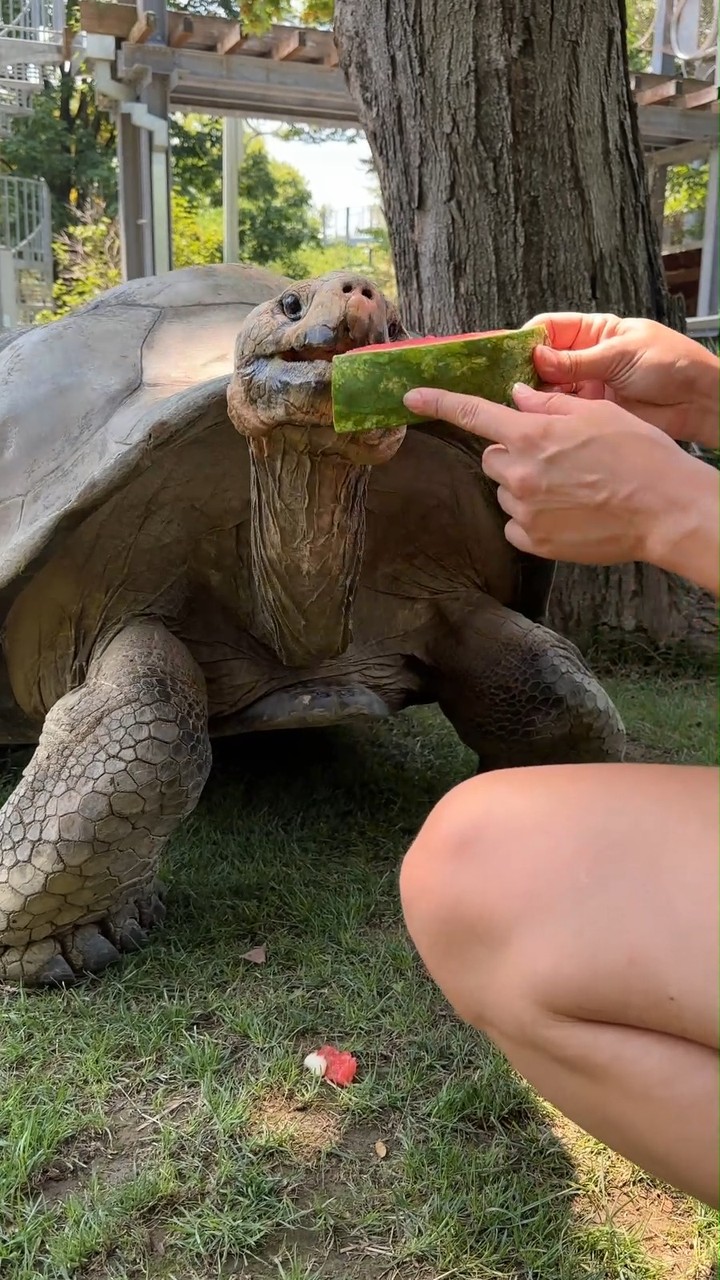
- Background on Abrazzo, the Western Santa Cruz Galapagos tortoise
- Significance of his offspring for conservation efforts
- Overview of Galapagos tortoise breeding and husbandry
- Importance of older animals in breeding programs
- Celebrating Father’s Day in the context of wildlife conservation
Abrazzo is not just any tortoise; he is the oldest resident at the Zoo, estimated to be around 96 years old. His age adds a layer of significance to his story, as he represents both the history of the Zoo and the ongoing efforts in wildlife conservation. This year, he became the proud father of the first Western Santa Cruz Galapagos tortoise babies to ever hatch in the zoo’s over 150-year history. This event marks a milestone in the Zoo’s journey, reflecting both the challenges and triumphs faced in keeping these ancient creatures.
The significance of Abrazzo’s offspring extends well beyond the excitement of new life at the Zoo. Galapagos tortoises are classified as critically endangered, primarily due to habitat loss, invasive species, and poaching. By successfully breeding these tortoises, the Zoo contributes to genetic diversity within the species and helps create a sustainable population. Each hatching represents a crucial step toward restoring these tortoises’ numbers and ensuring their long-term survival.
Understanding the breeding process of Galapagos tortoises provides insight into Abrazzo’s journey as a new father. Galapagos tortoises have a slow reproductive rate, maturing at around 20 to 30 years of age. Female tortoises usually lay eggs only once every few years, making successful breeding events even more critical. Eggs are often laid in a sandy nest, where they are buried before the female moves on. In the case of Abrazzo and his mate, Mommy, their partnership has produced eggs that have now hatched, showcasing the importance of both parents in this natural process.
Zoo management plays a pivotal role in the successful hatching of tortoise eggs. Careful monitoring and management of the breeding environment are essential. Staff provide a controlled setting that mimics the tortoises’ natural habitat, ensuring the correct temperature and humidity levels crucial for egg incubation. The hatchlings receive specialized care to ensure they thrive in their formative stages. This hands-on approach underlines the necessity of human intervention in conservation efforts aimed at preserving species like the Galapagos tortoise.
Moreover, the participation of older animals in breeding programs such as this is vital for genetic diversity. Abrazzo, at 96 years old, not only contributes his genes to the next generation but also embodies the wisdom of his species. With various tortoise populations in the Galapagos Islands exhibiting different adaptations, mixing genes can improve resilience against diseases and environmental changes. Consequently, older tortoises like Abrazzo are invaluable assets in breeding programs that strive to maintain this diversity, fortifying the future of these remarkable animals.
Fathers in the animal kingdom, including tortoises, play diverse roles in nurturing their young. While tortoises do not engage in direct parental care post-hatching, the act of bringing forth a new generation is nevertheless a transformative experience. In the wild, a male tortoise may mate with multiple females, but the importance of stable partnerships in captivity cannot be overstated. Abrazzo’s relationship with Mommy demonstrates how consistent bonding can yield favorable reproductive outcomes.
As the world prepares to celebrate Father’s Day, reflecting on Abrazzo’s role as a father provides an opportunity to connect personal relationships with broader themes of conservation. Celebrating Father’s Day in this context underscores the commitment to protecting endangered species and appreciating the caring dynamics within animal communities. Advocating for animal welfare and habitat preservation fosters a deeper understanding of ecological balances, reminding us that all creatures play integral parts in our shared environment.
The Zoo’s celebration of this occasion serves to raise awareness about the urgent need for conservation efforts. Public engagement is critical for connecting audiences with the significance of wildlife preservation. Educational programs and outreach activities around Father’s Day can galvanize support for the Zoo’s initiatives, encouraging visitors to contribute to conservation efforts, whether through donations, volunteering, or simply becoming informed advocates for wildlife.
Understanding the roles of elder members like Abrazzo enriches our approach to conservation. The passage of wisdom, resilience, and genetic richness in older animals directly influences the robustness of new generations. Zoos play an essential role in breeding endangered species, but the impact of public interest and involvement cannot be overlooked. Awareness drives funding, research, and dedicated care, ensuring that organizations can continue to support legacy breeds like the Galapagos tortoises.
Abrazzo’s story reminds us that, while these creatures may not express affection in ways familiar to human fathers, their roles within their kind reflect a commitment to survival. The union of nature and nurturance requires ongoing commitment from conservationists, educators, and the public. Apart from donating time and resources, raising awareness is key to advancing the goals of wildlife organizations that work tirelessly for preservation.
As we honor fathers around the globe, the efforts of dedicated teams at zoos provide another layer of recognition—acknowledging those who care for vulnerable species and protect their habitats. Celebrating Father’s Day by highlighting fathers in nature emphasizes the urgency of wildlife conservation and the link between the present and future populations. With Abrazzo as a focal point, we can begin to reframe what it means to be a father in the natural world.
This Father’s Day, let us reflect on the extraordinary journey of Abrazzo and the unyielding resolve of countless organizations working to secure a future for endangered species. The lessons learned from his years and the offspring he has sired carry profound implications for conservation science and professional wildlife management. By aligning our efforts with meaningful goals, we empower generations to come to coexist harmoniously with wildlife and appreciate the roles that all creatures play in their ecosystems.
As communities come together to celebrate fatherhood, let’s channel that spirit into conservation initiatives. Acknowledging the importance of wildlife preservation goes beyond appreciation; it requires action. Letting Abrazzo’s journey serve as a catalyst for conversation around conservation and animal welfare is paramount. In every corner of the globe, from urban parks to distant fields, there are stories like Abrazzo’s waiting to inspire action for a vibrant future.
In sum, the heartfelt celebration of Abrazzo, the oldest and newest dad at the Zoo, serves as a conduit for larger discussions about wildlife conservation, species longevity, and ecological stewardship. Let his extraordinary story invigorate public interest in sustainable practices and provoke continued dialogue. This Father’s Day, make a conscious effort to support the initiatives that keep stories thriving, ensuring that generations of tortoises can continue to hatch and flourish in habitats secure enough to allow them to live their lives to the fullest.
*****
Source Description
Happy Father’s Day from our oldest and newest dad at the Zoo, Abrazzo! 🐢 This year, he became the proud papa of the first Western Santa Cruz Galapagos tortoise babies to ever hatch in the Zoo’s 150+ year history. He’s estimated to be 96 years old, one year younger than his mate, Mommy.
