
- Overview of National Seashell Day and its importance
- Introduction to the Florida Spiny Jewel Box, Arcinella cornuta
- Habitat and ecological role of the Florida Spiny Jewel Box
- Shell characteristics and collecting tips
- Conservation efforts and the significance of marine bivalve species
National Seashell Day is a celebration designed to appreciate and educate people about the beauty and diversity of seashells. It highlights the ecological significance of these natural treasures and encourages stewardship of coastal habitats. For those in Florida, this day offers a distinct opportunity to focus on local species, particularly the Florida Spiny Jewel Box, Arcinella cornuta. This bivalve species, reaching sizes over 40 mm (approximately 1.6 inches), thrives along the coasts of Southwest Florida.
The Florida Spiny Jewel Box is part of a fascinating array of bivalves that inhabit marine environments. These bivalves have hinged shells that consist of two symmetrical halves, commonly known as valves. This species is particularly prevalent on the beaches of Sanibel Island. After storms, loose shell halves can be found scattered along the sands, making it a popular target for shell collectors. However, finding whole shells remains a challenge. This rarity often makes the entire collection experience more rewarding.
The species name, Arcinella cornuta, reflects the unique features of the shell, particularly the hollow spines that dot its surface. The term "cornuta" translates to "horned" in Latin, aptly describing these characteristics. The distinctive color patterns of the shells add to their appeal, showing a variety of hues that differ among individual specimens. Observing these differences can enhance the appreciation of the species and its ecological role.
The ecological presence of the Florida Spiny Jewel Box is significant. As a bivalve, it plays a crucial role in marine ecosystems. These organisms filter water, improving water clarity and quality in their environments. This filtering process can benefit surrounding marine life, creating a healthier ecosystem overall. The Spiny Jewel Box and other bivalves help maintain the balance of nutrients, underscoring their importance in coastal habitats.
Specific habitats are vital for the growth and development of the Florida Spiny Jewel Box. They are typically found in sandy bays and estuaries, which provide suitable conditions for their survival. Within these environments, they find protection from predators and sufficient food sources. Understanding the habitat of this bivalve can inform conservation efforts aimed at preserving local ecosystems.
Collectors often seek whole shells, yet these can be elusive. Loose valves, or shell halves, become more apparent after storms, but complete specimens are often buried beneath sand or debris. For enthusiasts aiming to find whole shells, employing specific techniques can enhance success. Walking along the waterline at low tide and examining areas where waves have reshaped the shoreline increases chances of finding intact specimens. Familiarity with the tides and local weather patterns can enhance the shell-collecting experience.
Shells can sometimes show signs of damage, which can indicate previous interactions with marine animals. For instance, holes in the shell may result from other species, such as the Stimpson Chimney Clam, which bores through shells. Observations like these provide insight into the interactions within marine ecosystems. Recognizing such damage can also inform collectors about biodiversity and the various species that inhabit the same areas.
Collecting seashells, particularly the Florida Spiny Jewel Box, also involves careful consideration of conservation. Coastal ecosystems face numerous threats, including pollution, habitat destruction, and climate change. Encouraging responsible shell collecting practices can significantly minimize negative effects on marine environments. Collectors should adhere to local regulations that govern shell collection, focusing on sustainable practices. Keeping only empty shells and ensuring not to disturb the habitats of living organisms is crucial for maintaining ecological balance.
Educational initiatives play a critical role in increasing awareness about the need for conservation. Museums and nonprofit organizations, like the Bailey-Matthews Shell Museum, provide resources for the public to learn about the significance of marine bivalves. Such institutions offer insights into the diverse species in Florida’s coastal areas, along with the ongoing efforts to protect them. Engaging educational programs can foster appreciation for shell collecting as a means of learning about marine biodiversity and conservation strategies.
In summary, National Seashell Day serves as a vital reminder to appreciate the natural world. The Florida Spiny Jewel Box not only captivates with its beauty but also represents the interconnectedness of coastal ecosystems. By highlighting this species, we encourage individuals to engage with their environment, cultivate an understanding of marine science, and apply responsible marine stewardship practices.
Understanding species like the Florida Spiny Jewel Box enriches awareness of the myriad life forms inhabiting our oceans. Through exploration and education, individuals can develop a deeper connection to marine environments while promoting the importance of conservation. These efforts are essential for ensuring the health and resilience of our marine ecosystems. By advocating for sustainable practices today, we help safeguard tomorrow’s natural wonders and their habitats.
Ultimately, Happy National Seashell Day invites everyone to not only celebrate the beauty of seashells like the Florida Spiny Jewel Box but also to actively participate in the efforts needed to protect marine biodiversity. Each shell tells a story and represents an essential piece of our planet’s ecological mosaic. Collecting seashells becomes an opportunity for reflection on our impact on the environment and encourages a lifelong commitment to preserving the delicate balance of coastal life.
*****
Source Description
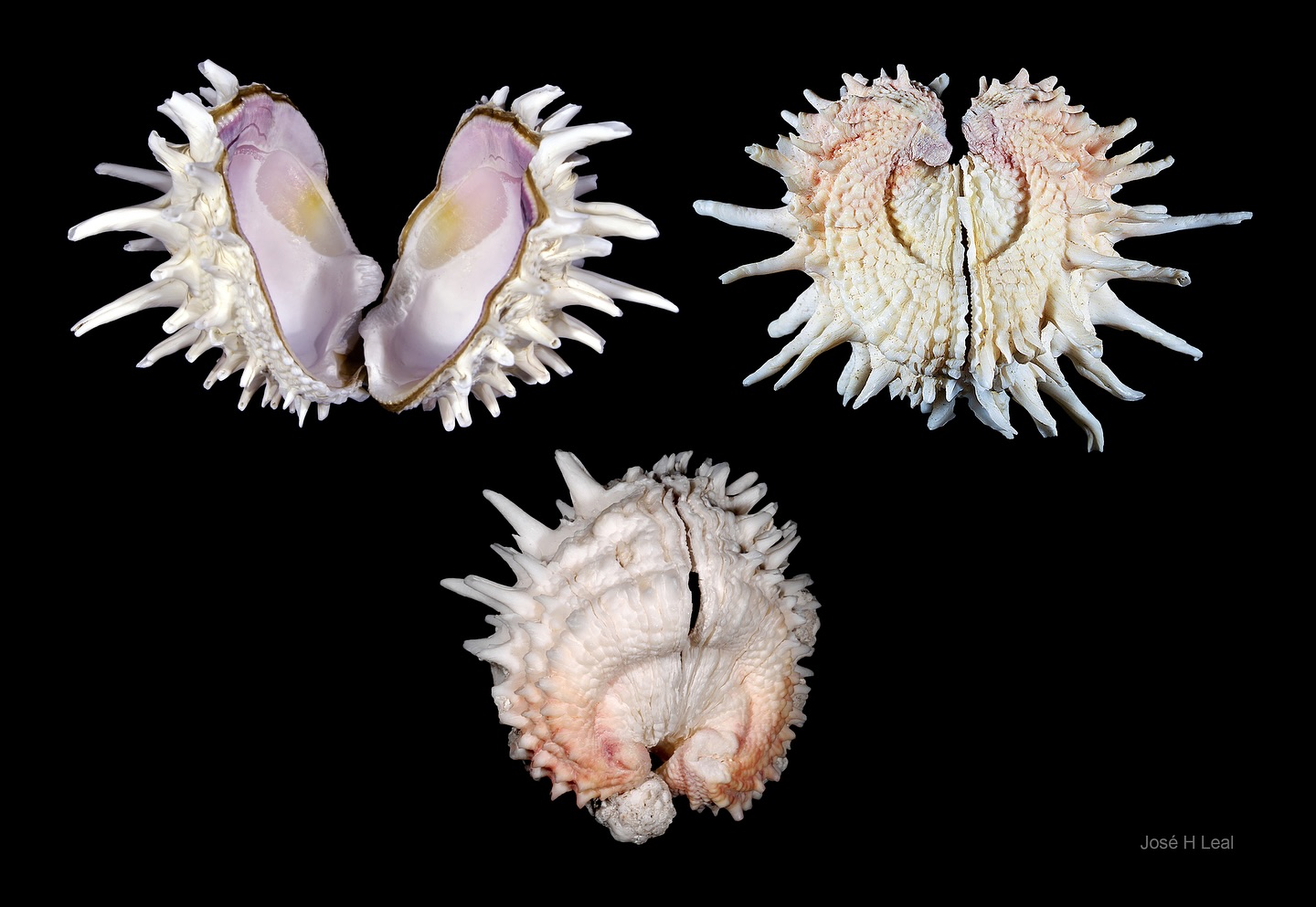
Happy National Seashell Day! To celebrate, let’s take a look at the Florida Spiny Jewel Box. Reaching in excess of 40 mm (approximately 1.6 inches), Arcinella cornuta is a relatively common species in Southwest Florida, and loose valves (shell halves) can be found after storms on our beaches.
However, as it happens with most bivalves, whole shells* (paired valves) are more difficult to find. Spiny Jewel Boxes show delicate and variable color patterns (see illustration) and the scientific species name derives from the hollow spines present on the shell (the Latin word cornuta means “horned” or “with horns”). The shell on the bottom image had been bored by a Stimpson Chimney Clam, whose dwelling (looking like a little cauliflower) can be seen on the hinge area, on the lower left part of that photo.
The three images in the illustration portray three different shells, all from Sanibel Island. More? ShellMuseum.org/shell-guide
