
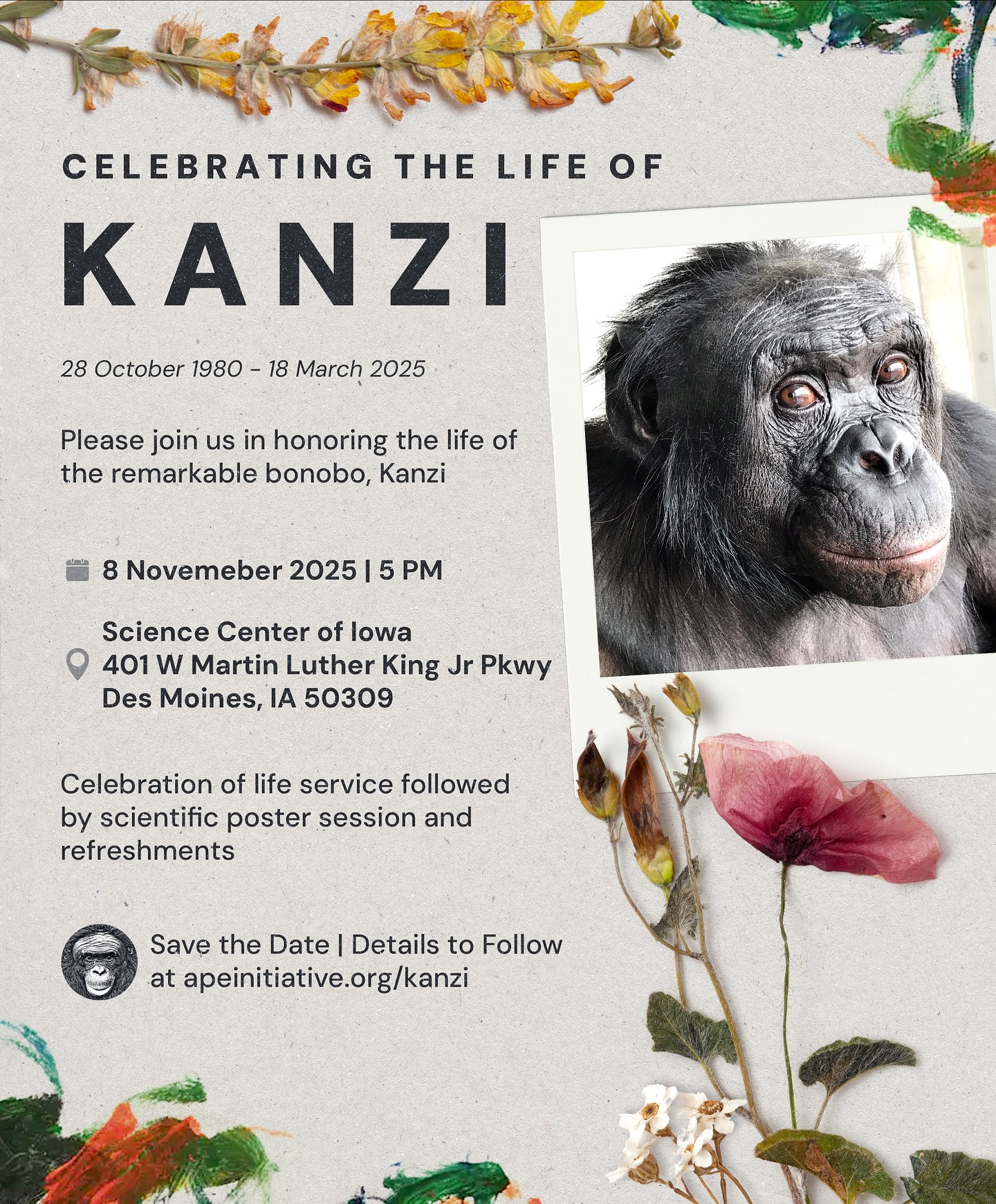
- The significance of Kanzi in the study of bonobos and their behavior
- The conservation challenges facing bonobos in the wild
- The role of zoos and sanctuaries in wildlife conservation
- Details about the celebration of Kanzi’s life, including event logistics
- Scientific insights into bonobo communication and social structures
The significance of Kanzi in the study of bonobos and their behavior cannot be overstated. Born in 1980 at the Yerkes National Primate Research Center, Kanzi has garnered attention for his ability to communicate using a symbolic language, known as lexigrams. This method allows Kanzi to press symbols on a keyboard that represent words. His proficiency in this means of communication has provided profound insights into not only bonobo cognition but also into the evolutionary processes that shape human language. Kanzi’s ability to understand complex tasks and precisely react to explicit instructions sets him apart in the animal kingdom. Active learning observed in Kanzi sheds light on the cognitive capabilities of bonobos, which are closely related to humans and have shown levels of intelligence and problem-solving skills previously unrecognized in non-human primates.
Kanzi’s interactions with his caregivers illustrate the complexities of bonobo social behavior. Bonobos are known for their matriarchal societies, where females often lead while males engage in cooperative behavior. Kanzi’s social bonds and friendships with both humans and other bonobos showcase the species’ strong emotional connections and nuanced social structures. Language acquisition studies involving Kanzi have broader implications for understanding the evolution of language as a whole, providing researchers with data that might illuminate the origins of human communication.
The conservation challenges facing bonobos in the wild are significant. Bonobos, which are listed as endangered by the International Union for Conservation of Nature (IUCN), face habitat loss primarily due to deforestation and illegal hunting. The Congo Basin, where the majority of wild bonobos reside, is undergoing rapid agricultural expansion and logging activities. These practices not only destroy habitats but also lead to human-wildlife conflict, further threatening bonobo populations. Conservation efforts are vital to protecting not only bonobos but also the broader ecosystem that supports countless plant and animal species in Central Africa.
Organizations striving to conserve bonobos emphasize community involvement and sustainable practices. Education campaigns aimed at local populations help foster understanding of the ecological importance of bonobos, encouraging the protection of their habitats. Various non-profits and conservation groups are working tirelessly to create sanctuaries and protected areas, ensuring safe habitats for bonobos while also promoting responsible ecotourism that benefits both local economies and wildlife conservation. The plight of bonobos, exemplified by Kanzi’s life story, highlights the broader issues of environmental degradation and the urgent need for global conservation efforts.
The role of zoos and sanctuaries in wildlife conservation plays a crucial part in efforts to ensure species survival, particularly for endangered species like bonobos. Modern zoos are designed not only for public education but also for preserving genetic diversity within species. Many organizations, including the Association of Zoos and Aquariums (AZA), have dedicated programs for breeding and reintroducing endangered animals into the wild. By collaborating with conservation organizations, zoos have the potential to contribute significantly to the sustainability of various wildlife populations.
Kanzi’s life at the Great Ape Trust in Iowa showcased how zoos can successfully foster engagement and education. Public exhibitions featuring Kanzi helped raise awareness about bonobos and their ecological significance. Engaging the public through educational programs and interactive exhibits can inspire future generations to take an interest in conservation initiatives. Events like the upcoming celebration of Kanzi’s life at the Science Center of Iowa further emphasize how zoos can serve as platforms for deeper understanding and discussions about wildlife conservation.
Details about the upcoming event to honor Kanzi are designed to bring together community members and conservation enthusiasts alike. Scheduled for November 8, 2025, at 5 PM, the celebration will take place at the Science Center of Iowa in Des Moines. Attendees can expect a heartfelt service acknowledging Kanzi’s impact, followed by a scientific poster session and reception featuring refreshments. Given Kanzi’s remarkable life and the important research contributions he has made, this event stands as a pivotal opportunity to reflect on his legacy and engage in discussions surrounding bonobo conservation.
Tickets and registration links are available at apeinitiative.org/kanzi. Those who attend will not only pay tribute but also gain insight into ongoing conservation efforts and how they can contribute to protecting bonobos and their habitats.
Scientific insights into bonobo communication and social structures reveal a lot about the species and their genetic closeness to humans. Bonobos are known for their peaceful behaviors, often resolving conflicts through social interactions instead of aggression. This trait is beneficial for the cohesive living arrangements within their groups. Studies have shown that bonobos engage in a variety of vocalizations, gestures, and facial expressions, enhancing their communication skills beyond the scope of what researchers previously understood.
Understanding bonobo communication also impacts how we view social behaviors in primates. Kanzi’s experiments highlighted his capability to manifest preferences, desires, and emotions through language, demonstrating a sophisticated level of cognitive functioning. He effectively showcased the potential of non-human primates to acquire and utilize communication tools.
In summary, honoring the life of the remarkable bonobo, Kanzi, offers an essential opportunity to spotlight the vital role bonobos play in the ecosystems they inhabit and the ongoing conservation challenges they face. Kanzi’s exceptional contributions to science have enriched our understanding of the cognitive and communicative capabilities of bonobos, providing a unique lens through which we can explore not just their lives but also humanity’s relationship with the animal world.
The planned celebration on November 8 serves as both a tribute to Kanzi’s legacy and a platform for discussing broader themes in wildlife conservation and ecological stewardship. This gathering could inspire individuals and communities to take meaningful action in nature preservation, ensuring that the remarkable traits of bonobos, as exemplified by Kanzi, are protected for future generations.
*****
Source Description
Please join us in honoring the life of the remarkable bonobo, Kanzi 💛💐
🗓️ November 8, 2025 at 5 PM
📍 Science Center of Iowa in Des Moines
A celebration of life service will be followed by a scientific poster session/reception with refreshments.
Tickets and conference registration links are now available at apeinitiative.org/kanzi 🎟️🌼
