
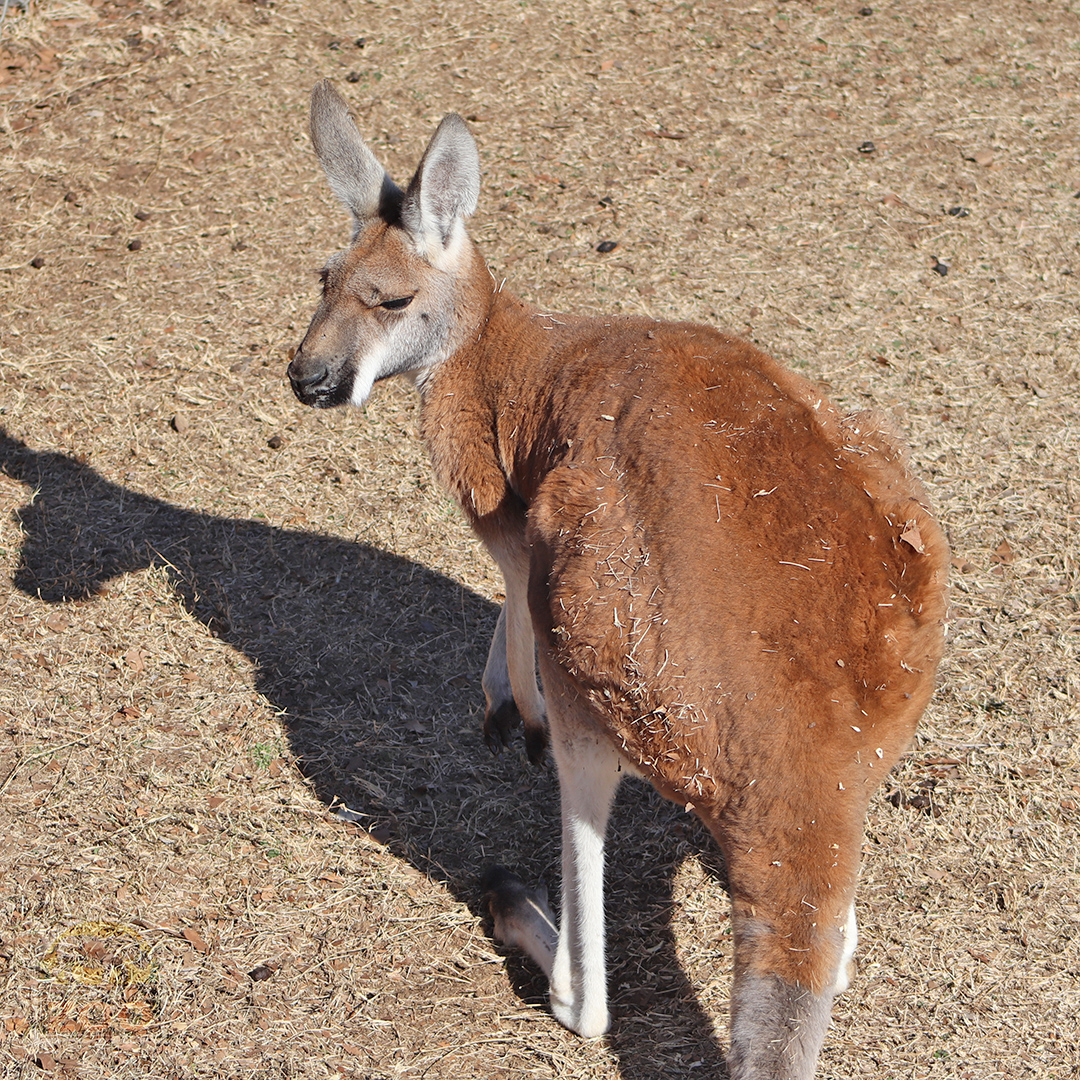
- Kangaroo Biology and Behavior: Key Facts
- World Kangaroo Day Significance
- Conservation Efforts and Threats to Kangaroo Populations
- Role of Zoos in Wildlife Conservation
- Visit Rolling Hills Zoo: Meet Our Kangaroo Family
Kangaroo Biology and Behavior: Key Facts
Kangaroos belong to the family Macropodidae, which means “big foot” in Greek. This moniker aptly describes their large hind feet, which are uniquely adapted for their lifestyle. Adult kangaroos can reach impressive heights of over 6 feet and weigh up to 200 pounds. Fascinatingly, they are not just adept at hopping; they possess strong forelimbs that they use for balance during movement and for grooming.
One of the most remarkable features of kangaroos is their ability to leap. They can cover distances of over 25 feet in a single bound, thanks to their powerful hind legs and elastic tendons. Kangaroos have also been clocked at speeds reaching up to 35 mph. This allows them to evade predators effectively, making their extraordinary physical adaptations integral to their survival.
Reproduction in kangaroos also showcases their unique biology. Female kangaroos have a reproductive strategy called embryonic diapause. This allows them to pause the development of their embryos until environmental conditions are favorable. In essence, they can control the timing of giving birth, ensuring that the young, known as joeys, arrive when conditions provide the best chance for survival. This reproductive flexibility is vital, especially in changing climates.
World Kangaroo Day Significance
World Kangaroo Day is celebrated annually to raise awareness about these remarkable marsupials and their role in Australian ecosystems. It serves as an opportunity to educate the public about the biology, behaviors, and conservation needs of kangaroos. The day is especially important for fostering a deeper understanding of wildlife and promoting stewardship among communities.
As kangaroos represent the native fauna of Australia, their presence is not merely symbolic; they are integral to the ecological balance. This day encourages discussions about their habitats and the interconnectedness of different species within these environments. Through events and educational programs, individuals learn how to contribute positively to wildlife conservation efforts.
Moreover, World Kangaroo Day highlights individual zoos’ efforts to provide habitats that replicate their natural environments. Various activities, such as educational talks and interactive exhibits, are designed to engage and inform visitors about these exceptional animals. At our own Rolling Hills Zoo, we embrace this opportunity to connect with our guests on themes of conservation and animal welfare.
Conservation Efforts and Threats to Kangaroo Populations
While kangaroos are listed as Least Concern on the IUCN Red List, they face several significant threats in their natural habitats. Habitat loss due to agricultural expansion and urban development has greatly reduced their living spaces. This encroachment not only limits their natural foraging areas but also places them in closer proximity to vehicles, increasing the risk of collisions.
Climate change further complicates the situation for kangaroos. Alterations in weather patterns lead to fluctuating food sources and changes in water availability. As they are highly dependent on their environment, any disruption can have ripple effects on kangaroo populations. Increased droughts and heatwaves threaten also their ability to reproduce successfully.
To mitigate these challenges, various conservation efforts are underway. Organizations are actively engaged in habitat restoration, research, and public awareness campaigns. Some focus on protecting critical areas where kangaroos roam freely, helping to maintain healthy ecosystems.
Visitor participation in these efforts is crucial. Every ticket purchased at places like the Rolling Hills Zoo contributes to ongoing conservation work. Funds are allocated towards habitat restoration projects, research initiatives, and educational programs, fostering community involvement in wildlife support.
Role of Zoos in Wildlife Conservation
Zoos play a vital role in wildlife conservation, serving as hubs for education and research while also acting as sanctuaries for endangered species. By housing kangaroos, zoos not only offer a safe haven for these animals but also provide an educational platform for the public. Visitors learn about the importance of biodiversity, ecosystem balance, and conservation practices.
At Rolling Hills Zoo, our mission is to touch hearts, ignite passion, and save wildlife. Educational programs and conservation exhibits are integral to this mission. They provide insights into the biology and behavior of kangaroos, highlighting their ecological significance. Moreover, engaging activities allow visitors to connect with the animals, fostering a deeper appreciation for wildlife.
Collaborative efforts with researchers and conservation organizations enhance the work that zoos can do. By participating in breeding programs and habitat restoration projects, zoos contribute to the genetic diversity of species at risk. These initiatives help ensure that populations can thrive in controlled environments while also preparing them for reintroduction into the wild when feasible.
Visit Rolling Hills Zoo: Meet Our Kangaroo Family
To celebrate World Kangaroo Day, we invite you to Rolling Hills Zoo where you can meet our kangaroo family! Say g’day to Mark, Jolene, and Polly Pocket, three kangaroos that exemplify the captivating nature of their species. Mark is known for his playful antics, while Jolene often exhibits a gentle demeanor. Polly Pocket, the youngest, embodies the spirited curiosity that characterizes many joeys.
Visiting the zoo offers more than just an opportunity to see these animals. It provides an immersive experience where guests can learn about their behaviors, diets, and habitats. The zoo setting mimics the kangaroo’s native environment, allowing for a more authentic understanding of their lifestyle. Educational signage and interactive experiences enhance this learning journey.
Your visit also has a direct impact on wildlife conservation. Ticket purchases aid in funding our ongoing projects designed to protect these essential animals. This might include habitat restoration or outreach programs aimed at educating communities about wildlife preservation. Here at Rolling Hills Zoo, every visit is an investment in the future of our wildlife.
Make plans to engage with the kangaroo mob at our facility. Our staff is enthusiastic to share insights, answer questions, and help cultivate a sense of responsibility for wildlife conservation among all our visitors.
In celebrating HOP-py World Kangaroo Day, we recognize not just the playful nature of kangaroos but also their significance in the ecosystem and the pressing challenges they face. Kangaroos are more than just an emblem of Australia; they are key players in their habitats, illustrating the need for conservation efforts. Through education and community involvement, we can create a more sustainable future for these iconic animals and their ecosystems, ensuring that generations to come will be able to enjoy and learn from them.
*****
Source Description
🦘HOP-py World Kangaroo Day! We’re bouncing with excitement to celebrate our roo-markable friends! Plan a visit to Rolling Hills Zoo soon to say “hello” to our mob soon!
Did you know?
🌏 Kangaroos are macropods – which literally means “big foot!”
💨 They can leap over 25 feet in a single bound and reach speeds up to 35 mph!
👶 Female kangaroos can pause their pregnancies until conditions are just right — a superpower called embryonic diapause!
While kangaroos are listed as Least Concern on the IUCN Red List, habitat loss, vehicle collisions, and climate change still threaten their populations in the wild. Every visit to Rolling Hills Zoo helps us continue our mission of Touching Hearts, Igniting Passion, and Saving Wildlife! 💚
So don’t just stand around… Hop to it! Come say g’day to Mark, Jolene, and Polly Pocket this week and celebrate World Kangaroo Day with us!
