
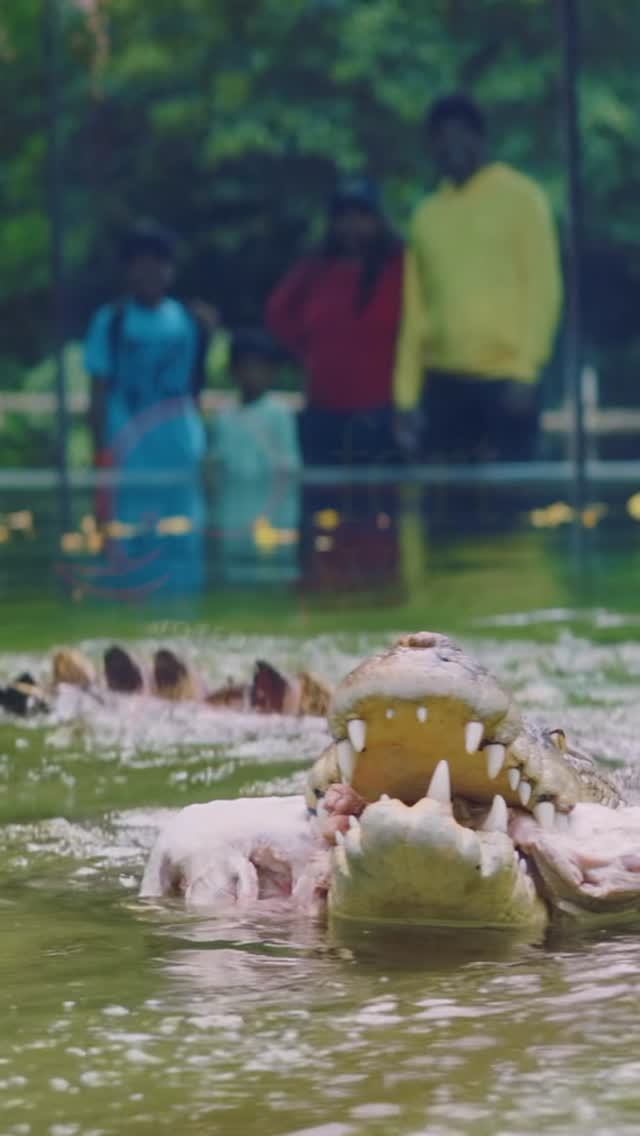
- Saltwater crocodile biology and natural hunting behavior, with emphasis on ambush predation and feeding ecology.
- Best practices for carcass feeding in managed care: welfare, nutrition, biosecurity, and staff safety.
- Conservation status, threats, population management, and the role of public education.
- Communicating predator behavior responsibly on social media and using playful captions like “You look like the Fourth of July … it makes me want a hot dog real bad.” to drive engagement without compromising scientific accuracy.
“You look like the Fourth of July … it makes me want a hot dog real bad.” is a playful caption that captures attention. Used with an image or reel of a 50-pound carcass feed for a large saltwater crocodile, it pairs humor with spectacle. That pairing creates opportunity. Zoos and aquariums can leverage such content to teach biology, husbandry, and conservation in plain language that still respects animal welfare.
Saltwater crocodile biology and ambush predation
Saltwater crocodiles (Crocodylus porosus) are the largest living crocodilians and apex predators in many coastal and riverine systems. Adult males may exceed 5 meters in length and weigh several hundred kilograms. Their morphology reflects a life spent in water and at the water’s edge: a streamlined body, laterally compressed tail for propulsion, and powerful jaws armed with conical teeth for gripping and tearing. Saltwater crocodiles possess integumentary sensory organs on their jaws that detect changes in water pressure. These receptors allow precise detection of surface disturbances and prey movements at close range.
Ambush predation defines their hunting strategy. Individuals often lie partially submerged with only eyes and nostrils exposed. They remain motionless for extended periods, minimizing visual and hydrodynamic cues that would alert prey. When prey approaches within striking range, the crocodile uses explosive forward motion and a rapid clamp of the jaws. Saltwater crocodiles execute a variety of feeding behaviors after capture, including head-shaking, tearing, and the characteristic death roll to dismember large prey. These behaviors are adaptive for handling prey items ranging from fish and crustaceans to mammals and large birds.
Physiology supports this strategy. As ectotherms, crocodiles’ metabolic rates scale with ambient temperature, which affects digestion, activity patterns, and frequency of eating. They can tolerate long intervals between meals. A single large meal may sustain an animal for weeks. Their digestive system handles large yields of protein and bone efficiently; gastric acidity and gut microbiota are adapted to a carrion-inclusive diet, although fresh prey is preferred when available.
Carcass feeds replicate elements of natural behavior
In managed care, offering whole carcasses can stimulate natural feeding sequences and provide substantial enrichment. A 50-pound carcass feed, like the one used for Salty, allows a large crocodile to perform stalking, seizing, tearing, and handling behaviors that are important for physical and behavioral health. When constructed and executed correctly, carcass feeds deliver multiple benefits:
- Behavioral enrichment: Carcass feeds create unpredictable feeding conditions that reduce stereotypic movements and support mental stimulation.
- Physical conditioning: Manipulating large prey requires strength and motor coordination, supporting musculoskeletal health.
- Nutritional completeness: Whole carcasses offer bones, organs, connective tissue, and fat—components that mimic a wild diet and supply micronutrients often absent in processed rations.
Carcass feeding protocols must be evidence-based. Staff plan feed size and frequency around animal size, age, reproductive status, and ambient temperature. Smaller individuals receive proportionally smaller rations. In an adult saltwater crocodile, a 50-pound carcass may be a substantial but appropriate single meal for a very large adult, delivered infrequently to mimic wild meal spacing. Veterinary oversight of body condition, blood panels, and growth trajectories informs ration adjustments.
Husbandry, biosecurity, and ethics of carcass use
Carcass feeding introduces practical and regulatory considerations that require rigorous attention. Sourcing, handling, and presentation must protect animal health, staff safety, and public perception.
Sourcing and screening
Carcasses should come from traceable, legal sources. Acceptable origins include licensed agricultural byproducts, fishery bycatch processed with documentation, or specimens from permitted culling programs. Roadkill may be acceptable if collection follows public health rules and decomposition is minimal. Suppliers should provide records to document species identity, chain of custody, and any veterinary certificates. Prior to feeding, veterinary staff perform a risk assessment. That may include visual inspection and, for higher-risk sources, microbiological testing for pathogens such as Salmonella, Clostridium, or parasitic cysts. Chemical contaminant screening—heavy metals, persistent organic pollutants—should be considered for carcasses from industrial or contaminated watersheds.
Preparation and presentation
Staff follow protocols for thawing frozen carcasses, storing them refrigerated, and presenting them with minimal handling to maintain natural sensory cues. Presentation methods vary. Submerged placement in deep water allows an animal to use swimming and diving behaviors. Tethered placement can permit staff to control distance for safety. Some institutions use remote feeders or long-handled feeding poles to reduce direct contact. Presentation timing considers ambient temperature and animal activity cycles.
Safety procedures
Feeding large crocodilians is inherently hazardous. Strict standard operating procedures reduce risk. Common practices include:
- Two-person rule: Two trained staff on-site for any feed involving direct enclosure access.
- Lockout/tagout: Mechanical barriers and secondary gates control movement and create secure zones.
- Use of equipment: Long feeding poles, catch nets, and remote devices keep staff at safe distance.
- Emergency protocols: Trauma kits, rapid evacuation plans, and communication lines with local medical services are in place.
Training and documentation
Staff receive regular training in behavior recognition, emergency extraction, carcass handling, and zoonotic disease prevention. Institutions maintain logs of feeds including date, source, carcass weight, animal behavior, and any veterinary follow-up. These data support welfare audits and can inform peer-reviewed studies on managed care practices.
Welfare monitoring and nutritional science
Objective welfare metrics are central to carcass-feeding programs. Routine checks include body condition scoring, weight measurements, and behavior sampling. Bloodwork evaluates metabolic status, organ function, and inflammatory markers. Fecal exams assess parasite load. For reptiles, hematologic interpretation requires species-specific reference ranges and consideration of seasonal changes in physiology.
Nutritional planning must account for macro- and micronutrient needs. Saltwater crocodiles require high-protein diets with appropriate calcium-to-phosphorus balance to maintain bone health. Whole-prey items supply these components, but supplementation may be required in some systems. Varying the species composition of carcasses reduces the risk of nutritional imbalances. Veterinary nutritionists calculate average daily energy requirements based on thermal environment, size, and reproductive state.
Conservation context and wild population management
Public displays of feeding present a bridge to conservation messages. Saltwater crocodiles were heavily exploited during the 20th century for leather. Many populations crashed under unregulated hunting. Conservation measures—legal protection, controlled harvest schemes, and habitat restoration—enabled widespread recovery across parts of their range. IUCN currently lists Crocodylus porosus as Least Concern globally, but regional populations may face different pressures. Many populations remain vulnerable to habitat loss, pre-emptive killing due to human-crocodile conflict, and contamination of waterways.
Effective conservation integrates science, policy, and local livelihoods. Harvest management programs have combined regulated use with community benefit sharing to reduce illegal taking. Protected area networks safeguard nesting beaches and foraging habitats. Where conflict is acute, interventions include engineered exclusion structures, community education on safe behavior around water, and rapid response teams to relocate problem animals under strict protocols. Monitoring uses mark-recapture, telemetry, and genetic methods to quantify population trends and inform management.
Captive populations contribute to conservation through genetic management, public education, and in some cases, support for release programs. Genetic diversity is maintained via studbook coordination and managed breeding to avoid inbreeding depression. Captive breeding intended for release requires disease screening, behavioral conditioning, and post-release monitoring to maximize survival and minimize risk to wild populations.
Public engagement, captioning, and ethical messaging
“You look like the Fourth of July … it makes me want a hot dog real bad.” is a lively caption that connects a holiday atmosphere to a visceral visual—Salty consuming a large carcass. That kind of content attracts views, comments, and shares. It creates a teaching moment if paired with accurate context. Institutions can use playful language to hook audiences, then deliver factual material on the animal’s natural history, captive care, and conservation status.
Recommendations for responsible messaging:
- Pair humor with facts. Use the caption to draw attention and follow with a concise explanation of the animal’s biology and the reasons for carcass feeds.
- State safety clearly. Explain that feeds are managed by trained staff under strict protocols so viewers understand the scale of professional care required.
- Avoid sensationalism that mischaracterizes the species as mindless killers. Present behavior as adaptive feeding strategies shaped by evolution.
- Link to conservation actions. Provide clear calls to action such as supporting habitat protection, reporting illegal killing, or donating to vetted conservation organizations.
Using the caption “You look like the Fourth of July … it makes me want a hot dog real bad.” up to four times across a campaign can create thematic consistency without redundancy. Repeat the phrase sparingly in captions and follow-up posts, then expand on science and stewardship. One post can show the feed; subsequent posts can present digestion physiology, staff interviews, and conservation case studies, each using the caption as a light touch.
Legal, regulatory, and community considerations
Feeding practices operate within legal frameworks that vary by jurisdiction. Permits may be required for carcass import, possession of certain species, and public displays involving potentially dangerous animals. Institutions consult regulatory bodies and maintain documentation to demonstrate compliance. Community relations matter. Large carcass feeds draw crowds and sometimes controversy. Institutions can mitigate public concern through advance notices, educating signage, and controlled viewing areas. Proactive engagement with local communities, media, and indigenous groups builds trust and fosters collaborative conservation.
Research and data collection opportunities
Carcass feeds also present controlled opportunities for research. Scientists can collect behavioral data on bite forces, feeding sequences, and intra-specific competition. Veterinary teams can study digestion rates, gastric pH changes, and nutrient assimilation following large meals. Ethical research protocols keep animal welfare paramount and use non-invasive sampling when possible. Data derived from managed feeds can inform wild ecology by clarifying aspects of dietary breadth, carcass utilization, and energy budgets.
Risk management and zoonotic considerations
Carcasses can introduce pathogens that affect both crocodiles and humans. Staff wear personal protective equipment, practice hand hygiene, and control access to carcass storage areas. Disposal of residual carcass material follows public health guidelines. Institutions monitor for zoonotic outbreaks and maintain clear reporting lines to public health authorities. Risk mitigation also addresses chemical contaminants. Regular environmental testing of exhibit water and surrounding soils helps detect accumulation of heavy metals or persistent organics that could be present in sourced carcasses.
Case study: a 50-pound carcass feed as enrichment and education
When a facility stages a 50-pound carcass feed for a large male like Salty, preparation begins days in advance. The carcass undergoes traceability checks. Veterinary staff evaluate freshness and screen for obvious disease signs. Enrichment staff design the presentation to encourage natural hunting sequences while keeping staff at a safe distance. On the day of the feed, two or more trained keepers implement the operation under veterinary oversight. Public messaging links the spectacle to biological facts: explanation of ambush predation, thermal effects on digestion, and the reasons for infrequent large meals in managed diets.
Post-feed monitoring records feeding patterns, leftover consumption rates, and any atypical behavior. Those data enter a husbandry log and inform future feed plans. Photographs and video clips can be shared with explanatory captions that include the playful line “You look like the Fourth of July … it makes me want a hot dog real bad.” once or twice to maintain continuity and viewer interest, while subsequent commentary expands on conservation messages and management science.
Final remarks on stewardship and education
Managed displays that include carcass feeding can be powerful tools for education and conservation, when handled responsibly. They give audiences a direct look at predator behavior and can dispel misconceptions about crocodilians. Institutions must maintain high animal welfare standards, rigorous biosecurity, and transparent communication. Using catchy phrases like “You look like the Fourth of July … it makes me want a hot dog real bad.” can be effective if paired with accurate scientific content, ethical sourcing, and clear safety information. Such posts can motivate viewers to learn more, support conservation efforts, and respect both animals and professional care teams.
*****
Source Description
You look like the Fourth of July … it makes me want a hot dog real bad. 🌭😉🇺🇸
Happy Fourth of July, everyone! ❤️💙 Salty celebrated the holiday with one of his large, 50-pound carcass feeds.
Saltwater crocodiles are ambush predators meaning that they watch for long periods of time before pouncing to maintain the element of surprise over their prey. Even with a carcass like this, Salty can exhibit his natural behaviors and hunting skills. Plus, it’s a pretty cool sight to see! 🐊💥
