
- Understanding Armadillos: Species Characteristics and Habits
- The Ecosystem Role of Armadillos
- Life Cycle of Armadillos and Their Diet
- Conservation Challenges Facing Armadillos
- The Intriguing Interaction between Armadillos and Their Prey
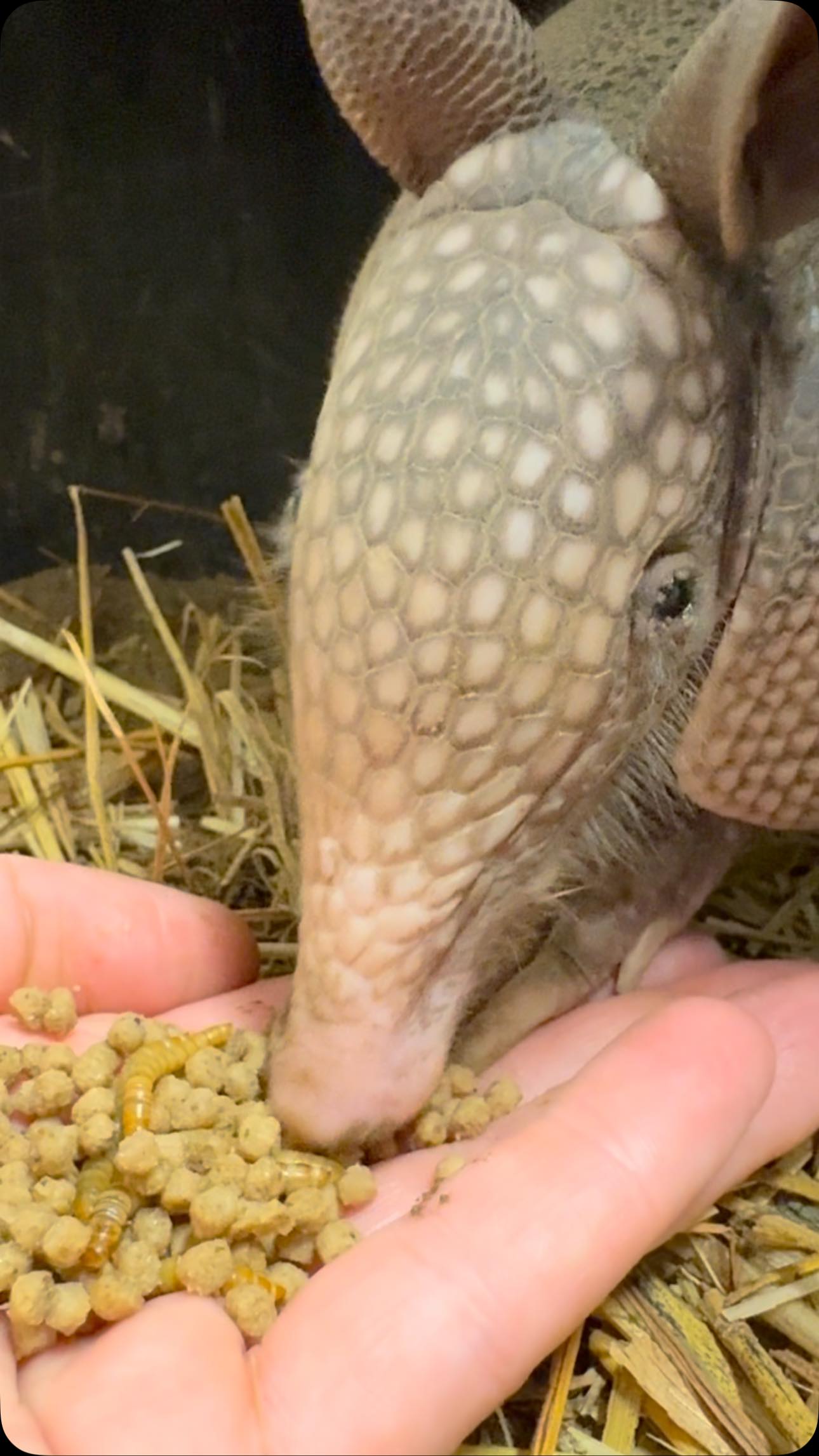
Imagine yourself as a handful of worms, wriggling in the moist earth, and then suddenly finding yourself in the jaws of a baby armadillo named Moon. This experience offers a unique perspective on the intricate web of life, where every creature plays a part.
Understanding Armadillos: Species Characteristics and Habits
Armadillos belong to the family Dasypodidae, and there are about twenty different species, with the nine-banded armadillo being the most recognized. These creatures are distinguished by their unique armor-like shells, which are composed of bony plates covered in a leathery skin. The shells serve as a protective barrier, particularly in the face of predators. In their juvenile phase, armadillos are soft and more vulnerable; however, as they mature, their shells harden from a pink hue to a robust gray, providing essential protection as they grow.
Armadillos are predominantly nocturnal, meaning they are active during the night. This characteristic allows them to avoid the sweltering heat that can make foraging during the day challenging. As insectivores, their diet primarily consists of insects, grubs, and worms, making them incredibly effective at controlling pest populations. The structure of their snouts is elongated and uniquely adapted for digging into soil to find various food sources. Moon, our baby armadillo, represents this hungry stage in life, where the incessant need to find food shapes daily activities.
The Ecosystem Role of Armadillos
Armadillos play a significant role in their ecosystems. As they scavenge for their food, they burrow and dig through the soil, which aerates the earth and promotes healthy plant growth. They also aid in nutrient cycling. Their foraging habits help balance soil microbiomes, contributing to ecological stability.
In being a part of this chain of life, Moon, the baby armadillo, contributes significantly to the balance of her environment. As she feasts on a handful of worms, she is not just intensifying her own growth but also fostering the conditions necessary for the survival of various plant and animal species in her area.
Life Cycle of Armadillos and Their Diet
The journey of an armadillo begins shortly after birth when they are born live from their mothers. Unlike many animals that lay eggs, armadillos carry their young until they are ready to face the outside world. After a gestation period that lasts about two to five months, baby armadillos emerge in litters—typically consisting of four identical siblings—almost fully formed.
As they grow, their diet shifts. While worms are a key starter food, they begin to include a variety of insects and even small vertebrates in their diet over time. Moon, like many baby armadillos, finds herself sampling some of the earth’s most nutritious offerings, helping her body grow robust as her shells start to mature.
By consuming worms, Moon serves as a living example of nature’s cycle. Her eating habits are not merely about survival; they exhibit instincts honed over generations. The ecological importance of this diet cannot be understated, as armadillos provide a natural form of pest control, while also utilizing food sources that may have been overlooked by other creatures.
Conservation Challenges Facing Armadillos
Despite their adaptability, armadillos face numerous threats. Habitat destruction due to urbanization is one of their most significant challenges. As humans expand their living spaces, natural habitats are destroyed, putting additional pressure on already vulnerable species. Climate change also poses risks, affecting their food availability and altering the ecosystems they depend on.
Worms, like Moon’s meal, are also essential to the health of the soil and, implicitly, to the health of armadillos. Any decline in worm populations due to environmental issues could drastically affect armadillo populations. Moreover, diseases and parasites can be detrimental to these animals, which may struggle to combat infections in a changing environment.
Efforts to preserve armadillo habitats and raise awareness of their plight are, therefore, crucial. Organizations focused on wildlife conservation often emphasize the need for responsible land use and the protection of natural areas. Protecting Moon’s habitat not only secures her future but also preserves the interconnected ecosystems in which she and her prey, like worms, live.
The Intriguing Interaction between Armadillos and Their Prey
Understanding the dynamics between a baby armadillo and its food source adds layers to ecological awareness. Worms, in their natural habitats, play a vital role in soil health. As they decompose organic matter and enrich the soil, they form a vital link in the food chain. Therefore, when Moon consumes a handful of worms, she is directly participating in the natural cycle while simultaneously contributing to her growth.
This interaction also speaks volumes about the prey-predator relationship in nature. While worms may seem defenseless, their populations thrive under normal conditions thanks to their high reproductive rates and ability to live underground away from many threats. Each encounter between an armadillo and its prey serves to regulate populations, ensuring that neither becomes overly dominant.
The circle of life is interwoven with countless stories. For Moon, every worm consumed fuels her journey, exemplifying both vulnerability and resilience. Such connections are essential not only for biology students aiming to understand ecological interrelations but for anyone keen on recognizing how each organism contributes to its environment.
Engaging with the world as both a baby armadillo and a handful of worms provides an extraordinary lens through which to observe life. Each narrative sheds light on vital ecological concepts, urging readers to think critically about conservation. As ecosystems continue to face various challenges, the relationship depicted by Moon and the worms serves as a reminder of the importance of biodiversity.
At every step, engagement in wildlife conservation and appreciation of ecological intricacies can lead to profound impacts. Whether through hands-on conservation work, educated advocacy, or simply sharing knowledge, individuals can contribute toward fostering a healthier planet for all inhabitants, from the smallest worm to the cutest armadillo.
*****
Source Description
POV: You’re a hand full of worms being eaten by a baby armadillo named Moon 👀😝
Our baby armadillos don’t look much like babies anymore! Their shells have hardened and changed color from pink to grey.
