
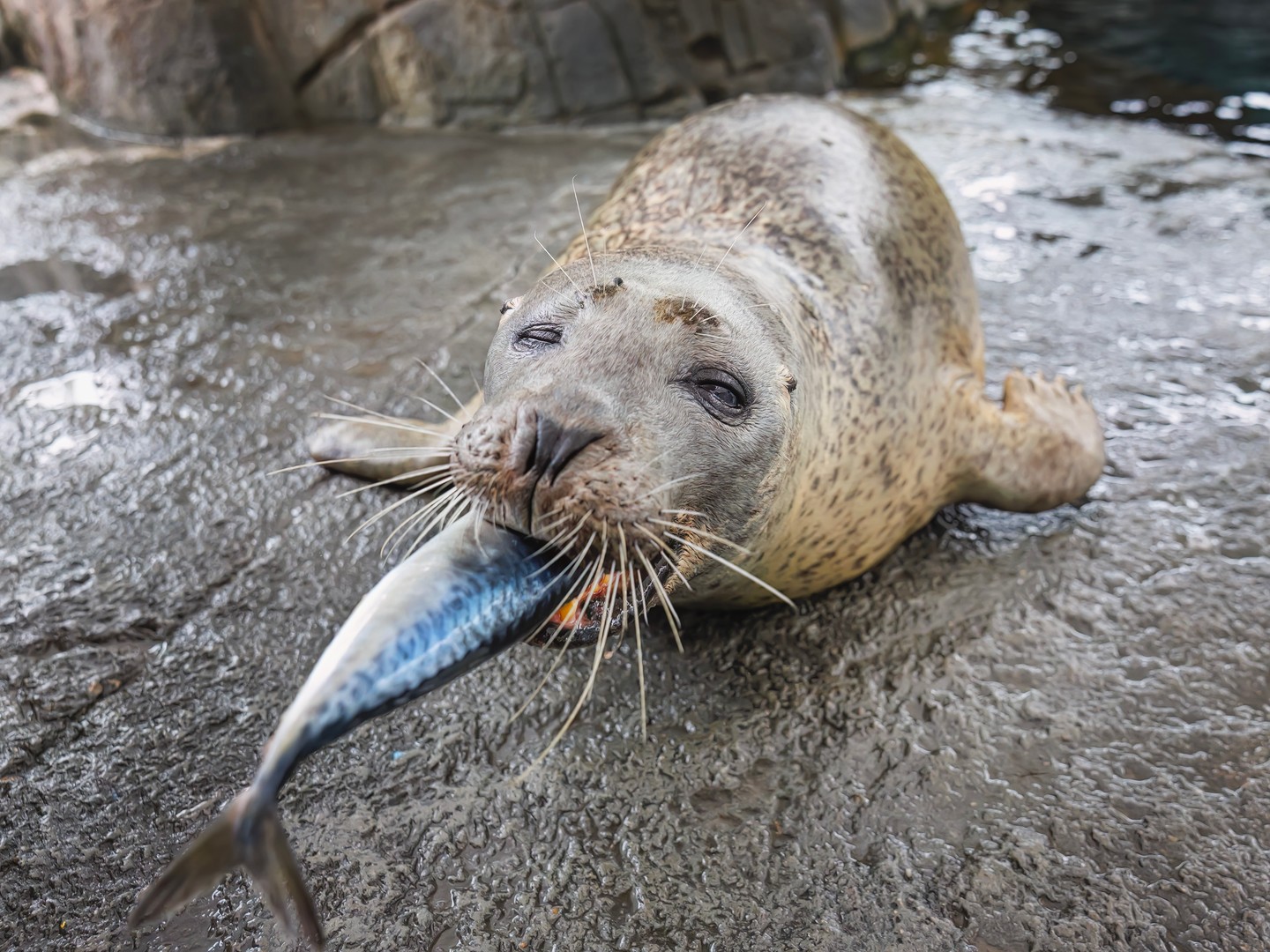
- Elga, also known as Ellie, is celebrating 37 years, making her the oldest mammal at the aquarium and older than the aquarium itself.
- Her care reflects advanced geriatric animal management, including daily teeth brushing, monthly wellness checks, and close daily monitoring by trained staff.
- Her story highlights how modern zoo and aquarium medicine supports long-lived marine mammals through preventive care, behavior-based husbandry, and welfare-focused routines.
- Ellie’s age offers a conservation and education opportunity by showing how accredited aquariums contribute to animal welfare, public learning, and long-term species knowledge.
- Photos by Robin Riggs document a milestone that connects animal care, professional husbandry, and public appreciation for marine mammal longevity.
IT’S A SEAL-EBRATION! Elga, also known as Ellie, turns 37 today, and that milestone carries real zoological significance. She is the oldest mammal at the aquarium and older than the aquarium itself. For animal care teams, that fact is more than a celebration. It is a record of long-term, adaptive management that has supported a marine mammal through decades of growth, maturity, and senior care.
Ellie’s age places her in the category of a geriatric marine mammal. In zoological settings, that term refers to older animals that need more frequent health observation, adjusted nutrition, and close behavioral monitoring. Aging in pinnipeds, the group that includes seals and sea lions, can involve wear on teeth, changes in mobility, altered body condition, and shifts in activity level. Care teams respond with preventive medicine and day-to-day husbandry that keeps older animals comfortable and active.
Ellie receives daily teeth brushing. That detail matters. Dental health is a major part of captive marine mammal care because seals use their teeth for feeding and social behavior. Plaque, tartar buildup, gum disease, and tooth wear can affect comfort and appetite. Daily brushing reduces that risk and allows staff to observe the mouth closely for injury, inflammation, or changes that may signal a broader health issue. Routine oral care is a practical tool in geriatric management.
Monthly geriatric wellness assessments add another layer of support. These checks typically include body condition evaluation, visual examination of the eyes, ears, skin, and mouth, and review of behavior, appetite, and movement. In marine mammal medicine, staff also watch for signs that may indicate joint stiffness, decreased flexibility, or age-related changes in metabolism. Regular assessments give the care team a baseline and help them spot small changes early. Early detection is central to preventive veterinary care.
Ellie’s care also depends on husbandry built around trust and cooperation. Aquarium teams use positive reinforcement training so animals can participate in their own care. That may include presenting a flipper, opening the mouth for inspection, holding still for a weight check, or allowing blood collection. This approach reduces stress and improves the quality of medical information. It also supports long-term welfare because the animal remains engaged and calm during routine procedures.
The phrase IT’S A SEAL-EBRATION! captures the public joy around Ellie’s birthday, but it also reflects a broader zoological truth. Longevity in managed care is not accidental. It comes from years of consistent feeding, clean water, preventive medicine, environmental enrichment, and skilled observation. Each element matters. When these components work together, an older mammal can remain comfortable and behaviorally active well into advanced age.
Aquarium staff who care for an animal like Ellie must think in daily increments. They monitor how she moves, how long she rests, how she interacts with staff, and whether she shows interest in food or enrichment. Senior animals often need changes in feeding strategy, such as softer textures, different presentation methods, or closer control of caloric intake. That helps maintain body condition without putting extra strain on aging teeth or joints.
Marine mammal nutrition is especially important in geriatric care. Seals need diets rich in high-quality protein and marine fats that match their physiological needs. Older animals may require adjustments based on weight, activity, and dental status. Keepers and veterinarians work together to track intake and body condition. They also watch for signs that an animal is eating slower, swallowing differently, or preferring certain fish. Those observations can reveal health changes before they become serious.
Environmental enrichment supports welfare at every age, but it is especially useful for senior animals. Enrichment can include varied feeding methods, new scents, sensory stimulation, changes in presentation, or opportunities for choice and control. For an older seal, enrichment should be balanced with comfort. The goal is not to push activity for its own sake. The goal is to support natural behavior while reducing boredom and maintaining mental engagement.
Ellie’s long life also offers a useful point of comparison for the public. Many people are surprised to learn that some marine mammals can live for decades in managed care when they receive strong veterinary and husbandry support. Species, genetics, diet, environment, and access to medical care all influence lifespan. In accredited aquariums, records from long-lived individuals help animal care teams improve future welfare practices. Each animal becomes a source of practical knowledge.
The work behind IT’S A SEAL-EBRATION! also reflects the growing field of geriatric veterinary medicine in zoos and aquariums. Older animals often need health plans that are more frequent and more specific than those used for younger individuals. Veterinarians may recommend imaging, bloodwork, dental care, mobility checks, and changes to habitat design. Even small improvements, such as substrate adjustments or easier access to preferred haul-out areas, can reduce strain and support quality of life.
Behavior is one of the clearest indicators of health in a pinniped. A seal that remains alert, responsive, and curious is often showing good welfare, even if age has slowed some movements. Care teams know the individual well enough to notice subtle changes. They can distinguish normal aging from a medical concern because they observe the animal every day. That familiarity is a major strength of professional zoological care.
Long-term care also depends on the human-animal relationship. Animals like Ellie benefit from predictable routines. Predictability lowers stress and gives the animal confidence during health checks. Staff benefit as well, because cooperative behavior makes it possible to gather reliable information without unnecessary restraint. This is a central principle in modern zoo management. Welfare improves when animals have choice, and when caretakers can assess them without causing avoidable distress.
The celebration of Ellie’s 37th birthday also highlights the role of photos and public communication. Images by Robin Riggs help translate daily husbandry into a story that audiences can understand. Photography shows more than age. It can document posture, body condition, coat quality, and the quiet confidence that comes from decades of attentive care. Public-facing media can build appreciation for the science behind animal welfare while also honoring individual animals.
From a zoological perspective, Ellie’s milestone supports education about aging in marine mammals. Older animals require the same fundamentals as younger ones, but with greater attention to detail. That includes careful nutrition, regular health checks, enrichment, and strong veterinary oversight. It also includes patience. Elder care is slower work. It asks staff to make adjustments based on observation and data, not assumption.
The aquarium setting adds another layer of significance because Ellie is older than the aquarium itself. That fact shows how institutions can outlive generations of staff and guests while still providing continuity of care. For an animal to remain healthy across that span, an organization must maintain records, transfer knowledge, and preserve standards. Successful long-term care depends on institutional memory as much as on daily effort.
In a conservation context, marine mammals in human care often serve as ambassadors for ocean literacy. They help audiences understand anatomy, physiology, behavior, and the importance of healthy marine ecosystems. While Ellie is an individual animal with her own history, her presence also helps the public see the value of animal care teams, veterinary science, and responsible stewardship. People tend to remember a named animal more than an abstract concept. That makes Ellie a strong educational bridge.
Daily brushing, wellness checks, and patient handling are part of a larger welfare framework used across accredited facilities. These practices align with evidence-based animal care. Staff record data, compare trends, and adjust plans when needed. That process supports both health and humane treatment. It also shows that good aquarium management is active work, not passive display. It requires observation, training, adaptation, and consistency.
IT’S A SEAL-EBRATION! is therefore more than a birthday message. It is recognition of a long-lived marine mammal whose care reflects current standards in zoology and animal welfare. Ellie’s 37 years represent years of husbandry decisions, veterinary follow-up, and daily human dedication. Her story demonstrates how professional care can support an aging animal with dignity and comfort.
Photos by Robin Riggs capture that milestone with clarity and purpose. They give viewers a chance to appreciate Ellie’s age, the skill of her care team, and the quiet science behind her daily routine. For anyone interested in zoology, zoo management, or wildlife conservation, her birthday is a reminder that animal welfare is built one day at a time.
*****
Source Description
IT’S A SEAL-EBRATION! 🦭
Elga, aka Ellie, turns 37 today! She is the oldest mammal at the aquarium, and is older than the Aquarium itself.
Ellie receives daily teeth brushing, monthly geriatric wellness assessments, and endless patience and love from her care team, who work with her every single day to keep her healthy, comfortable, and thriving.
Please join us in seal-ebrating 37 years of the ever elegant Ellie. 💙
Photos by Robin Riggs
