
- Meet Bandit: An Introduction to the Tammar Wallaby
- The Diagnosis: Understanding Bandit’s Cancer
- The Surgical Journey: Amputation and Recovery
- Life After Surgery: Rejoining Kangaroo Walkabout
- Conservation and Care: Highlighting the Importance of Wildlife Health
Meet Bandit: An Introduction to the Tammar Wallaby
Bandit is a 9-year-old Tammar wallaby, a fascinating marsupial residing in our zoo. Tammar wallabies, renowned for their adaptability and resilience, are native to Australia. These small, herbivorous animals primarily inhabit coastal forests and scrublands. Bandit’s calm demeanor and playful spirit are endearing, capturing the hearts of both staff and visitors. Primarily nocturnal, these wallabies are known to be social, living in mobs that provide protection and companionship. Their diet consists mostly of grasses, leaves, and fruit, making them important herbivores in their ecosystems. Through studying Bandit, we can gain insights into the broader ecological roles of this species.
The Diagnosis: Understanding Bandit’s Cancer
Recently, our animal care team faced a significant challenge after discovering cancer in Bandit’s left arm. This diagnosis was not only concerning for Bandit’s health but also highlighted a widespread issue affecting wildlife. Cancer can arise from various factors, including genetic predispositions and environmental influences. In Bandit’s case, the tumor’s presence necessitated immediate and careful evaluation. Our veterinary team performed a series of diagnostic tests, including imaging scans, to assess the tumor’s nature and staging.
Understanding cancer in wildlife is critical, as it can reflect larger environmental health issues. The relationship between habitat quality and the incidence of diseases in wildlife is an area of ongoing research. Factors such as pollution, habitat destruction, and climate change can contribute to increased cancer rates in the animal kingdom. Bandit’s experience serves as a reminder of the broader implications of wildlife health and the importance of habitat conservation.
The Surgical Journey: Amputation and Recovery
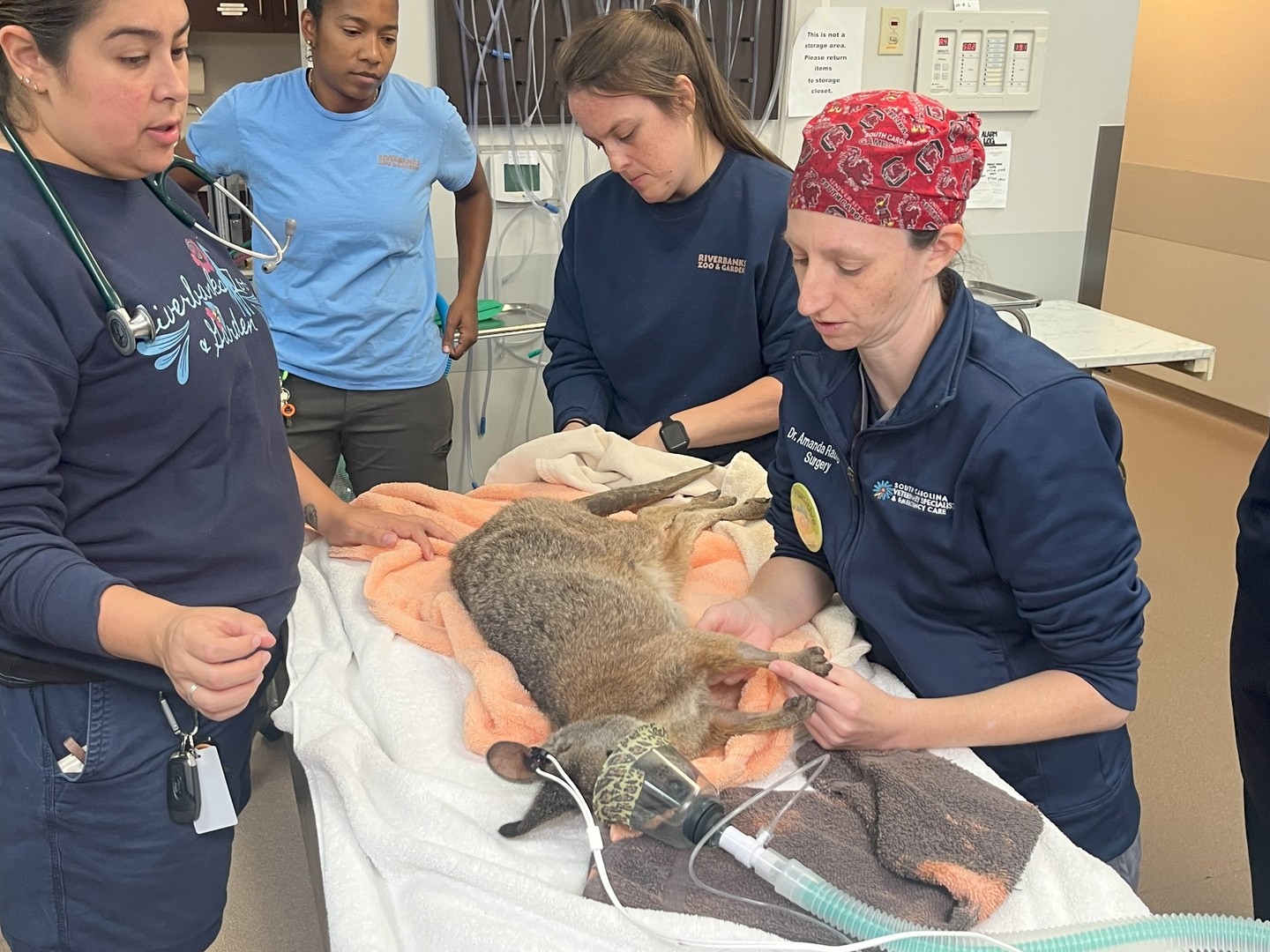
Following the diagnosis, our veterinary team, alongside specialists at the SCVSEC, evaluated treatment options. It became clear that amputation was the most viable solution to ensure Bandit’s comfort and well-being. This decision was not made lightly; it required a thorough discussion among veterinarians, animal care staff, and our management team. Amputation can be a significant procedure for any animal, especially for a wallaby that relies on balance and mobility.
The surgery itself was a success, demonstrating the high level of expertise within our veterinary team. Bandit emerged from surgery in stable condition, exhibiting the fighting spirit he is known for. Post-operative care was conducted with precision. Bandit was monitored closely to manage pain and prevent infections. This intensive care ensured his body could adapt to the loss of his arm, focusing on rehabilitation to aid recovery.
Our team provided Bandit with a suitable recovery environment that prioritized comfort and security. Nutrition played a pivotal role during this time. We ensured that Bandit received a well-balanced diet rich in essential vitamins and minerals, aiding tissue healing and energy replenishment. During the recovery period, staff engaged with Bandit, offering physical therapy, stimulating his mental faculties while encouraging movement.
Life After Surgery: Rejoining Kangaroo Walkabout
With time and attention, Bandit began to regain strength and mobility. Upon completion of his recovery, the moment everyone had been waiting for arrived: Bandit rejoined his mob in the Kangaroo Walkabout exhibit. This moment was significant not just for Bandit but also for our caregiving team, whose dedication and hard work made his return possible.
Bandit’s transition back to his group was closely observed. Wallabies are social animals, and reintroduction is crucial. The interactions in the mob provide emotional support and stimulate natural behaviors. Bandit quickly demonstrated that he could adapt despite the loss of his arm; he resumed his role in the group dynamics, hopping alongside his companions and engaging in typical wallaby behaviors.
Engaging in these natural behaviors is essential for Bandit’s psychological health. Social interactions can provide mental stimulation, reducing stress and enhancing overall well-being. Observations of Bandit’s adaptation can contribute valuable knowledge to studies related to wildlife recovery and rehabilitation. Understanding how animals cope with significant physical changes in social structures can aid future veterinary practices and wildlife conservation efforts.
Conservation and Care: Highlighting the Importance of Wildlife Health
The journey of Bandit underscores a vital aspect of wildlife conservation: the health of individual animals impacts species as a whole. Conservation efforts are not solely about protecting habitats; they also encompass the health and wellness of the animals residing in those environments. Disease management, veterinary care, and public education play substantial roles in wildlife preservation.
The role of modern zoos extends beyond caretaking. They are involved in research, breeding programs, and education, all contributing to broader conservation efforts. Studies based on animals like Bandit can inform conservation strategies, understanding how diseases affect populations in the wild, and training methods for rehabilitation.
Educational initiatives at our zoo reinforce the connection between wildlife health and environmental stewardship. By sharing Bandit’s story, we aim to inspire visitors to be stewards of the environment. Every action impacts the world around us; promoting healthy habitats benefits not only wild animals like Bandit but also humans.
Further, partnerships with organizations like SCVSEC exemplify collaborative efforts in wildlife conservation. The expertise in veterinary care and the dedication to animal welfare contribute significantly to the success stories we witness. Innovations in veterinary medicine allow us to treat conditions that, in the past, would have been fatal, showcasing society’s commitment to animal health and the promotion of biodiversity.
Bandit’s resilience highlights an essential message: animals can adapt and thrive despite adversity. As Bandit hops through the Kangaroo Walkabout, he symbolizes hope and the continuous commitment of both animal care teams and the wider community toward wildlife health and conservation. His story is a call to action—a reminder that protecting wildlife requires ongoing efforts, vigilance, and compassion for all living beings.
The narrative of Bandit, our resilient Tammar wallaby, serves as a critical educational resource. It reflects the interconnectedness of wildlife health, conservation practices, and the responsibility we hold in preserving not just individual animals but entire species. Through the lens of Bandit’s journey, we gain insights into the importance of compassionate care and the role it plays in wildlife preservation.
*****
Source Description
Meet Bandit, our resilient 9-year-old Tammar wallaby. Not long ago, we faced a difficult diagnosis when discovering Bandit had cancer in his left arm. Our vet and animal care teams knew he deserved every chance, so they made the tough but necessary decision to amputate, hoping to give Bandit the comfort and hoppiness he enjoys most.
Thanks to the dedicated care from our partners at SCVSEC, Bandit pulled through surgery like a true champion!
Following the recovery period, Bandit rejoined his mob this week in Kangaroo Walkabout. 🐾
