
- The significance of Washed Ashore’s art projects in promoting environmental awareness.
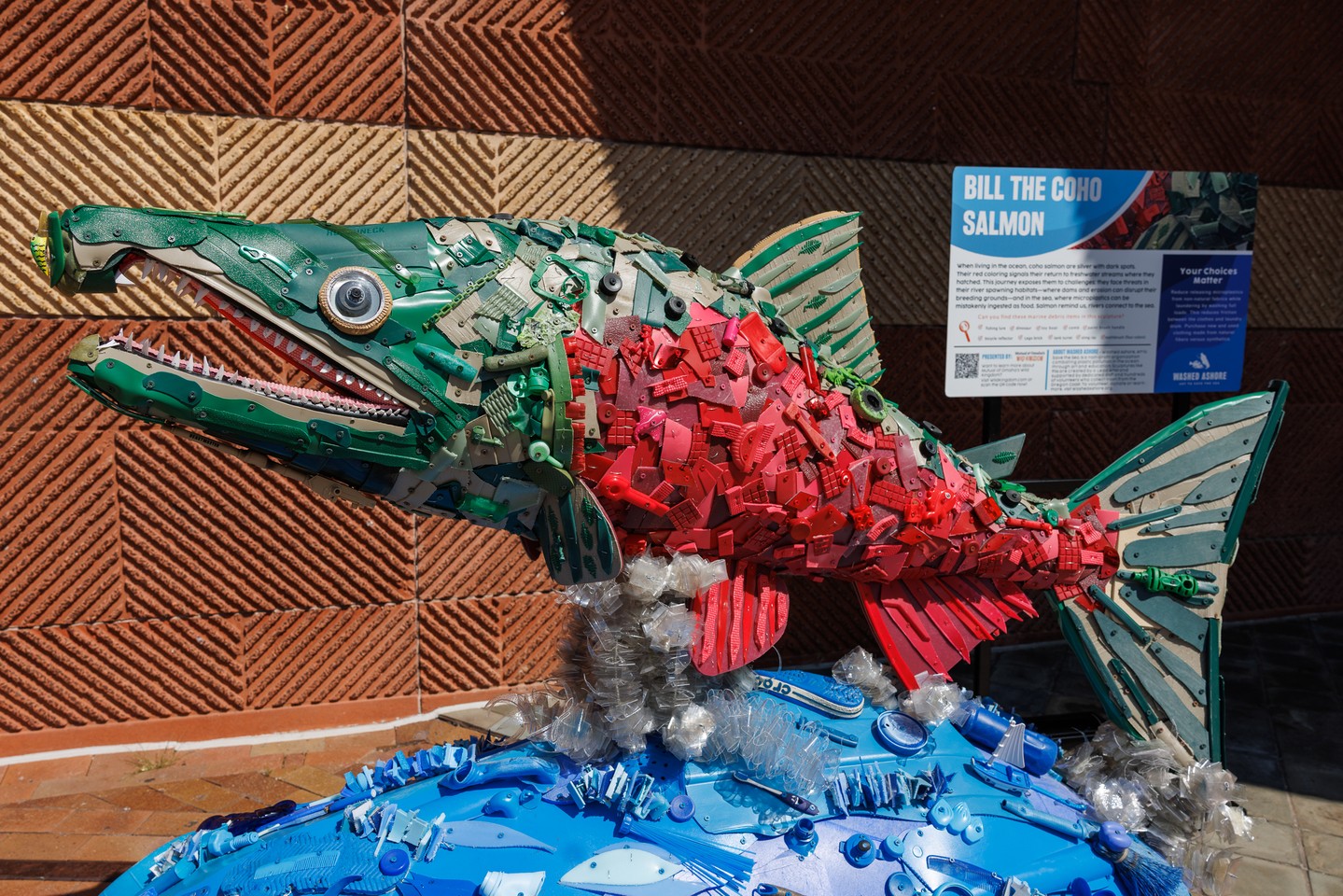
- Detailed exploration of Bill the Coho Salmon, its creation, and its role in conservation.
- The impact of plastic pollution on aquatic life and ecosystems.
- Collaborative efforts between art projects and aquariums to promote sustainable practices.
- Innovative strategies to reduce single-use plastics and preserve marine habitats.
Washed Ashore: Transforming Waste into Art
Washed Ashore, a remarkable art initiative, has found an inventive way to address the rampant issue of plastic pollution. By collecting plastic debris scattered across beaches, the organization crafts intricate sculptures that embody the beauty and plight of marine life. This creative endeavor not only produces captivating artwork but also serves an educational purpose by highlighting the severe impact of plastic waste on ecosystems.
At the heart of Washed Ashore’s mission is the transformation of waste material into visual narratives that stir consciousness and inspire change. These sculptures, crafted with precision, successfully convey urgent environmental messages to audiences worldwide. Visitors are drawn to the aesthetic appeal, only to discover the deeper message centered on sustainability and conservation.
Meet Bill the Coho Salmon
Bill the Coho Salmon is a stellar example of Washed Ashore’s ingenuity. Created entirely from beach-collected plastic, Bill stands as a testament to the resilience and vulnerability of marine species. As part of World Ocean Month celebrations, Bill will be exhibited at an Aquarium, engaging visitors in conversations around plastic waste.
This striking sculpture, like his real-life counterpart, raises awareness about the threats faced by species due to pollution. Coho salmon are vital to aquatic ecosystems, serving as both predator and prey in the food web. By featuring Bill, Washed Ashore emphasizes the critical balance that must be maintained to preserve biodiversity.
Plastic Pollution: A Threat to Aquatic Life
Plastic pollution has reached alarming levels, infiltrating even the most remote marine environments. Microplastics, which result from the breakdown of larger debris, pose a significant risk to marine organisms. These tiny particles are easily ingested, causing physical harm and introducing toxins into the food chain.
The presence of sculptures like Bill highlights the tangible manifestations of plastic pollution. It underscores the necessity of concerted efforts to mitigate this environmental crisis. Understanding the origins and lifecycle of marine debris can inform strategies aimed at reducing its presence in aquatic habitats.
Collaborative Efforts for Conservation
The partnership between Washed Ashore and Aquariums epitomizes how collaboration can lead to increased awareness and action. By integrating art with environmental education, they create immersive experiences that captivate and inform visitors. This alliance encourages sustainable practices and fosters a sense of stewardship for aquatic ecosystems.
In addition to Bill, the Aquarium boasts other educational sculptures like Stella the Seahorse and Trashy Trout. These installations complement the broader effort to inform the public about the importance of conservation and the role they can play in reducing plastic consumption. By showcasing these artworks, the Aquarium serves as a hub for learning and proactive engagement.
Strategies for Reducing Single-Use Plastics
To combat marine pollution, it’s pivotal to implement strategies that target the reduction of single-use plastics. Educational campaigns aimed at altering consumer habits can lead to decreased demand for disposable items. Encouraging alternatives, such as reusable containers and biodegradable materials, can drastically reduce the influx of plastics into waterways.
Legislation also plays a crucial role in this effort. Policies that limit plastic production and enhance waste management systems contribute to cleaner oceans. Support for research and innovation can further advancements in sustainable packaging and recycling technologies.
The visit of Bill the Coho Salmon to the Aquarium is not just an art exhibition. It challenges perceptions and sparks dialogue about our environmental responsibilities. The creative intersection of art and conservation exemplified by Washed Ashore’s project is pivotal in encouraging sustainable actions that preserve marine life and habitats. Through collective effort, informed by engaging educational experiences, significant progress can be achieved in the fight against plastic pollution.
*****
Source Description
Meet Bill the Coho Salmon! Bill was created by Washed Ashore, an art project that re-purposes plastic waste collected from beaches to create elaborate animal sculptures, and he’s visiting the Aquarium for a World Ocean Month celebration through the Fourth of July weekend. Bill will join another Washed Ashore sculpture on permanent display at the Aquarium, Stella the Seahorse, and an Aquarium-created sculpture named Trashy Trout to help spark conversations about how reducing single-use plastics can keep our waterways clean.
