
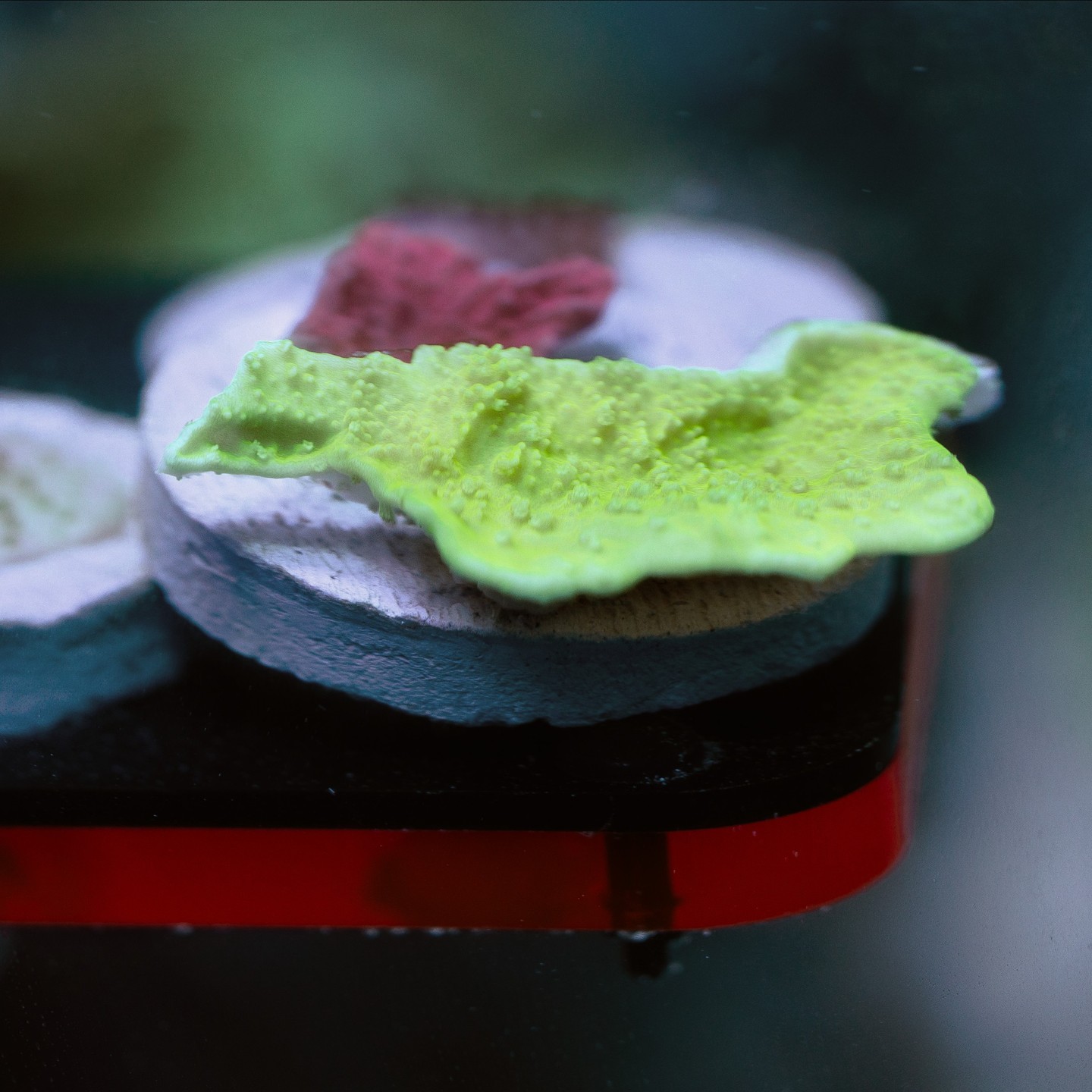
- Introduction to Pol the polyp and the Coral Lab’s role in coral conservation.
- Coral biology and the significance of coral polyps in reef ecosystems.
- The threats facing coral reefs and the urgency of conservation efforts.
- Techniques and technologies used in the Coral Lab to support Pol’s development.
- How individuals and communities can participate in reef conservation.
Meet Pol, the youngest addition to our Coral Lab: a newly-budded coral polyp of the yellow scroll coral species. As part of World Reef Awareness Day, Pol symbolizes hope and innovation in coral conservation. This article delves into the intricacies of coral biology, emphasizes the urgent need for reef preservation, and showcases the pioneering work being done to nurture Pol in our lab.
Coral Biology and Ecosystem Significance
Coral polyps, though tiny, are fundamental building blocks of coral reefs. Each polyp, including Pol, is a small, soft-bodied organism living in a hard calcium carbonate exoskeleton. Together, these polyps form colonies that make up massive reef structures visible from space. Reefs are biodiversity hotspots, supporting approximately 25% of all marine life despite covering just 1% of the ocean floor.
Polyps like Pol engage in a symbiotic relationship with zooxanthellae, microscopic algae living in their tissues. This relationship is crucial as the algae perform photosynthesis, providing essential nutrients to the coral. In return, polyps offer the algae a protected environment and access to sunlight. This harmony sustains reef ecosystems, underlining the importance of understanding and preserving coral polyps.
Threats to Coral Reefs
Despite their ecological and economic significance, coral reefs are in peril. Climate change, ocean acidification, pollution, and overfishing have caused widespread reef degradation. Rising sea temperatures lead to coral bleaching, where stressed corals expel their symbiotic algae, often resulting in death. Ocean acidification dissolves calcium carbonate, the building material for coral skeletons.
Moreover, nutrient runoff from agriculture leads to algal blooms, which suffocate reefs. Overfishing disrupts ecological balance, leading to unchecked predator populations that can devastate coral communities. Without intervention, these threats could irreversibly damage reefs like those supporting young polyps like Pol.
Innovative Conservation Techniques
Our Coral Lab, home to Pol, employs cutting-edge techniques to tackle these challenges. Coral nurseries propagate resilient coral species, while selective breeding programs enhance stress tolerance. Advanced technologies like 3D printing create sustainable coral structures that mimic natural reef systems, giving polyps optimal growth conditions.
In the lab, aquarists monitor Pol’s growth using specialized equipment to ensure optimal water temperature, light, and nutrient levels. By simulating natural conditions and minimizing stressors, the lab supports healthy polyp development and facilitates research into coral resilience.
Engagement and Participation
Conservation requires collective effort. Individuals can make significant contributions by advocating for policies that protect marine environments, supporting sustainable seafood choices, and reducing carbon footprints. Community involvement in citizen science projects, such as reef monitoring and clean-up efforts, also plays a crucial role.
Educational outreach is paramount. World Reef Awareness Day serves as a platform to illuminate the plight of coral reefs and inspire action. By sharing Pol’s story and progress, we hope to foster a deeper connection with marine conservation efforts and motivate others to contribute.
In bringing attention to Pol the polyp, we underscore the delicate balance within coral ecosystems and the vibrant life they sustain. The continued development of these initiatives is essential for the preservation of reefs and the countless species they support. Let Pol serve as a reminder of what’s at stake and the actions we can take to promote conservation and resilience in marine environments.
*****
Source Description
Meet Pol the polyp for World Reef Awareness Day! Pol is a newly-budded coral polyp our aquarists are raising in our Coral Lab to support coral reef conservation and research efforts. Keep an eye on our Stories to keep up with Pol’s growth and development in the weeks ahead!
Photos Description: Pol the yellow scroll coral polyp in our Coral Lab.
