
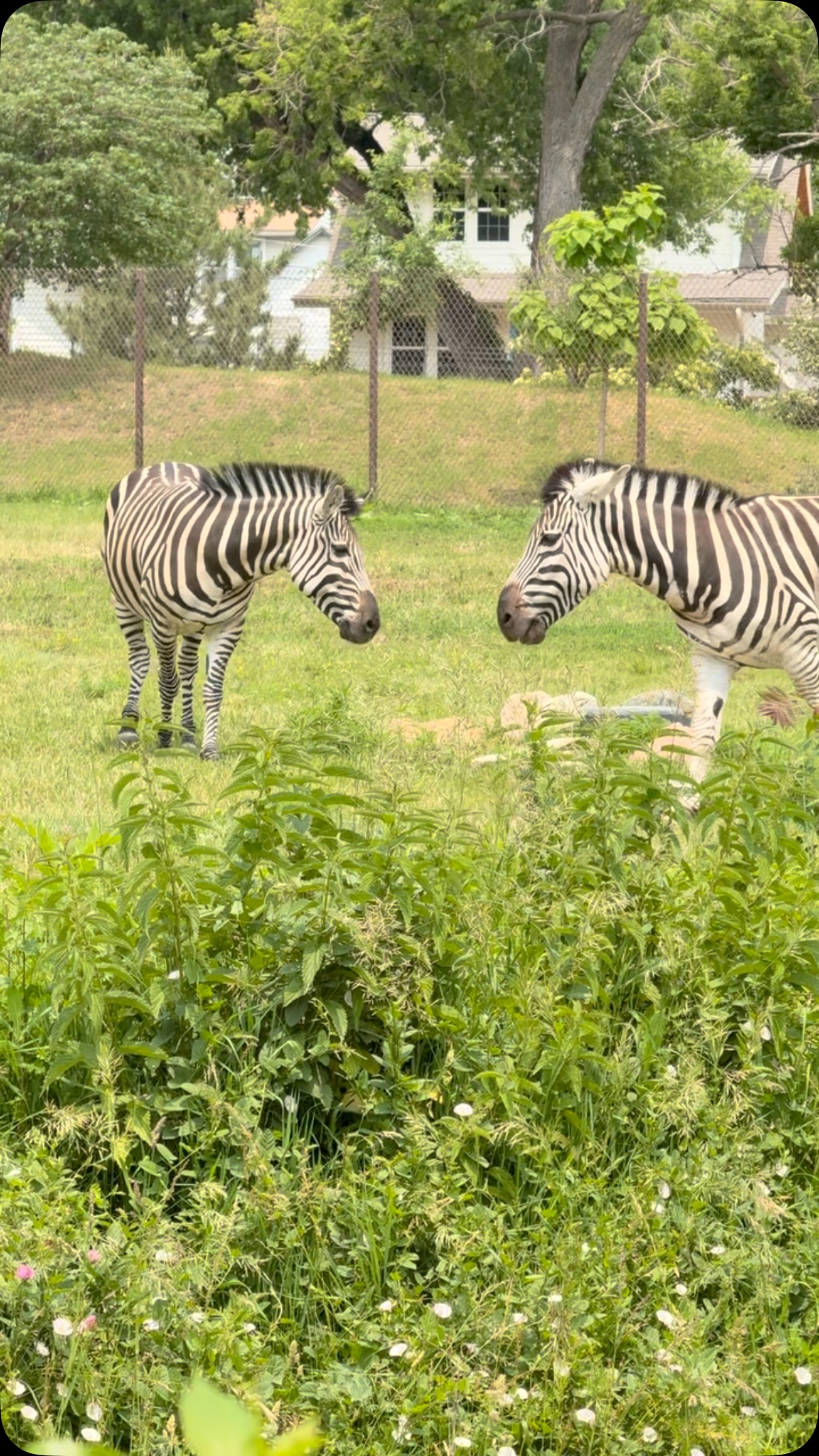
- Understanding the relocation of zebras Minnie and Berniece and its impact on their welfare
- Examining the new habitat for Minnie and Berniece and its significance
- Insights into zoo habitat management and its role in animal conservation
- The integration of Dee the sable into a new herd and the implications for social animal behavior
- The role of Simmons Wildlife Safari in conservation and public education
Minnie and Berniece, our personable zebra duo, are off to embrace their fresh beginnings, navigating a transition that not only signifies a change in scenery but underscores an evolution in animal management practices. Their recent relocation to the former sable habitat brings a host of considerations essential for enhancing their quality of life and stimulating natural behaviors. This move provides an opportunity for zoo management to implement advanced welfare strategies that promote the health and happiness of our zebras.
The newly designated zebra habitat is meticulously crafted to mimic the African savannas, designed with elements crucial for the enrichment of Minnie and Berniece. With an expansive area featuring ample grazing options, varied topography, and water features, this habitat caters to the zebras’ innate behaviors such as foraging and social interaction. Such habitat replication is vital in a zoological setting, as it allows for the physical and psychological well-being of the animals. The thoughtful incorporation of environmental complexity helps replicate the freedom of the wild, encouraging activities that maintain their fitness and mental stimulation.
Enhancing animal habitats goes beyond aesthetics; it involves scientific planning and ecological engineering. The need for adequate space, appropriate plant life, and environmental stimuli aligns with modern zoo management practices that prioritize conservation education and species preservation. By investing in such habitats, Simmons Wildlife Safari exemplifies a commitment to nurturing both animal welfare and public awareness. Visitors are thus able to witness firsthand the embodiment of these principles, fostering a deeper appreciation for biodiversity.
Meanwhile, Dee, the sable antelope, embarks on an integration journey, joining a new herd behind-the-scenes at Simmons Wildlife Safari. This assimilation highlights the intrinsic social dynamics inherent in herd animals. Sable antelopes, like many ungulates, form complex social structures that influence their behaviors and adaptability. The cautious introduction of Dee is crucial; it involves understanding their communication signals and hierarchy, ensuring that her integration is smooth and stress-free. Observing such interactions provides valuable insights into social acclimatization and is a testament to the zookeepers’ expertise in animal behavior and interspecies relationships.
Simmons Wildlife Safari, through initiatives like these, continues to play a pivotal role in conservation and education. By facilitating animal relocations and ensuring scientifically-informed care, the safari serves as a bastion for species conservation. Engaging the public through interactive experiences not only educates but inspires action towards wildlife preservation.
Minnie, Berniece, and Dee symbolize more than just a transition within Simmons Wildlife Safari. They represent the continuous advancement in zoo management, emphasizing welfare-driven practices and educational outreach. As visitors engage with these animals in their new settings, they are reminded of the intricate balance between conservation efforts and the roles of modern zoos in safeguarding our planet’s wildlife.
*****
Source Description
Minnie and Berniece are off to exciting new adventures!
Our zebras have moved to the former sable habitat, and our resident sable, Dee, has joined our herd behind-the-scenes at our @simmonswildlifesafari. Make sure to say hi to Minnie and Berniece in their new home during your next visit to the Zoo!
