
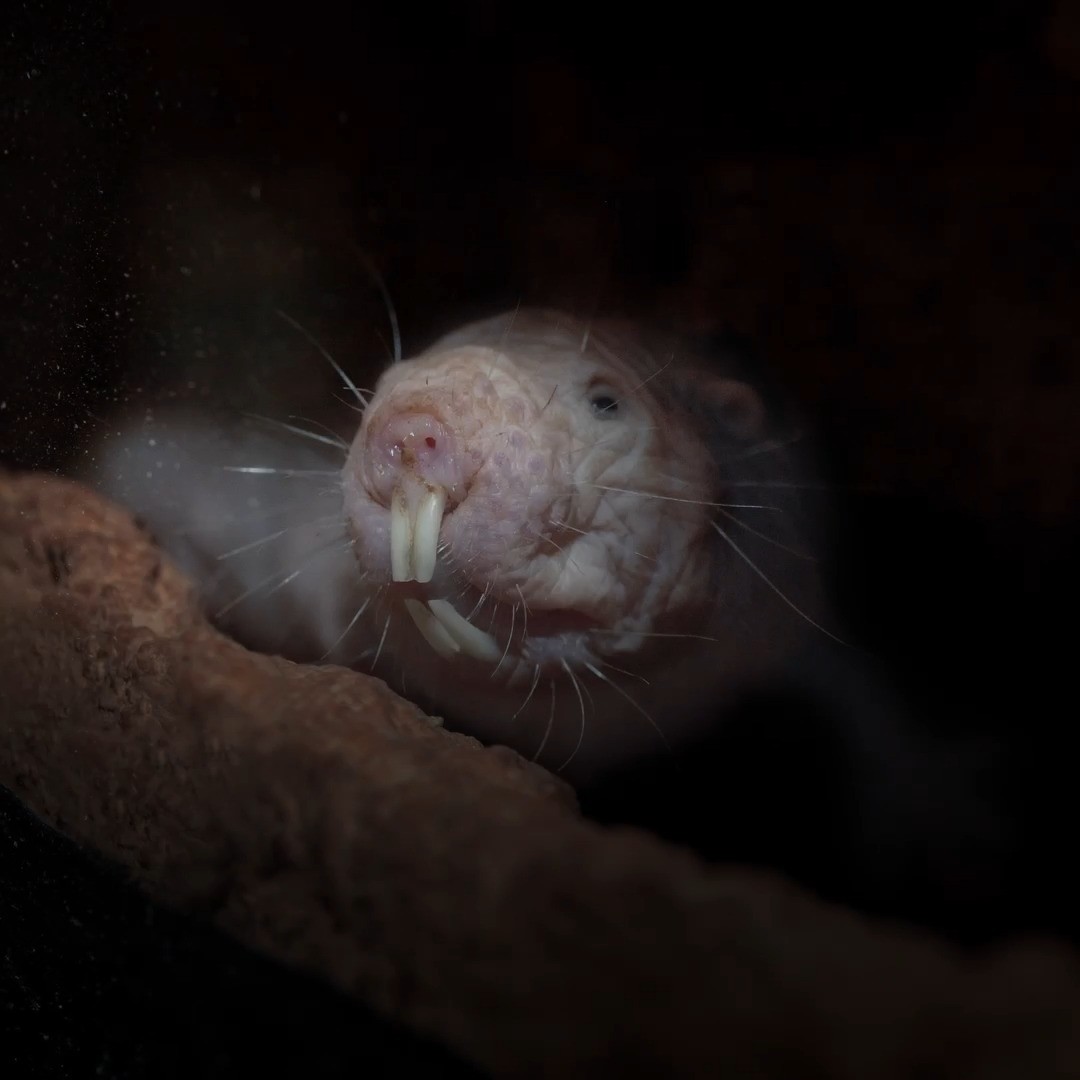
- Naked mole rat social structure and behavior
- Physical adaptations for underground living
- Feeding habits and diet preferences
- Conservation status and ecological importance
- Unique features of the new exhibit in zoos
The naked mole rat (Heterocephalus glaber), a fascinating creature that solely inhabits the underground environments of East Africa, exhibits a social structure and behavior that stands out in the animal kingdom. Living in colonies, these animals operate under a highly organized system. A typical colony comprises a queen, several breeding males, and numerous worker rats. Only the queen reproduces, making her the central figure of the group. This social setup allows the workers to take on various roles including foraging, tunnel construction, and brood care.
Physical adaptations significantly contribute to their underground lifestyle. Naked mole rats are almost completely hairless, a characteristic that may help them navigate through dark, damp tunnels. Their skin is loosely attached to their bodies, preventing injury when moving through tight spaces. A highly developed sense of smell compensates for their lack of eyesight, allowing them to find food and recognize nest-mates. Their jaws contain powerful muscles, making it possible for them to dig relentless tunnels through hard-packed soil. This strength is so pronounced that roughly one-fourth of a mole rat’s total muscle mass is concentrated in its jaw muscles.
Their feeding habits reflect the environments they inhabit. Naked mole rats primarily consume tubers, which they locate underground. Their sharp, continuously growing incisors are perfectly adapted for accessing and excavating these food sources. The incisors can operate independently, similar to chopsticks, allowing them to extract nutrients efficiently. The colonies can excavate complex tunnel systems that may extend up to 2.5 miles, with specific chambers designated for nesting, eating, and other activities. The intricate design of these tunnels not only depends on the dietary needs but also aids in temperature regulation within their habitat.
The ecological importance of naked mole rats cannot be overstated. They aerate the soil through their digging, promoting plant growth and contributing nutrients back into the ecosystem. Their unique lifestyle has also fascinated scientists, making them a subject of extensive research. Studies on their social behaviors and adaptations help illuminate the complexities of communal living and the evolution of social structures among mammals. Naked mole rat colonies also contribute to our understanding of eusociality, showcasing a social organization typically associated with insects like bees and ants.
The recent opening of the World of Darkness exhibit provides a captivating opportunity to observe these remarkable creatures in a simulated natural habitat. This new setting is more than just an enclosure; it is actively designed to replicate the underground tunnels and chambers that naked mole rats naturally inhabit. Here, visitors can witness their day-to-day behaviors and social interactions in an environment that reflects their actual living conditions, heightening awareness and appreciation for this exceptional species.
This exhibit will undoubtedly play a crucial role in education and conservation efforts. Given the threats posed by habitat destruction and climate change, initiatives to protect the naked mole rat and its ecosystem are essential. Engaging the public through interactive displays and informative signage will help raise awareness of the importance of these animals. By understanding their role in the ecosystem and appreciating their uniqueness, we can mobilize efforts aimed at preserving their habitats and supporting broader conservation strategies.
Overall, naked mole rats present a compelling study in adaptation, social behavior, and ecological impact. Observing these creatures in a well-curated exhibit allows visitors to connect with wildlife and understand the intricate relationships that sustain ecosystems. Special emphasis on their fascinating biological traits, coupled with the educational outreach efforts from zoos, can significantly enhance public engagement and foster a stronger commitment to wildlife conservation.
*****
Source Description
If you guessed a naked mole rat was the answer to our last post, you were correct! These unique (and wonderful) hairless rodents live in cooperative colonies in intricate, underground tunnel systems. Living in total darkness, they rely on their heightened sense of smell to navigate, and forage for food. They also use their powerful incisor teeth, which operate independently like a pair of chopsticks, to excavate hard-packed soil. In fact, a quarter of a mole-rat’s muscle mass can be found in its jaws! With formidable teeth like these, a single colony’s tunnels can reach 2.5 miles long!
Large colonies produce complex underground systems of tunnels that connect chambers within the burrow. Mole-rats use these chambers for different activities, such as nesting and eating. They even sequester a chamber to use as a latrine. And if the colony is under threat from flooding or a predator, “soldier” mole-rats will assemble and block the entrance to protect the colony and their queen. Don’t miss the chance to observe these intriguing social animals in our new World of Darkness exhibit, opening July 12.
