
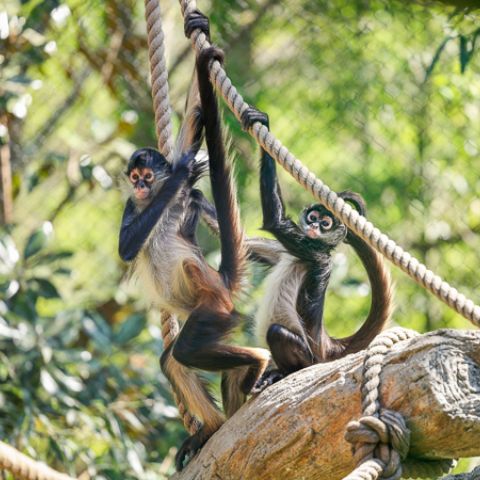
Summary of Nashville Zoo Welcomes Rescued Spider Monkeys:
Nashville Zoo has welcomed two female Mexican spider monkeys, Mistletoe and Julia, rescued from the illegal wildlife pet trade through a partnership with the Association of Zoos and Aquariums and the Wildlife Confiscations Network. The monkeys, taken from the wild at a young age, received care and support after being confiscated and are now integrated into the Zoo’s existing troop.
This initiative highlights the impact of the illegal pet trade, which often involves poaching and smuggling practices that endanger these animals. Mexican spider monkeys are social creatures with complex needs, making them unsuitable as pets. The Wildlife Confiscations Network has facilitated the care of nearly 100 spider monkeys.
Zoo officials emphasize the importance of combating wildlife trafficking to protect biodiversity and prevent disease transmission. Visitors can support conservation efforts by backing accredited zoos, reporting wildlife trafficking, and advocating against keeping wild animals as pets. The Mexican spider monkey is classified as endangered, facing threats from habitat loss and poaching.
- Nashville Zoo has rescued two female Mexican spider monkeys from the illegal wildlife trade.
- The illegal wildlife pet trade poses serious threats to species like the Mexican spider monkey.
- The care and rehabilitation of rescued animals require specialized knowledge and environments.
- Conservation efforts extend beyond zoos through partnerships and legislation.
- Public involvement is crucial in combating wildlife trafficking and supporting animal welfare.
Nashville Zoo recently expanded its family by welcoming two female Mexican spider monkeys, named Mistletoe and Julia. These two monkeys were rescued from the illegal wildlife trade, where they were subjected to significant trauma and loss. Their journey toward recovery highlights the challenges and successes seen in zoos and rehabilitation centers across the nation.
Through a partnership with the Association of Zoos and Aquariums (AZA) and the Wildlife Confiscations Network, Nashville Zoo received the monkeys after their confiscation. The rescue is emblematic of a larger national effort aimed at addressing the severe impacts of wildlife trafficking. The AZA Wildlife Confiscations Network, launched in 2023, works in collaboration with entities like the U.S. Fish & Wildlife Service. It seeks to place animals rescued from illegal trade into accredited facilities that meet their complex social and behavioral needs.
Mexican spider monkeys are often targeted in the illegal pet trade due to their appealing appearance and social nature. Tragically, juvenile monkeys are frequently taken from their mothers after poachers kill them. They are smuggled across borders under dire conditions, often arriving malnourished or wounded. These circumstances significantly reduce their chances of survival in their natural habitats.
The arrival of Mistletoe and Julia at Nashville Zoo is not just a simple rescue; it represents a renewed commitment to healing and education. Brittany Canfield, Primate Area Supervisor at Nashville Zoo, expressed gratitude for the space provided for these animals to thrive. This reflects the zoo’s dedication to animal welfare and its educational mission, aiming to inform the public about critical issues surrounding wildlife trafficking.
The illegal pet trade poses profound dangers to biodiversity. Mexican spider monkeys are classified as endangered due to habitat destruction and poaching. They play a crucial role in their ecosystems. As seed dispersers, their survival is directly linked to the health of forest environments. Without adequate protection and intervention, both the species and its habitat face severe challenges.
Spider monkeys are not suitable as pets, as they require complex social structures and extensive interaction. In their natural habitats, they engage in intricate social behaviors within large groups. Without appropriate care, they may experience behavioral problems, including aggression and anxiety. The consequences of removing these animals from the wild extend beyond individual suffering; they disrupt ecosystems and contribute to species decline.
Mistletoe and Julia’s integration into Nashville Zoo involved careful planning and management. Animal Care Specialists gradually introduced the monkeys to the existing troop, a process that is both delicate and essential. Such acclimatization is a vital part of ensuring that the monkeys can live in social harmony with their comrades in captivity. The spacious habitat along Bamboo Trail has become their new home, providing an enriching environment conducive to their social needs.
Addressing the underlying causes of wildlife trafficking is crucial. The Wildlife Confiscations Network has placed nearly 100 spider monkeys into professional care, demonstrating the commitment to protecting these species. Conservationists recognize that combating wildlife trafficking isn’t merely an animal rights issue; it has broader implications for public health and ecosystem stability.
For instance, the illegal wildlife trade is linked to the transmission of diseases from animals to humans. Outbreaks of zoonotic diseases, such as COVID-19, highlight the risks associated with exploiting wild species. Thus, protecting biodiversity directly contributes to public health initiatives.
Public awareness and involvement are essential in thwarting wildlife trafficking. Individuals can take multiple steps to aid conservation efforts. Supporting accredited zoos and their conservation programs is a straightforward yet impactful way to contribute. It encourages responsible animal management practices and raises funds for rehabilitation and educational efforts.
Educating the public about the risks associated with wildlife trafficking is equally important. Campaigns such as “Not a Pet” emphasize the need to remain vigilant against the commodification of wild animals. Understanding the legality and morality of keeping wild animals is critical in reshaping consumer behavior and attitudes.
Active participation in legislative efforts can also make a difference. The Captive Primate Safety Act serves as an example of a necessary law to regulate the private ownership of primates. Engaging with such legislative efforts can help shape a society that prioritizes animal welfare and species conservation.
It’s imperative never to purchase or keep wild animals as pets. This practice endangers their well-being and perpetuates the cycle of wildlife trafficking. Instead, advocating for alternatives, such as adopting pets from shelters, can help combat the demand for exotic animals.
Nashville Zoo promotes these conservation values through initiatives like its Wild Works program. This program engages with various organizations, including the Rainforest Awareness Rescue Education Center (RAREC), which specializes in providing care and rehabilitation for animals confiscated from the illegal wildlife trade. Partnerships like these extend the zoo’s reach beyond its immediate environment, contributing to global efforts aimed at wildlife preservation.
Focusing on Mexican spider monkeys, it’s important to understand their biology and ecology. These primates, known scientifically as Ateles geoffroyi, inhabit the tropical rainforests of Mexico and Central America. They have long limbs and prehensile tails that help them navigate tree canopies effectively. Their foraging habits as frugivores make them critical to the dispersal of seeds in their habitats.
The International Union for the Conservation of Nature (IUCN) classifies Mexican spider monkeys as endangered due to habitat loss and poaching. They are listed under CITES Appendix II regulations, which indicates they require international protection. However, they do not receive complete protection under U.S. law, making advocacy efforts even more critical.
In summary, the story of Mistletoe and Julia resonates well beyond Nashville Zoo’s walls. It encapsulates the myriad struggles and triumphs faced by conservationists working against wildlife trafficking. Efforts to rescue and rehabilitate animals caught in illegal trade are essential components of broader conservation strategies aimed at safeguarding biodiversity. Combined with public participation, these initiatives can help ensure the survival of species like the Mexican spider monkey, securing a healthier planet for future generations.
