
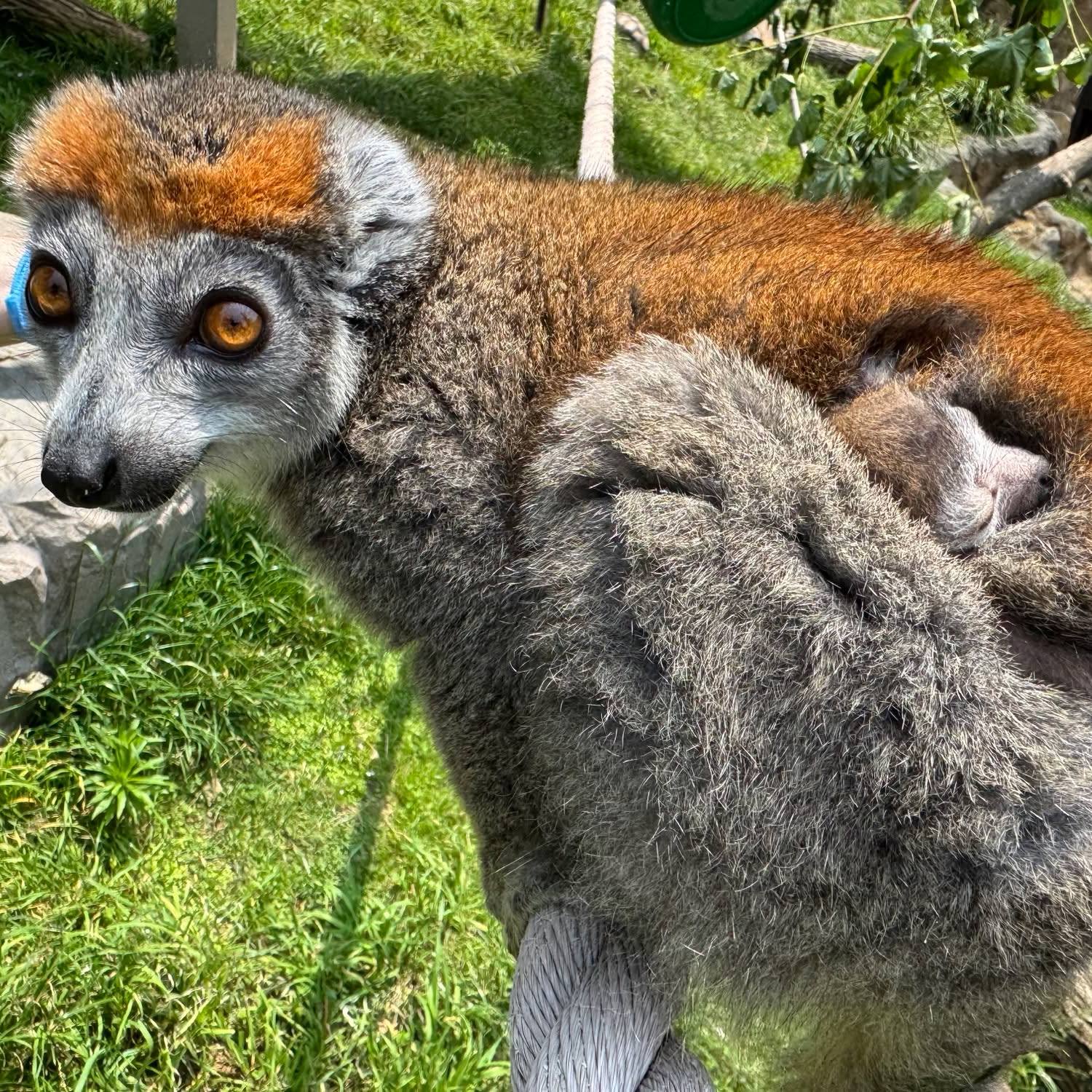
- Birth details of the crowned lemur infant and its significance to conservation.
- Overview of crowned lemurs, including their habitat, behavior, and conservation status.
- Insights into the role of Brandywine Zoo in wildlife conservation and education.
- The importance of veterinary care in zoo settings and early life monitoring of newborns.
- Visitor engagement opportunities to learn more about lemurs and conservation efforts.
A crowned lemur infant born to Sophie and Kipp on May 31, 2025, signifies an important achievement in the ongoing effort to conserve this endangered species. This event marks the third successful crowned lemur birth at Brandywine Zoo, a critical facility focusing on species conservation and education. The infant’s initial veterinary exam indicates good health, although the sex is still to be determined. For the next few days, visitors can witness this new addition from 10:30 AM to 1:00 PM as the lemur family acclimatizes to the Madagascar exhibit.
Crowned lemurs (Eulemur coronatus) are native to the island of Madagascar. This species is characterized by its striking appearance, featuring a distinctive crown-like pattern of fur on its head. In the wild, these social primates live in family groups, exhibiting complex social behaviors and vocalizations, which are essential for communication. The birth of these infants contributes to the genetic diversity and population stability of crowned lemurs, which face severe threats from habitat loss and poaching.
The crowned lemur population has seen significant decline over recent decades, primarily due to the deforestation associated with agricultural expansion and logging. As a result, the IUCN Red List classifies crowned lemurs as endangered. Conservation efforts are critical for their survival. Institutions like Brandywine Zoo play a vital role in breeding programs that help bolster numbers in managed care. Additionally, these zoos often collaborate with various conservation organizations, combining efforts to restore habitats and create sustainable environments for wild populations.
Brandywine Zoo is renowned not just for its animal exhibits but for its dedication to wildlife education and conservation. The zoo serves as a resource for the public, fostering awareness about the plight of many species, including crowned lemurs. The educational programs offered, such as guided tours and interactive sessions with zookeepers, focus on species characteristics, behaviors, and conservation challenges. Engaging with visitors directly supports the zoo’s mission to inspire them to advocate for environmental stewardship.
Veterinary care is another pivotal aspect of managing zoo populations, particularly during the early stages of life. The health of newborns is meticulously monitored. The initial veterinary exam for the crowned lemur infant is critical for assessing its well-being. This examination often includes checks for weight, temperature, and overall physical health. Early monitoring allows keepers to address potential health issues immediately, ensuring the infant develops well in its formative weeks.
Additionally, the process of acclimatization for a newborn animal is highly significant. In the case of crowned lemurs, mothers typically provide nurturing care, and the family unit plays a crucial role in the infant’s socialization. The initial bonding time allows the young lemur to learn behaviors essential for survival, such as foraging and social interactions that will last throughout its life. Visitors will have the unique opportunity to observe these behaviors as the family adjusts to its habitat in the coming days.
The public’s fascination with lemurs, often heightened by their striking appearances and playful behaviors, creates a strong incentive for conservation efforts. Zoos like Brandywine serve as educational hubs, where visitors can learn about the threats facing wildlife and the importance of biodiversity. Emphasizing the interconnectedness of ecosystems can lead individuals to reassess their choices and actions regarding environmental impacts.
The new crowned lemur infant at Brandywine Zoo illustrates the positive outcomes that dedicated conservation practices can yield. By raising public awareness about lemurs, zoos not only provide a window into their world but also promote action to safeguard their future. The challenges faced by crowned lemurs are paralleled by those confronting myriad other species across the globe. Thus, the conservation of crowned lemurs is part of a broader strategy to combat environmental degradation.
As the days unfold, visitors are encouraged to engage with the zoo’s programs that highlight the importance of conservation work. Interactive exhibits, educational talks, and special events offer opportunities to connect with wildlife experts and learn about ongoing efforts to restore habitats in Madagascar. The challenges faced by crowned lemurs can only be addressed through a collective approach to conservation that bridges the gap between in-situ and ex-situ strategies.
The birth of the crowned lemur infant and the story of its family at Brandywine Zoo exemplifies successful breeding programs and conservation initiatives. This event also underscores the critical work being conducted by zookeepers, conservationists, and researchers dedicated to preserving endangered species. As the infant grows and thrives, it will serve as an ambassador for its species, allowing visitors to learn about the complexities of wildlife conservation efforts.
Education plays a central role in these conservation strategies. zoos have the opportunity to positively influence public attitudes toward wildlife conservation. Young visitors, in particular, can develop a lifelong passion for nature and science through their experiences at Brandywine. Programs aimed at children often foster curiosity about ecosystems and biodiversity. This connection can encourage future generations to advocate for and engage in environmental stewardship.
In summary, the new birth alert for the crowned lemur infant at Brandywine Zoo is more than just an announcement; it highlights vital aspects of species conservation, veterinary care, and public education. Each lemur born contributes to the genetic diversity essential for the survival of the species. The ongoing efforts to protect this primate underscore the significance of collaborative conservation initiatives.
The opening of the Madagascar exhibit provides an incredible opportunity for visitors to witness not only the newcomers but also to learn more about their behaviors and the challenges they face. The zoo’s role extends beyond mere entertainment; it serves to educate and inspire individuals to participate in wildlife protection efforts. Conservation is a collective responsibility and must be embraced by all levels of society.
The crowned lemur infant’s birth is not just a critical development for Brandywine Zoo; it signifies hope for the future of crowned lemurs. The dedicated work being done at the zoo exemplifies the commitment needed to preserve endangered species and protect the natural world. As we celebrate this milestone, we must also remain mindful of the broader implications for conservation strategies worldwide.
*****
Source Description
NEW BIRTH ALERT!
A crowned lemur infant was born to Sophie and Kipp on May 31, 2025. This is the third successful crowned lemur infant born at Brandywine Zoo, marking a huge win for lemur conservation!
At the initial veterinary exam, the infant looks to be healthy. The sex of the infant is yet to be determined. Over the next few days, the crowned lemur family will re-acclimate to the Madagascar exhibit and be visible from 10:30am to 1:00pm. Stop by Brandywine Zoo to see the lemurs!
📸: Keepers Allyson and Linnea
