
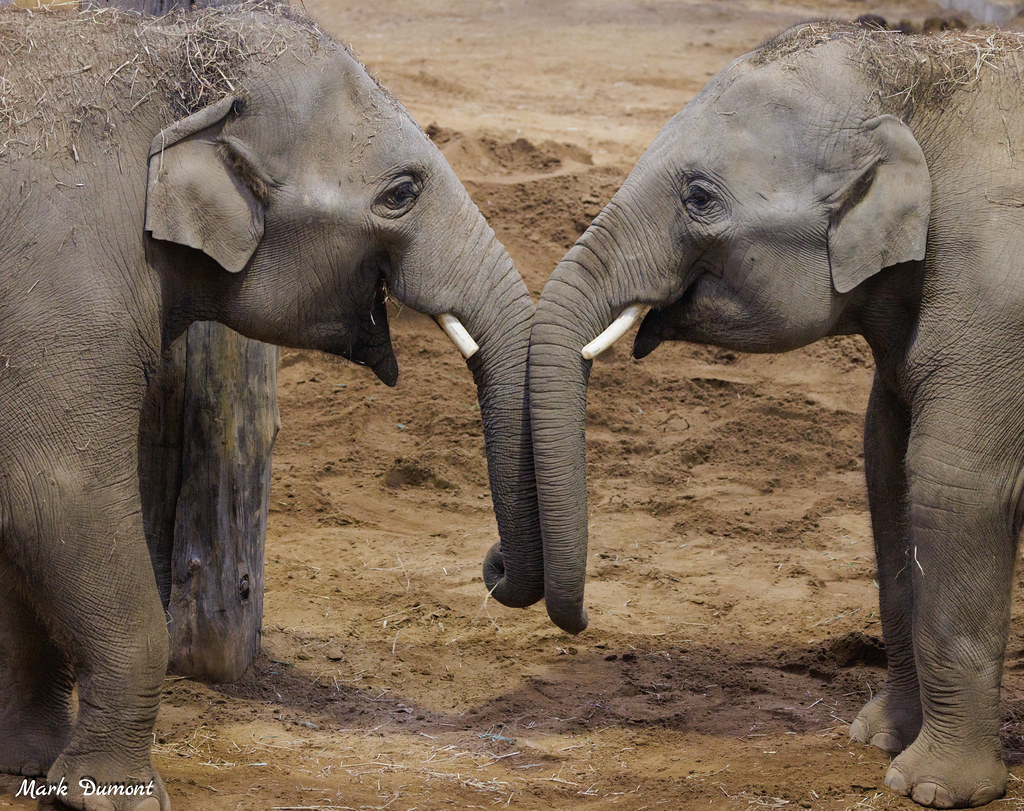
Summary of Groundbreaking Vaccine Helps Young Elephants at Cincinnati Zoo Overcome Deadly Virus:
A collaboration between Dr. Paul Ling from Baylor College of Medicine and the Houston Zoo has led to significant advancements in detecting and treating Elephant Endotheliotropic Herpesvirus (EEHV). This partnership has developed diagnostic tests that shape protocols for monitoring EEHV globally. In 2023, two elephants, Sanjay and Kabir, were transferred to the Cincinnati Zoo, where they received a new vaccine against EEHV after being identified as vulnerable. Early results showed they developed strong immune responses, and subsequent monitoring revealed that despite mild infections, they did not require aggressive treatment. This successful vaccination marks a significant step in Asian elephant conservation, aided by partnerships with various organizations focused on this effort.
- Groundbreaking vaccine development for young elephants at Cincinnati Zoo.
- The collaboration of experts leading to enhanced diagnostics and treatment for EEHV.
- Importance of monitoring and managing EEHV in elephant populations.
- Impact of the vaccine on conservation efforts for Asian elephants.
- Future prospects for vaccine distribution and elephant health management.
The recent milestone achieved at the Cincinnati Zoo, where young elephants have been protected against a deadly virus through vaccination, represents a significant leap in veterinary science and wildlife conservation. This advancement addresses the critical concern of Elephant Endotheliotropic Herpesvirus (EEHV), a virus that has proven lethal to many juvenile elephants around the globe. The collaborative efforts between various institutions and experts have played a pivotal role in designing a vaccine that could redefine the future of elephant health management.
EEHV poses a significant threat specifically to Asian elephants, often leading to severe, acute hemorrhagic disease in young specimens. Until recently, the understanding and management of this virus have relied heavily on symptomatic treatments. The emergence of a groundbreaking vaccine heralds a new era of proactive measures that can save young elephants from the devastating effects of EEHV. At the Cincinnati Zoo, two young elephants, Sanjay and Kabir, received this innovative vaccine following their transfer from Dublin Zoo. Both elephants were identified as being particularly vulnerable due to the absence of maternal antibodies against EEHV, thus highlighting the urgent need for interventions.
Central to the success of this project is a longstanding partnership between Dr. Paul Ling, a virologist at Baylor College of Medicine (BCM), and the Houston Zoo. Their collaboration has been instrumental in advancing both detection and treatment protocols for EEHV. The development of sensitive diagnostic tools and antibody tests has established a foundation for national and international strategies aimed at monitoring and managing this dangerous virus.
In 2023, two young elephants at the Cincinnati Zoo underwent rigorous testing that revealed an absence of protective antibodies against EEHV. Recognizing the potential risks, the zoo implemented advanced measures including the establishment of an EEHV PCR lab to monitor the health of the young elephants continuously. Anticipating potential viral exposure, the zoo proactively administered plasma transfusions from elephants that had developed antibodies to EEHV. Unfortunately, these transfusions did not achieve comparable immunity levels seen in elephants recovering from natural infections, signaling a pressing need for a more effective solution.
In a remarkable response to the growing threat posed by the virus, the Cincinnati Zoo adopted the newly developed EEHV vaccine in Fall 2024. Preliminary results were promising; both elephants showed robust antibody responses to the vaccine. The antibodies produced were significantly similar to those found in elephants that had survived natural infections, suggesting that the vaccine could provide a reliable defense mechanism against EEHV.
By February 2025, antibody levels in Sanjay and Kabir remained detectable and were sustained for longer periods compared to those achieved through plasma transfusions. This extended immunity further validated the effectiveness of the vaccine as a preventive measure. Throughout this period, diligent monitoring of elephant health confirmed that Sanjay was exposed to low levels of EEHV through interactions with a herd mate. Despite this exposure, he exhibited no significant symptoms, and his body managed to control the viral load effectively. The increasing antibody levels indicated a successful immune response facilitated by the vaccine, thus negating the need for aggressive medical interventions.
Similarly, Kabir also showed mild signs of infection. However, like his counterpart, he managed a full recovery without any required treatments. These occurrences mark the first documented natural exposures following vaccination, underscoring the vaccine’s potential to prevent severe disease outcomes associated with EEHV.
In developing this vaccine, several key partnerships proved invaluable. Collaborations with Dr. Jeroen Pollet from the National School for Tropical Medicine, the International Elephant Foundation (IEF), Colossal Biosciences, and the Houston Methodist Center for RNA Therapeutics contributed essential expertise and resources. The combined efforts of these institutions illustrate the depth of commitment to elephant health and welfare across various organizations.
The implications of this vaccine reach far beyond the confines of the Cincinnati Zoo. It serves as a beacon of hope for the conservation of Asian elephants, a species that faces numerous threats including habitat loss, poaching, and disease. Researchers and conservationists are hopeful that the successful application of this vaccine will lead to national and international distribution efforts. Such initiatives could protect countless populations of Asian elephants, contributing significantly to their survival and the preservation of biodiversity.
Monitoring protocols established by the collaborative efforts of experts in the field will play an essential role in tracking the efficacy and safety of the vaccine across different populations. This integrated approach to elephant health management ensures that emerging challenges will be met with scientifically grounded solutions.
Beyond these immediate applications, the advancement of EEHV vaccine initiatives stands as a model for future wildlife health management strategies. By demonstrating how vaccine deployment can yield immediate benefits, conservationists can translate these lessons to other endangered species facing similar threats from viruses and infectious diseases.
As visitors to the Cincinnati Zoo encounter Sanjay and Kabir among the rest of the herd, they become witnesses to a significant chapter in elephant conservation history. The Cincinnati Zoo opens daily at 10 a.m., welcoming individuals of all ages eager to learn about the ongoing efforts to safeguard these magnificent creatures.
Through unique programs and increased public awareness, zoos play a prominent role in educating the public about wildlife health management. The Cincinnati Zoo’s proactive measures and collaborations contribute significantly not only to the immediate well-being of their elephants but also to broader conservation efforts aimed at protecting Asian elephants worldwide.
The race against time is ongoing, and continuous research is essential. The successful development and implementation of the EEHV vaccine are just the start. Continued innovation and collaboration among veterinary scientists, wildlife management organizations, and zoos will be critical to ushering in new standards for elephant care.
This perspective on vaccine development exemplifies the intersection of science, conservation, and the deep systems of care required to nurture young elephants. As more resources are dedicated to research and monitoring, the hope remains that similar advancements can be made for other vulnerable species.
