
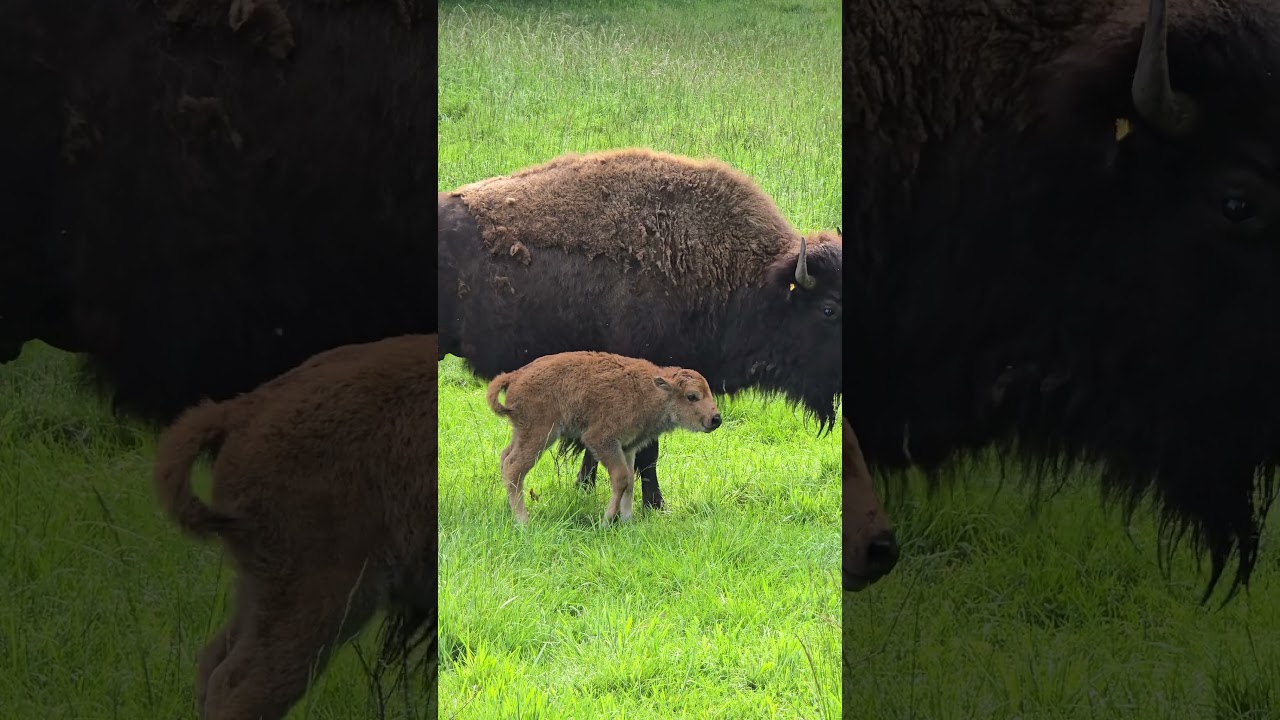
- Introduction to newborn bison behavior and first steps.
- Role of maternal care in bison development.
- Overview of bison ecology and conservation status.
- Importance of videos in wildlife education and awareness.
- Insights into zoo management and care for newborn animals.
In the early moments of life, a newborn baby bison begins a remarkable journey. With wobbly legs and the guidance of its mother, these first steps are not just physical milestones but vital for survival. Observing a newborn bison like this one taking its first steps with mom Sunny offers a glimpse into the behavior and development of these majestic creatures.
Newborn bison, often referred to as calves, are born after a gestation period of about nine months. Within a few hours of birth, they attempt to stand up and walk. This instinct to quickly get on their feet is critical. In the wild, mobility protects them from predators. The first steps of a newborn baby bison are typically uncertain. However, with maternal encouragement, they soon gain confidence and stability. The mother plays a crucial role, nudging and staying close, providing both physical and psychological support.
The nurturing instincts of bison like Sunny are pivotal in the survival and growth of calves. Bison mothers are known for their protective and attentive behavior. They use various signals to communicate with their young, ensuring they remain safe within the herd. Social structures within bison groups are complex. They consist of maternal groups and bachelor herds. Understanding these dynamics enriches our knowledge of bison behavior and social interaction.
Bison are charismatic megafauna, recognized for their ecological and cultural significance. As one of North America’s most iconic species, they serve as ecosystem engineers. Their grazing patterns maintain the balance of grassland ecosystems. Conservation efforts focus on increasing their population and preserving genetic diversity. Bison play a crucial role in maintaining biodiversity.
Video documentation of wildlife behaviors, such as that of a newborn bison taking its first steps, serves an educational purpose. Such recordings enhance public engagement and awareness. They highlight natural behaviors and foster appreciation for wildlife conservation. Videos provide an accessible way for people to connect with nature, promoting environmental stewardship.
Zoo management plays a critical role in the care and upbringing of newborn animals. Zoos provide safe environments where bison like the newborn can thrive. Enclosures are designed to mimic natural habitats, enabling calves to learn critical survival skills under the watchful eyes of their mothers. Zoos also serve as educational platforms, offering insights into animal behavior and conservation challenges.
In conclusion, the journey of a newborn baby bison taking its first steps is a natural wonder. It illustrates the intricate relationship between maternal care and calf development. It reminds us of the ecological importance of bison and underscores the value of wildlife conservation. Through educational videos and zoo initiatives, we continue to foster a greater understanding and appreciation for these majestic creatures.
*****
Source Description
Say hello to the newest and fluffiest member of our herd — a baby bison, just days old! 🧡 This little one is already melting hearts as it stays close to mom, exploring the Free-Roaming Area one wobbly step at a time.
📹: Keeper Jordan
