
- The biology and natural behaviors of Emperor Scorpions
- The maternal care exhibited by scorpions
- The ecological role of scorpions in their habitat
- Conservation challenges facing scorpions
- Educational insights for aspiring enthusiasts and conservationists
Emperor scorpions (Pandinus imperator) are fascinating creatures, well known for their impressive size and significant role in their ecosystems. This species is native to the rainforests of West Africa and has become popular in the pet trade due to their striking appearance and relative hardiness. In captivity, they can thrive and reproduce, as demonstrated by the return of our Emperor Scorpion as a mother. This remarkable event offers a chance to explore the biology, behaviors, and conservation of these impressive arachnids.
The biology of Emperor Scorpions is captivating. These scorpions can grow to a length of up to eight inches, characterized by their tough exoskeleton, large pincers, and a distinctly curved tail ending in a venomous stinger. Contrary to popular belief, their venom is mild, often causing nothing more than localized pain and irritation in humans, just as a bee sting would. They possess specially adapted features such as their segmented body and jointed appendages, which allow for agility and strength in navigating through their habitats. Their coloration, a dark black or greenish hue, aids in camouflage among the forest underbrush, protecting them from potential predators.
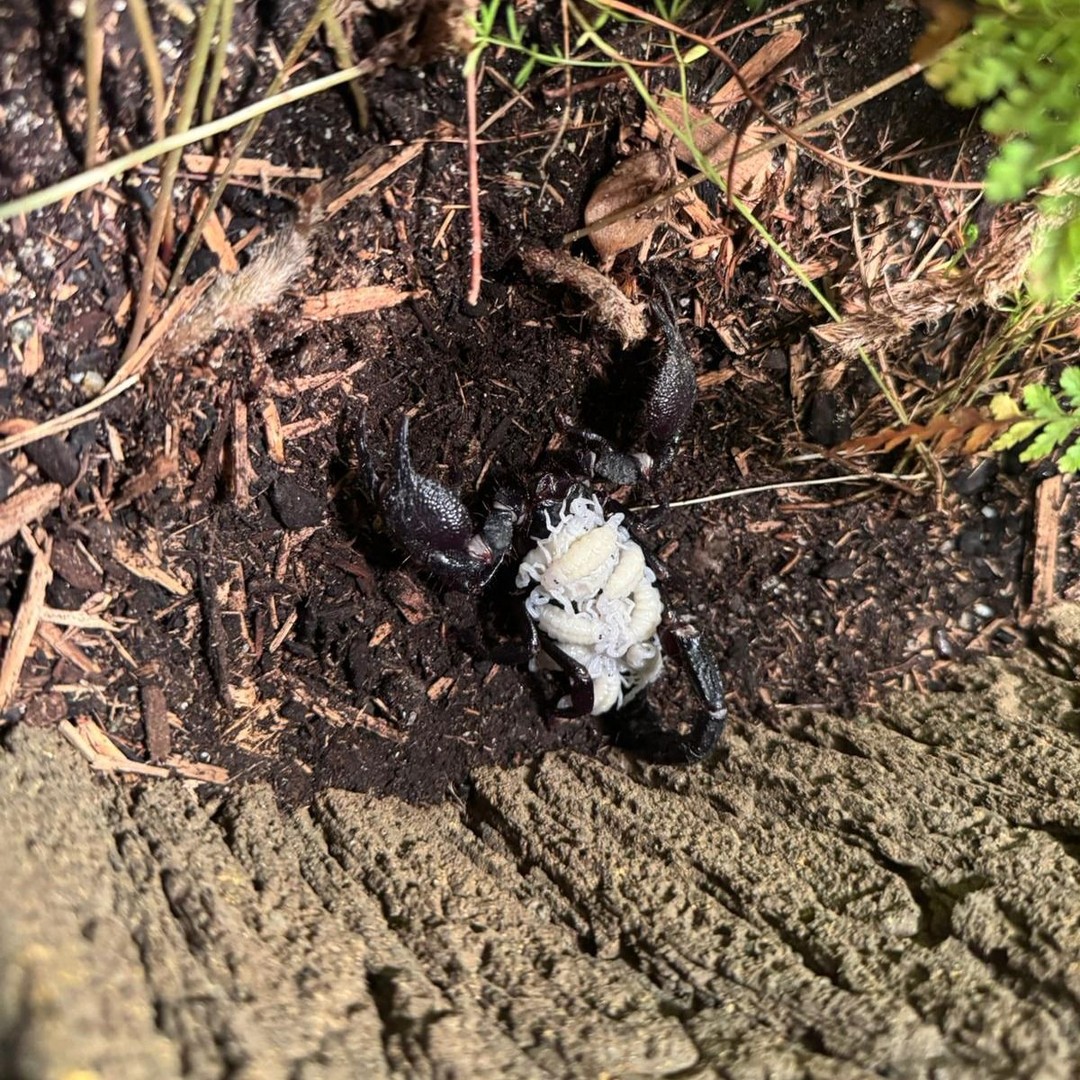
A pivotal behavior in the life of an Emperor Scorpion is maternal care. After a gestation period of about seven months, a female scorpion will give birth to a litter of live young—commonly referred to as scorplings. This signifies a major aspect of their reproductive strategy, wherein the young are born more vulnerable than many other terrestrial species. Upon birth, these scorplings cling to their mother’s back, a behavior that lasts several weeks. During this time, they receive protection and mobility, both crucial for their survival during the early stages of life. As they grow, the young scorpions undergo multiple molts, gradually developing their hardened exoskeletons. Mother’s role is central during this period as she provides care and guidance to her growing brood.
The ecological role of scorpions, including the Emperor Scorpion, is vital for the balance of their environment. As predators, they help control the populations of various insects and small invertebrates. This predator-prey dynamic contributes to maintaining healthy ecosystems. Scorpions play a significant part in nutrient cycling and are key indicators of environmental health. Their presence or absence can provide important ecological insights. Understanding their behaviors and roles enables conservationists to make informed decisions regarding habitat preservation and environmental management.
Despite their ecological importance, scorpions face conservation challenges. Habitat loss due to deforestation and human encroachment is one of the most pressing issues. As natural areas are converted into agricultural land or urban developments, the delicate ecosystems that support scorpion populations begin to deteriorate. In some regions, over-collection for the pet trade also poses threats to local populations. The survival of Emperor Scorpions is contingent upon a delicate balance that must be protected. Consequently, conservation efforts often focus on habitat restoration and public education to foster a deeper appreciation for these creatures’ roles within their ecosystems.
The fascination with Emperor Scorpions can inspire educational initiatives among budding enthusiasts and conservationists. Engaging in the study and care of these creatures can promote wildlife understanding. Learning about proper care, environmental needs, and ethical considerations in keeping scorpions can help future generations foster a lasting appreciation for all arachnids. For those interested in observing these creatures, research on appropriate captive environments is essential. Emperor Scorpions thrive in tropical terrariums, complete with a warm substrate and hiding spots to mimic their natural habitat. Proper heating and humidity are crucial in maintaining a healthy environment where scorpions can thrive.
Educational outreach can also play a significant role in promoting conservation efforts. Informing communities about the important role of scorpions in their native habitats can lead to increased support for wildlife protection initiatives. Schools, local conservation groups, and even zoos can participate in educating the public about scorpion biology, behaviors, and conservation needs. Fun facts, such as their ability to fluoresce under UV light due to certain proteins in their exoskeletons, can enhance interest and appreciation.
As our Emperor Scorpion welcomes another litter of scorplings, it serves as a beautiful reminder of the resilience and instincts rooted in nature. The nurturing instinct exhibited by scorpions, particularly their capacity for caring for young, provides vital lessons in the larger narrative of survival, adaptation, and ecological interdependence.
By emphasizing the importance of scorpions in their ecosystems and supporting conservation efforts, the public can help protect these unique creatures. Through careful research and active participation in conservation initiatives, future generations can contribute positively to the preservation of this stunning species, and by extension, the ecosystems they inhabit.
Observing the maternal behaviors of our Emperor Scorpion invites us to dive deeper into the world of arachnids. Understanding the key life stages, like the transition from scorpling to juvenile, reveals critical growth phases. Each stage highlights the importance of the mother’s engagement, reflecting broader biological principles related to reproduction and parenting found across species.
The life of the Emperor Scorpion provides insightful lessons regarding the balance of nature. The symbiotic relationships within ecosystems often hinge on species interactions like that between predators and prey. In this sense, scorpions are both vital cogs in the ecological wheel and fascinating subjects of study. For anyone interested in wildlife conservation, engaging with the biology and behaviors of animals like scorpions can spark a lifelong commitment to environmental stewardship.
Fostering an understanding of these intricate relationships can bridge the gap between people and wildlife. By supporting local conservation efforts, we can advocate for sustainable practices that protect habitats. This, in turn, promotes biodiversity and resilience within ecosystems. The ongoing efforts to educate both the public and policymakers about these needs can be instrumental in creating effective conservation policies.
Lastly, observing our Emperor Scorpion as a mom encourages us to reflect on our own connections to the environment. Each birth of scorplings serves as an impetus for appreciation and action. We become aware that every creature has its place in the grand tapestry of life. This awareness can inspire advocacy for sustainable practices, enabling ecosystems to flourish for generations to come.
Understanding the life and behaviors of our Emperor Scorpion opens a window into the wider world of arachnids and their ecological significance. For anyone wishing to turn curiosity into action, education is paramount. It paves the way to informed decisions that reverberate positively through ecosystems, ensuring that the delicate balance of life is cherished and protected. The return of our Emperor Scorpion as a mother is not just a personal milestone but a broader call for awareness and action in wildlife conservation.
*****
Source Description
Our Emperor Scorpion is a mom (again!) 🦂
She just welcomed another litter of scorplings, who will hitch a ride on her back for a few weeks until their exoskeletons harden. Nature is wild (and adorable)!
