
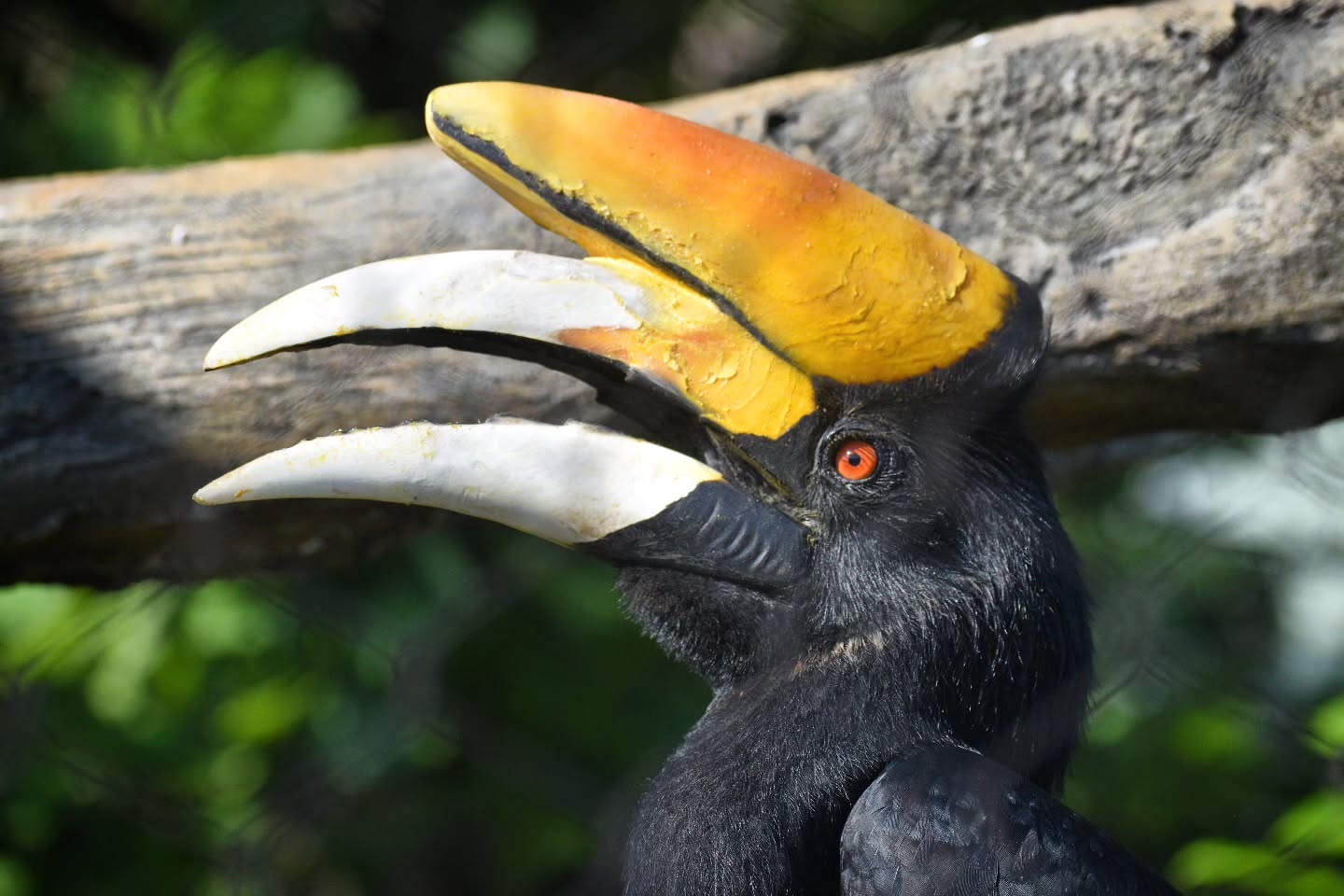
- Overview of the Rhinoceros Hornbill’s physical features and behavior
- Habitat and distribution of the Rhinoceros Hornbill
- Significance of the Rhinoceros Hornbill in its ecosystem
- Conservation status and efforts for the Rhinoceros Hornbill
- Educational initiatives and the role of institutions like the Cincinnati Zoo
The Rhinoceros Hornbill (Buceros rhinoceros) is a large bird known for its striking appearance and fascinating behaviors. Residing primarily in Southeast Asia’s tropical forests, this species showcases vivid colors, a prominent casque on its bill, and a dynamic lifestyle. The physical characteristics of the Rhinoceros Hornbill are as intriguing as its complex behaviors. Adult birds typically measure around 3 feet in length, featuring a long, curved bill topped with a sizable casque that varies in shape and size among individuals. Their plumage usually displays a glossy black with bold yellow and orange highlights that provide a striking contrast against the verdant backdrop of their natural habitat.
Beyond their appearance, Rhinoceros Hornbills are social birds, often found in pairs or small groups. They possess a distinctive flight pattern characterized by strong wingbeats and glides, which makes their presence even more noticeable in their environment. Their vocalizations are another defining trait; they communicate through a series of loud honks and calls that resonate throughout the forest, marking their territory and facilitating social interaction.
The habitat of the Rhinoceros Hornbill is primarily concentrated in mature rainforests, from the lowland forests of Indonesia to the mountainous regions of Malaysia and nearby islands. These birds prefer dense, humid environments rich in fruiting trees, which form a significant part of their diet. The Rhinoceros Hornbill is especially adept at foraging for fruits, particularly figs, but they also consume insects and small animals, showcasing a level of dietary adaptability that helps them thrive in various conditions.
The ecological role of the Rhinoceros Hornbill is crucial in its habitat. As a frugivore, this bird aids in seed dispersal, a vital process that supports forest regeneration and biodiversity. The consumption of fruits and subsequent excretion of seeds facilitates the growth of new plants, contributing to a balanced ecosystem. Moreover, the Rhinoceros Hornbill serves as a prey species for larger predators, positioning it as an essential component of food webs in the regions it inhabits.
Despite its ecological importance, the Rhinoceros Hornbill faces significant threats. Habitat destruction, primarily due to logging and agricultural expansion, has led to a decline in their populations. Furthermore, hunting for their casque and feathers, which are often used in traditional ceremonies and as trophies, exacerbates their vulnerability. Current conservation status assessments categorize the Rhinoceros Hornbill as “Near Threatened,” highlighting the urgent need for conservation efforts to protect this remarkable species.
In response to these conservation challenges, various initiatives have been launched to safeguard the Rhinoceros Hornbill and its habitat. These include habitat restoration projects aimed at reestablishing forests and creating protected areas to allow safe nesting and foraging. The promotion of sustainable agricultural practices also plays a role in mitigating habitat loss while benefiting local communities. Education is pivotal in these efforts, as it fosters awareness about the importance of the Rhinoceros Hornbill in maintaining healthy ecosystems.
Institutions such as the Cincinnati Zoo play a vital role in these conservation efforts. The zoo not only provides a safe haven for these birds but also engages the public through educational programs. These initiatives inform visitors about the Rhinoceros Hornbill’s plight, emphasizing the interconnection between species and the importance of biodiversity. By partnering with organizations focused on wildlife preservation, the Cincinnati Zoo furthers research and conservation strategies that can be applied in the field.
The significance of the Rhinoceros Hornbill extends beyond its ecological contributions. This bird symbolizes the rich biodiversity found in Southeast Asia and serves as an emblem of conservation efforts. Highlighting its beauty and the challenges it faces can inspire action among the public, fueling broader initiatives that protect various species and their habitats.
In sum, the Rhinoceros Hornbill exemplifies the critical relationship between species and their ecosystems, showcasing the need for continued advocacy and investment in wildlife conservation. Through education, research, and community involvement, it is possible to facilitate a shared understanding of and commitment to protecting this incredible bird and the habitats crucial for its survival.
*****
Source Description
Rhinoceros Hornbill (Buceros rhinoceros) 📷 at the @cincinnatizoo
