
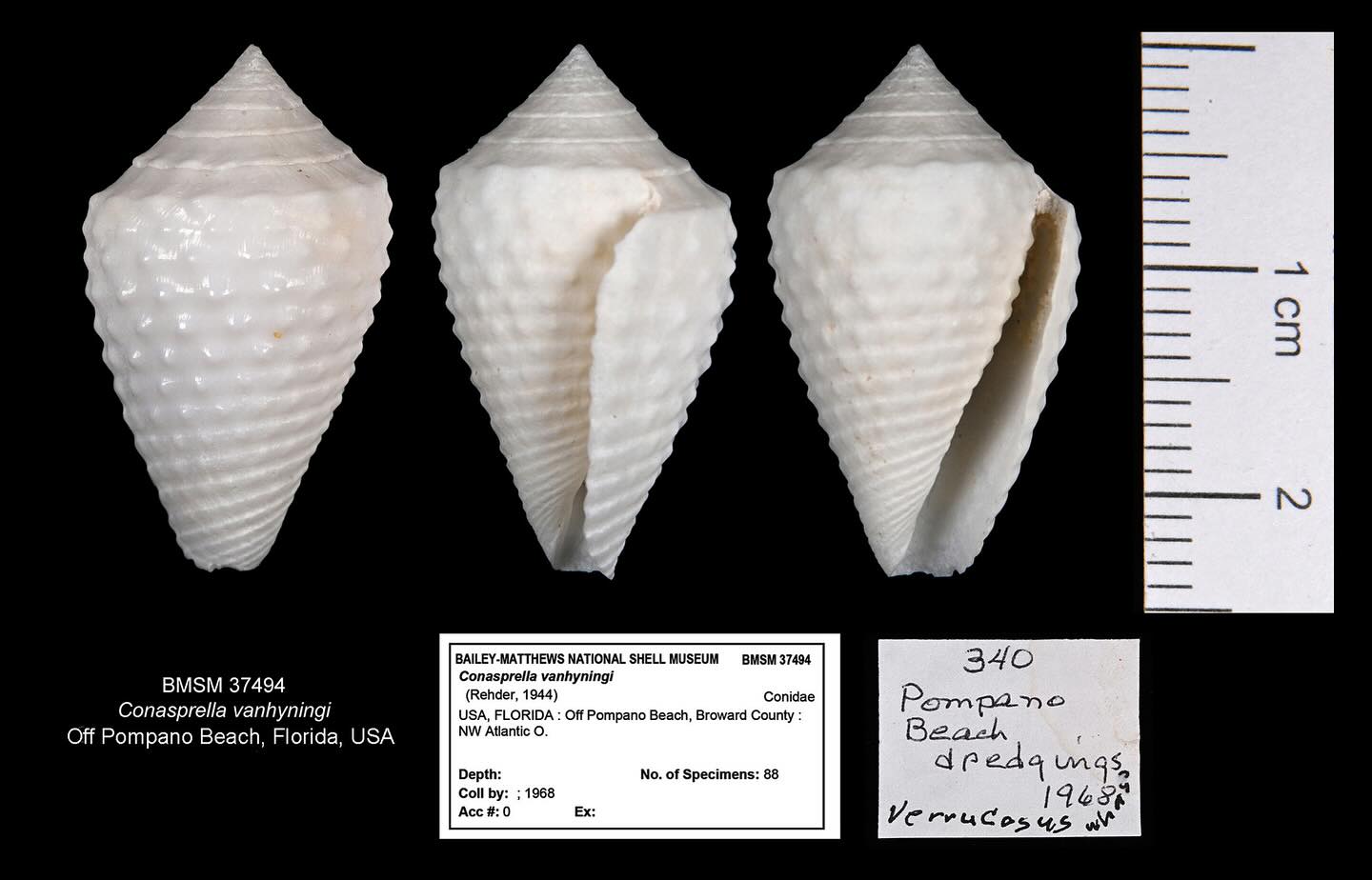
- The taxonomic classification and history of The Van Hyning’s Cone (Conasprella vanhyningi).
- Morphological characteristics and habitat specifics of the species.
- The ecological role of Conasprella vanhyningi and its interactions within marine ecosystems.
- Conservation status and the threats facing The Van Hyning’s Cone.
- The significance of research and public awareness in the conservation of marine biodiversity.
The Van Hyning’s Cone (Conasprella vanhyningi) is a small, fascinating species of cone snail with distinct morphological features and an interesting history. Officially classified in 1944 by Harald A. Rehder, this species was initially recognized as a subspecies of Conus verrucosus. Taxonomically, it is part of the family Conidae, which includes thousands of species of marine snails known for their unique conical shells and venomous radulae. The species was named in honor of Thomas Van Hyning, a noted malacologist and curator at the Florida State Museum.
This snail is relatively small, reaching a maximum size of up to 25 mm. Its shell displays a characteristic appearance marked by tiny bumps known as pustules. These pustules not only enhance the shell’s aesthetic appeal but may serve functions such as camouflage or structural reinforcement. The coloration of the shell typically ranges from white to light salmon-pink, making it visually distinct in its native habitat. The original type locality for The Van Hyning’s Cone is Pompano Beach, Florida, where the first holotype was dredged, signifying the location of its first comprehensive study.
Research has shown that these snails inhabit sandy substrates across various coastal environments. They are often found in shallow waters, where they can hide from predators and ambush prey. Being voracious predators themselves, Conasprella vanhyningi primarily feeds on small fish and other invertebrates, employing a specialized venom delivery system to subdue its prey. The venom, delivered through a structure called a radula, contains a mixture of toxins that can cause paralysis in their victims. This predatory behavior is an essential function within the marine food web, and understanding it provides insights into the ecological dynamics of coastal ecosystems.
The ecological role of The Van Hyning’s Cone extends beyond mere predation. By controlling the populations of their prey, these snails help maintain the balance within their ecosystems. Their feeding habits can regulate species diversity and abundance, allowing various marine organisms to thrive. In this way, Conasprella vanhyningi plays an integral part in shaping the marine biodiversity. Marine biodiversity is crucial for ecosystem resilience, as it allows various species to adapt to environmental changes and maintain healthy ecosystems.
Despite their ecological importance, The Van Hyning’s Cone faces various threats that could impact its survival. Habitat degradation due to coastal development, pollution, and climate change poses significant risks to its population. These factors can result in the loss of suitable habitats and a decline in prey availability. Specifically, the alteration of coastal environments may impede their ability to find food or evade predators, making conservation efforts essential.
Additionally, the collection of cone snail shells for the decorative shell trade also poses a direct threat to the population of The Van Hyning’s Cone. Overharvesting can lead to local extinctions, disrupting the balance of the ecosystems they inhabit. To address these threats, it is crucial to implement protective measures. Marine protected areas (MPAs) and sustainable fishing practices can significantly contribute to the conservation of Conasprella vanhyningi. MPAs can provide safe havens where cone snails and other marine species can thrive without human interference or exploitation.
Public awareness and education also play vital roles in the conservation of marine species like The Van Hyning’s Cone. Increased understanding of marine biodiversity and the ecological roles of different species can foster a sense of stewardship among communities. Outreach programs can inform the public about the importance of these organisms in coastal ecosystems, encouraging sustainable behavior and advocacy for stronger conservation policies.
In scientific research, ongoing studies focusing on the biological and ecological aspects of the species can yield promising results for conservation strategies. Research can help identify specific conservation needs, population dynamics, and genetic diversity, all of which are critical for formulating effective management plans. Furthermore, collaboration among conservationists, researchers, and local communities can amplify conservation initiatives, ensuring that native species like The Van Hyning’s Cone are protected for future generations.
The Van Hyning’s Cone typifies the complexity of marine ecosystems, embodying the delicate balance of predator and prey interactions while highlighting the broader challenges in marine conservation. As a subject of study, it draws attention to the nuances of taxonomy, ecology, and the need for conservation efforts. Knowledge of its characteristics and ecological role is vital for understanding the intricate dynamics of coastal marine environments.
Efforts to conserve species like The Van Hyning’s Cone can potentially yield benefits that extend beyond individual species. By sustaining healthy populations of these cone snails, researchers advocate for the entire coastal ecosystem’s health. Conservation of marine biodiversity can provide ecosystem services such as water purification, carbon storage, and resilience against climate change impacts. Through continuous research and dedicated conservation programs, we can work toward safeguarding not only The Van Hyning’s Cone but also the marine environments they call home.
*****
Source Description
The Van Hyning’s Cone (Conasprella vanhyningi) is a small cone snail that may reach up to 25 mm in size. Its shell is covered with small bumps, or pustules, and its color is usually white to light salmon-pink. The species was named in 1944 (as a subspecies of Conus verrucosus) by Smithsonian zoologist Harald A. Rehder (1907–1996) for Thomas Van Hyning (1861–1948), first malacologist, curator, and director of the Florida State Museum (now Florida Museum of Natural History) in Gainesville, Florida. The shell in the illustration was dredged off Pompano Beach on the east coast of Florida. Pompano Beach is the *type locality* of the species (place of origin of the holotype, or main specimen studied in the original description). Illustration by José H. Leal.
Read Dr Rehder’s brief article here: http://www.biodiversitylibrary.org/item/34848
