
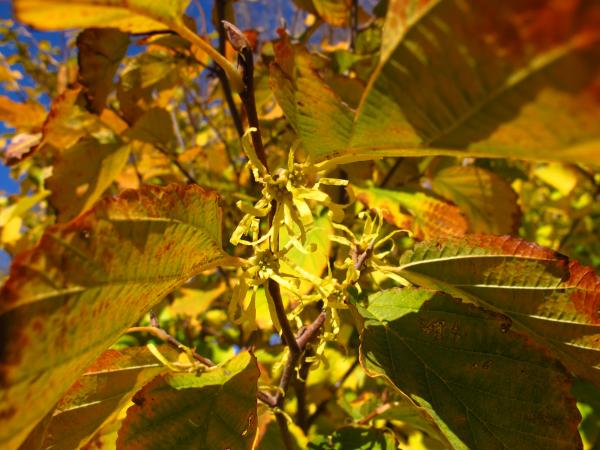
- Understanding the Virginia witch hazel and its unique blooming cycle
- The origin of the name “witch hazel” and its historical context
- Seed dispersal mechanisms of witch hazel and their ecological significance
- The characteristics and persistence of witch hazel flowers post-leaf drop
- Conservation efforts and the role of witch hazel in native habitats
The Virginia witch hazel (Hamamelis virginiana) is an intriguing shrub native to the eastern United States and parts of Canada. It stands out in the autumn landscape, flowering at a time when most plants are preparing for winter. The blooms—golden-yellow, ribbon-like petals—present a striking visual contrast against the backdrop of autumn foliage. Understanding this plant offers insights into its ecological role, historical significance, and conservation importance.
Virginia witch hazel is notable for its blooming cycle, which occurs from October to December. This unusual season for flowering is crucial for various pollinators, notably late-flying insects that take advantage of the blossoms when other food sources are scarce. This timing not only benefits the plants but also supports local ecological networks.
As the season progresses into winter, the foliage of witch hazel turns from green to a bright yellow before it eventually falls. Even with the absence of leaves, the bright flowers stand out and continue to attract potential pollinators. This unique adaptation allows the species to thrive in conditions where other flowering plants struggle, making it a resilient piece of the autumn and winter landscape.
The origin of the name “witch hazel” is steeped in history and folklore. The term “witch” in witch hazel is thought to derive from the Old English word “wice,” meaning “to bend.” The shrub’s flexible branches made it a popular choice for divining rods, hence linking it to witchcraft. Historical accounts indicate that early settlers and Native Americans utilized witch hazel for its medicinal properties, treating ailments such as skin irritation and inflammation. The leaves, bark, and twigs have been widely used in herbal medicine. Witch hazel extract remains popular in today’s skincare products, known for its soothing and anti-inflammatory properties.
One of the remarkable features of Virginia witch hazel is its method of seed dispersal. After the flowers bloom, they develop seed capsules. These capsules mature over several months, becoming increasingly dry. When conditions are right, particularly in late winter or early spring, the capsules explode. This explosive action can project seeds up to 5 meters from the parent plant. This mechanism not only aids in the distribution of the species but also allows it to colonize new areas effectively. By launching seeds over a distance, witch hazel reduces competition from the parent plant and increases genetic diversity in new populations.
The persistence of witch hazel flowers even after leaf fall is another fascinating aspect of this species. Unlike most flowering plants whose blooms fade with the loss of leaves, witch hazel blossoms can endure through the autumn and into winter. This characteristic enhances visibility for pollinators that may be foraging during this time. As the flowers persist, they contribute to the plant’s reproductive success by ensuring that pollinators have access to resources when many are in short supply.
Virginia witch hazel also plays a role in its native ecosystems beyond providing beauty and food. As a native species, it supports local wildlife, including birds and small mammals that may utilize its foliage for shelter. The plant acts as a cornerstone of ecological networks, offering habitat and maintaining soil health. Its presence in a landscape can indicate a healthy ecosystem, as native plants often provide the best adaptations for local conditions.
As urbanization and habitat loss threaten native plant species, understanding the importance of witch hazel helps to bolster conservation efforts. Restorative initiatives focus on preserving such native plants, not only for their beauty and ecological roles but also for their contributions to biodiversity. Engaging local communities in conservation practices, such as planting native flora, is fundamental to maintaining ecological balance.
Promoting awareness of Virginia witch hazel encourages individuals to appreciate and participate in conservation efforts. Educational programs about its environmental significance can foster respect for native plants and their role in sustaining local wildlife. By understanding the interconnectedness of species and ecosystems, individuals can contribute to a more sustainable future.
Participating in conservation methods, including habitat restoration, can ensure that valuable species like witch hazel are maintained in local environments. Community support and involvement in local conservation groups strengthen these efforts, promoting a collective dedication to preserving natural spaces. Planting native species in gardens can also contribute significantly to maintaining local biodiversity.
Virginia witch hazel’s unique adaptations make it a remarkable species worthy of study. This shrub not only beautifies the landscape during a time of transition but also exemplifies the importance of native flora in maintaining ecological balance. Through continued education and conservation, it is possible to protect this resilient plant and ensure its place in our natural heritage.
Understanding the fascinating nuances of Virginia witch hazel provides insight into broader ecological themes. From its unique blooming cycle to its explosive seed dispersal, every aspect of the plant contributes to the greater environmental tapestry. By fostering a respect for such native species, society can play a crucial role in conservation, preserving not just the plant but the rich biodiversity it supports. Engaging with the singular life cycles of plants like witch hazel enhances our knowledge and connection to nature, encouraging stewardship of our shared environment. Ultimately, as we appreciate the natural world around us, we can more effectively protect and sustain it for future generations.
*****
Source Description
Une floraison qui défie l’automne! 🍂
Connaissez-vous l’hamamélis de Virginie? Cet arbuste indigène fleurit en octobre, quand tout le reste se prépare à l’hiver.
🔮 Pourquoi l’appelle-t-on witch-hazel ou noisetier de sorcière?
💥 Comment ses graines sont-elles projetées à plus de 5 mètres?
🌱 Et pourquoi ses fleurs persistent même après la chute des feuilles?
👉 Découvrez toutes ces curiosités dans notre blogue!
📲 Lien dans la bio de @espacepourlavie
*****
A bloom that defies autumn! 🍂
Are you familiar with witch hazel? This native shrub blooms in October, when everything else is preparing for winter.
🔮 Why is it called witch hazel?
💥 How are its seeds projected over 5 meters?
🌱 And why do its flowers persist even after the leaves have fallen?
👉 Discover all these fascinating facts on our blog!
📲 Link in the bio of @espacepourlavie
