
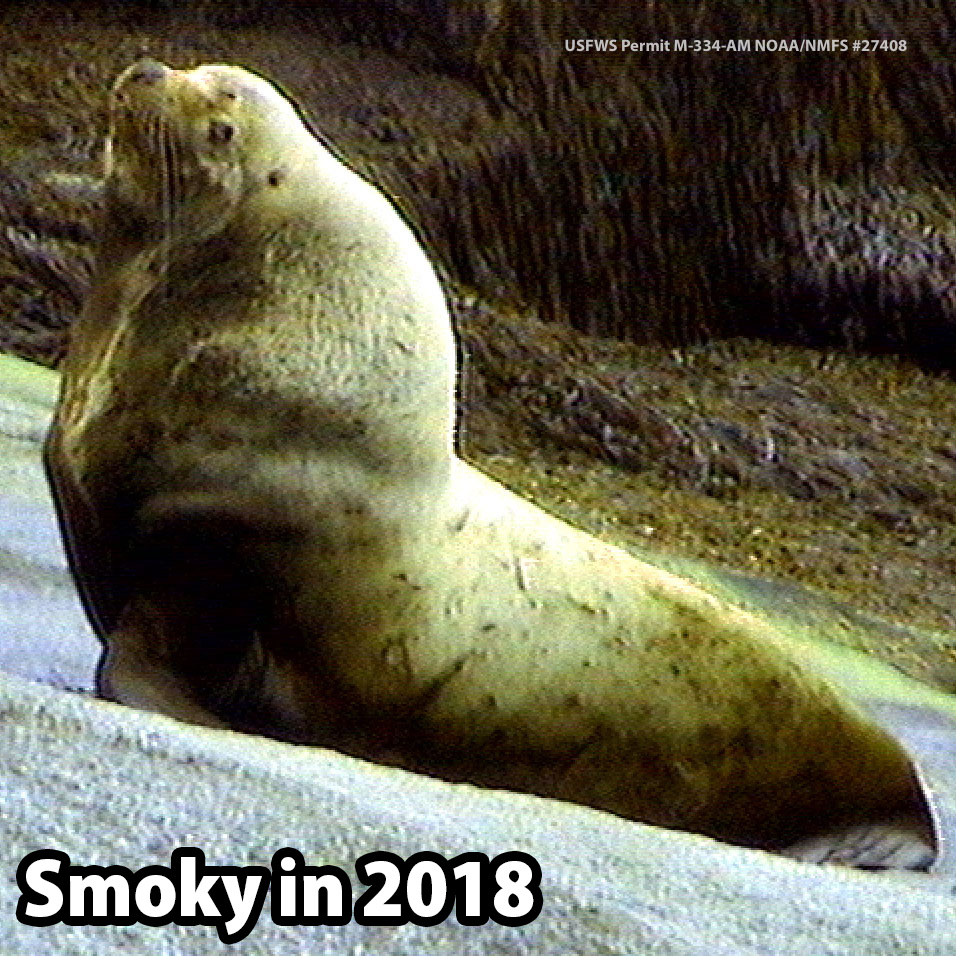
- Smoky’s significance as a Steller sea lion and his role within the Chiswell Island rookery ecosystem.
- The life cycle and behavioral patterns of male Steller sea lions.
- Challenges faced by Smoky and other sea lions due to environmental and human factors.
- Conservation efforts aimed at protecting Steller sea lions and their habitats.
- Future implications for the Steller sea lion population and the research being conducted by the ASLC.
Smoky, a prominent Steller sea lion bull, has been a known figure at the Chiswell Island rookery for nearly a decade. His story is intertwined with the resilience and challenges faced by this remarkable species. Steller sea lions, scientifically classified as Eumetopias jubatus, are the largest of the eared seals. With males reaching weights of up to 1,000 pounds and lengths of about 10 feet, they have distinctively thick necks, a mane-like appearance, and a deep vocalization that makes them easily recognizable. Smoky has not only stood out for his size and presence but also for his role in the complex social structure of sea lions.
The life cycle of male Steller sea lions is marked by intense competition and territoriality. Breeding typically occurs from late spring to early summer. Males establish dominance over sections of the rookery, often referred to as territories, where they gather and protect a group of females for breeding. Smoky was known to have claimed a valuable territory at Chiswell Island, which brought him numerous breeding opportunities and a prominent role in the genetic contribution to future generations. Male tenure at a breeding site can significantly impact the reproductive success of the females within their territory, making Smoky’s position vital for population dynamics.
However, Smoky and his peers face numerous environmental challenges impacting their survival. Climate change has resulted in shifting ocean temperatures and food availability, which can dramatically affect the health and reproductive success of Steller sea lions. An increasing number of sea lions have shown signs of malnutrition and starvation due to decreased prey availability, primarily fish such as herring and pollock, which are staples in their diet. Competition for food resources escalates with changes in the marine ecosystem, which is often compounded by human activities, such as commercial fishing.
Human-induced factors also put significant pressure on the Steller sea lion population. Coastal development, pollution, and interactions with fishing gear continuously threaten their habitats. Entanglement in fishing nets can result in severe injuries or death, and pollution can compromise the health of these marine mammals. Conservation efforts aimed at protecting Steller sea lions include the establishment of marine protected areas, regulations on fishing quotas, and public outreach programs focused on reducing human-sea lion conflicts. The Alaska SeaLife Center (ASLC) plays a crucial role in research and conservation initiatives. Through ongoing studies, scientists gather crucial data on the population’s health, behavior, and interactions with their environment.
Smoky’s recent behavior reflects the challenges he faces as an aging male. Signs of decline in dominance and territory loss can indicate his waning health. As older males relinquish their territories to younger, more vigorous rivals, they often struggle to maintain their breeding success. The stress of competition among males is intense, with younger sea lions vying for dominance to secure their breeding opportunities. Smoky’s presence has helped many young sea lions gain better opportunities for breeding by keeping older males at bay. However, as he ages, his ability to defend his territory diminishes, which is a critical aspect of his survival.
The entire Steller sea lion population faces uncertainties due to changing environmental conditions and pressures from human activities. Research indicates that populations have fluctuated over time, with historic lows and some regions experiencing significant rebounds, while others continue to decline. The ASLC’s research specifically focuses on the ecology and behavior of these marine mammals. Staff members gather data through direct observation, tagging, and surveillance at the rookery. This rigorous data collection is instrumental in understanding population dynamics and identifying potential strategies for conservation efforts.
The legacy of Smoky extends beyond his time at Chiswell Island; he embodies the larger narrative of resilience and adaptation within the Steller sea lion population. His experiences contribute to our understanding of male territoriality, reproductive strategies, and survival traits. Each year that Smoky has spent at Chiswell Island has added valuable insights into the complex social structures and behaviors of these remarkable animals. His story, unfortunately, is not entirely uncommon among pinnipeds, where the pressures of aging and environmental change become increasingly relevant.
In light of the potential changes in Smoky’s life due to age and competition, it’s essential to recognize the role that sea lions like him play in their ecosystems. They are not only vital components of marine food webs but also indicators of the overall health of ocean environments. When populations of Steller sea lions thrive, it signals a largely functioning marine ecosystem. When they decline, it’s often a red flag indicating that other marine life may also be at risk, prompting immediate attention from conservation organizations and researchers.
The Alaska SeaLife Center’s commitment to marine research and conservation is unwavering. Their team collaborates with other institutions, government agencies, and local communities to foster awareness and influence policy changes that protect Steller sea lions and the habitats they rely on. Documentaries and educational outreach programs provide further context regarding the challenges faced and promote community involvement in conservation efforts.
As technology continues to advance, new methodologies for monitoring sea lion populations and their habitats emerge. Satellite tracking and acoustic monitoring are becoming commonplace, allowing researchers to gain deeper insights into the behaviors and migratory patterns of Steller sea lions. This data is critical as scientists assess the impact of environmental changes and human activity on sea lion populations, informing proactive conservation strategies.
Understanding the trajectory of Smoky and his counterparts is vital, not only for their survival but for the broader ecological health of marine environments. These insights enable scientists to strategize efforts aimed at sustainable fisheries management and habitat preservation, integrating ecological data with conservation policy.
The potential loss of Smoky represents a significant gap in the ecological narrative of Chiswell Island. His experiences provide an essential case study in understanding the dynamics of male Steller sea lions. Researchers at ASLC emphasize the importance of continual observation, documentation, and interpretation of these behaviors as they evolve in response to environmental stresses.
Monitoring Smoky’s trajectory will be vital for ongoing conservation efforts. His story serves as a reminder of the resilience of wildlife but also the fragility of ecosystems facing anthropogenic changes. The legacy of Smoky, along with continued research and aggressive conservation strategies, will guide future generations in their understanding of Steller sea lions and the necessity for environmental stewardship.
In continuing to follow Smoky’s journey, researchers provide hope that lessons learned through his experiences will help inform policies that protect not just Steller sea lions but entire marine ecologies. A concerted commitment to sustainable practices and robust research will be essential for the survival of these remarkable animals in the face of ongoing change. The Struggles of Smoky highlight a broader narrative about wildlife conservation, emblematic of larger environmental issues impacting not only marine life but our shared planet.
*****
Source Description
Where did Smoky go?
Our research team at the ASLC has known and been able to identify “Smoky” the Steller sea lion bull for almost 10 years, along with hundreds of other wild Steller sea lions who visit the rookery at Chiswell Island. Sadly, this year might be the last year we see him. Curious to know why?
Read his story, and more about what our scientists have learned about male Steller sea lions in our latest blog:
Smoky’s Legacy: Lessons in Territory, Tenure, and Survival on Chiswell Island
