
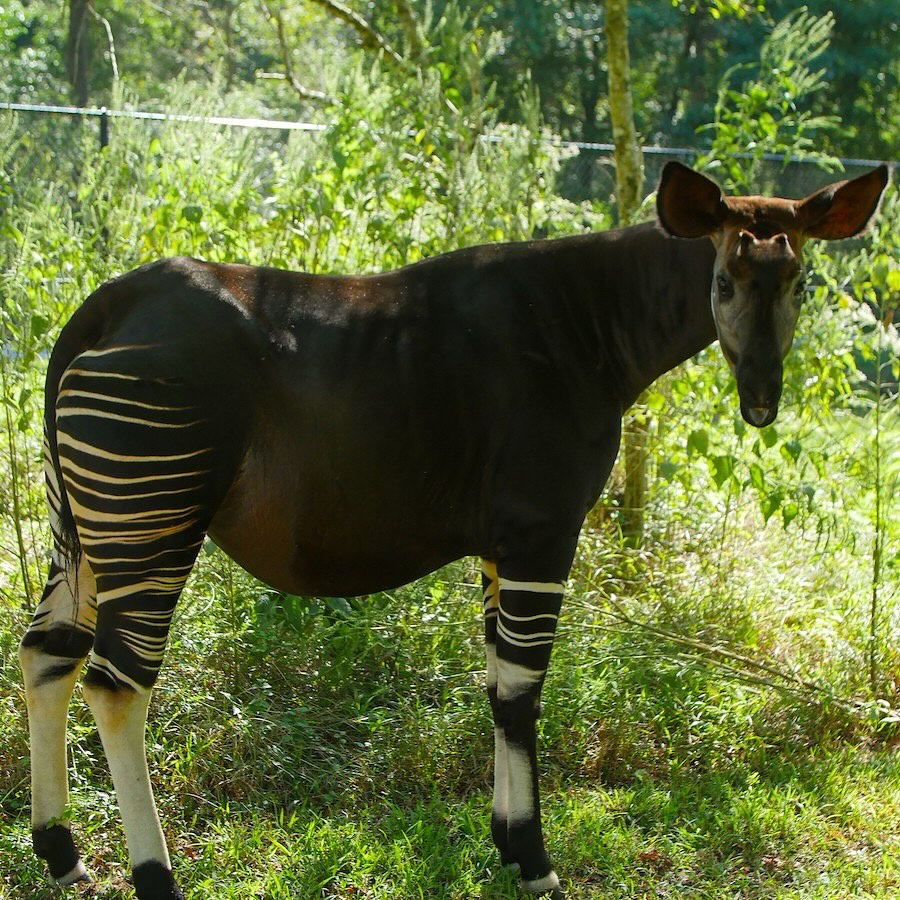
- Today is World Okapi Day and Asili, an eight-year-old female okapi, is expecting a calf.
- Okapis are only found in the Democratic Republic of Congo and are classified as Endangered.
- The decline in okapi populations raises alarms for conservationists, with numbers dropping by as much as 50% in the past two decades.
- The Audubon Species Survival Center has been pivotal in okapi conservation efforts and is currently preparing for the International Okapi Conference.
- The significance of Asili’s pregnancy emphasizes the critical role of breeding programs in the survival of this species.
Today is World Okapi Day, and there is exciting news to share from the Audubon Species Survival Center: Asili, an eight-year-old female okapi, is expecting a calf! This development is especially significant as she is currently 15 months into her pregnancy, with typical gestation lasting between 14 to 16 months. This gestation period aligns closely with that of her nearest genetic relative, the giraffe.
The okapi (Okapia johnstoni) is native exclusively to the Democratic Republic of Congo. The species is often referred to as “forest giraffes” because of their similar body shape and long necks, although they share more traits with zebras and horses. Unfortunately, the okapi is classified as an Endangered species by the International Union for Conservation of Nature (IUCN). This designation highlights the gravity of the situation; every birth is crucial for the continuation of this species. While the exact population of okapis in the wild remains elusive due to their secretive nature, estimates indicate a staggering decline of about 50% in less than 20 years.
Asili’s pregnancy is of special importance for the future of her species. Previous experience as a mother is invaluable, as she successfully gave birth to a female calf in 2022. Tragically, that calf lived for only a few months due to complications. However, Asili’s established maternal instincts predict a positive outcome for her new calf. Our animal care team will monitor both mother and baby closely to ensure their health and well-being, but the expectation is that Asili will care for her offspring independently.
The Audubon Species Survival Center has emerged as a leader in the conservation of okapis. Since becoming involved in the Association of Zoos & Aquariums’ Species Survival Plan in 2017, the center has been dedicated to maintaining a healthy population of these animals. Currently, the facility cares for five okapis, housed within its expansive 26 acres, creating an environment designed to support their natural behaviors and needs.
The alarming decline of okapi populations is driven by several factors, primarily habitat destruction and poaching. As logging and mining operations expand within the Democratic Republic of Congo’s critical habitats, okapi populations are further threatened. Conservation organizations are working tirelessly to combat these issues. Efforts include habitat preservation, anti-poaching initiatives, and education programs designed to raise awareness about the importance of the okapi in its ecosystem.
To further mobilize global efforts in conserving this remarkable species, the Audubon Species Survival Center is set to host the upcoming International Okapi Conference. Leaders in conservation from eight countries and representatives from 31 zoos will come together to discuss strategies and share insights on protecting okapis. This event is a vital platform for collaboration, emphasizing collective efforts that are necessary for the sustainability of okapis in the wild.
Understanding the okapi’s ecological role is essential for effective conservation efforts. They occupy a critical niche in the rainforest ecosystem. As browsers, they feed on a variety of plant material, including leaves, fruits, and bark. This feeding behavior helps maintain the health of their habitat by controlling plant growth. In turn, this promotes biodiversity, making okapis an integral part of their environment.
These beautiful animals are also fascinating from a physiological standpoint. Adult okapis typically weigh between 600 to 1,100 pounds and stand around 4 to 5 feet tall at the shoulder. Their unique coloration, which features a rich mahogany coat contrasted with white stripes on their hindquarters and legs, serves as an effective camouflage in the dappled light of their forest habitat.
Another noteworthy aspect of okapi behavior is their communication. They utilize a series of vocalizations, such as bleats and whistles, often to signal alarm or stress. Social structures are loosely formed, primarily revolving around mother-calf relationships. Adult males and females tend to come together only during mating season, emphasizing the solitary nature of their lives.
As conservationists and scientists work to study and protect these animals, advancements in research methodologies play a significant role. Technology such as camera traps and GPS tracking collar systems has become indispensable for monitoring their behavior and habitat use. These tools allow for a better understanding of their movements, social structures, and interactions with other species.
The challenges posed by climate change further complicate the conservation efforts for okapis. Shifts in weather patterns could lead to alterations in their habitat, from shifts in vegetation to increased frequency of extreme weather events. Addressing these environmental changes will require adaptive management strategies that can accommodate a variety of scenarios.
Public engagement in conservation efforts is another cornerstone of successful protection for the okapi. Zoos and wildlife centers play a crucial role in raising awareness. Educational programs about okapis help to illuminate their status as endangered animals and encourage visitors to support conservation efforts. Outreach initiatives, such as school programs and community activities, further serve to engage the public and foster a deeper appreciation for wildlife and habitats.
Asili’s pregnancy serves as a reminder of both the challenges and triumphs in the battle to save this species. Each calf born under human care contributes significantly to the genetic diversity of the population. This genetic health is vital for the survival of the species, particularly as wild populations face mounting pressures.
The okapi represents not just a unique species but also a symbol of our responsibility to care for the planet’s biodiversity. As we celebrate World Okapi Day and anticipate the arrival of Asili’s calf, it becomes evident that our collective efforts can make a meaningful difference. Conservation is a global endeavor, requiring collaboration and commitment across borders.
World Okapi Day serves as a focal point for conservation organizations, researchers, and animal lovers alike to mobilize support for this endangered species. It reminds us that behind the statistics are real lives dependent on our actions. As conservation strategies continue to evolve, the need for public support and understanding grows ever more urgent.
In the context of wildlife conservation, the significance of breeding programs cannot be overstated. The Audubon Species Survival Center’s dedication to these initiatives exemplifies how zoos can positively impact species survival. The anticipation surrounding the birth of Asili’s calf is not merely about increasing numbers; it signifies a hope for the future amid a landscape of uncertainty.
Engaging communities and fostering a collective consciousness around conservation expeditions will be vital in preserving the okapi for generations to come. It is through awareness, education, and activism that we can aspire not just toward survival but the flourishing of fragile ecosystems where species like the okapi play an essential role. Today, as we uplift the plight and significance of the okapi, let us reflect on our role in protecting the wildlife that shares our planet.
*****
Source Description
Today is World Okapi Day and we have some exciting news to share! Asili, an eight-year-old female okapi at Audubon Species Survival Center is expecting! She’s currently 15 months along, and okapi pregnancies typically last 14–16 months, just like their closest living relative, the giraffe.
Okapi are found only in the Democratic Republic of Congo and are among the world’s oldest (and most mysterious) mammals. Often called “forest giraffes,” they are listed as Endangered, and every birth matters. Because these animals are so elusive, scientists don’t know exactly how many remain in the wild, but estimates are alarming: populations may have dropped by 50% in just the last 20 years. That makes Asili’s pregnancy especially meaningful for the future of the species.
Asili previously gave birth to a female calf in 2022, who sadly survived only a few months. As an experienced mother, she is expected to care for her new calf without human assistance, though our animal care team will be monitoring closely to ensure the health and safety of both mom and baby.
Audubon has been a leader in okapi conservation through the Association of Zoos & Aquariums’ Species Survival Plan since 2017 and currently cares for five okapi on 26 acres at the Species Survival Center.
And there’s even more good news – next week, Audubon Species Survival Center is hosting the International Okapi Conference, welcoming conservation leaders from eight countries and 31 zoos to advance global efforts to protect this remarkable species.
