
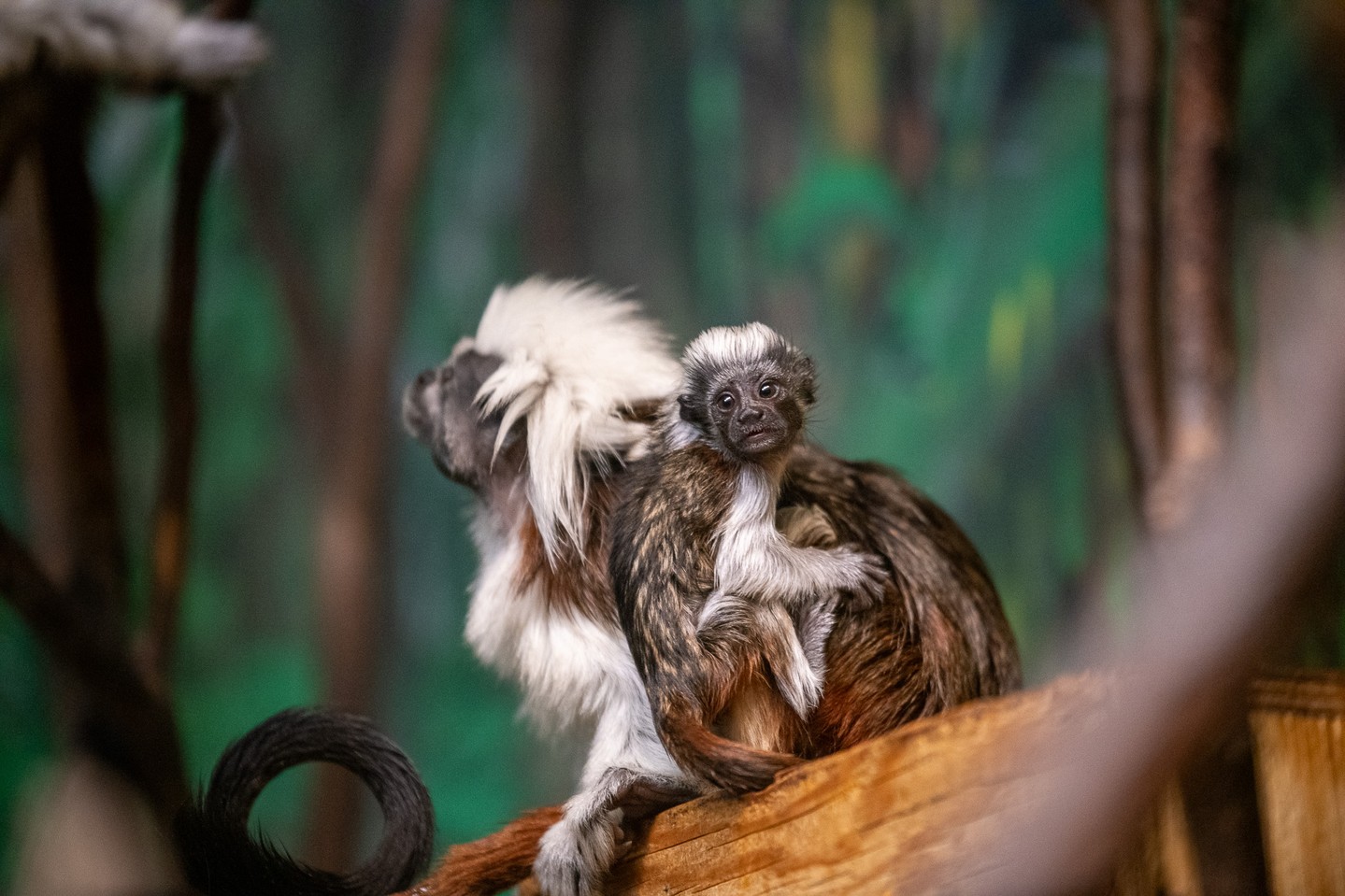
- The significance of the cotton-top tamarin’s recent birth at Lake Superior Zoo
- Overview of the cotton-top tamarin’s status in the wild and conservation challenges
- The role of social learning in tamarin parenting and troop dynamics
- Insights into the Association of Zoos and Aquariums’ Species Survival Plan
- Visitor experience and educational opportunities at Lake Superior Zoo
Celebrating the arrival of a new cotton-top tamarin at the Lake Superior Zoo is not just a moment of joy; it is a remarkable achievement in conservation efforts. Cotton-top tamarins, native to the tropical forests of northwestern Colombia, are critically endangered, with populations dwindling below 2,000 mature individuals in the wild. This recent birth at the zoo, occurring in the context of an ongoing conservation initiative, illustrates the importance of zoos in safeguarding endangered species.
Most births are marked by exuberance, but the import of this particular occasion is tempered by the common challenges faced by cotton-top tamarins. While Mira and Dino welcomed healthy twin infants, the smaller twin did not survive past the first day. Such incidents are regrettably common among tamarins, as infant mortality rates can reach approximately 53%. Despite this loss, the survival of the remaining twin signifies a crucial step in the survival of this rare primate. The healthy infant benefits immensely from the dedicated care of Mira, Dino, and their older siblings, Echo, Tango, and Foxtrot. This support structure is fundamental to the survival of their young and is an embodiment of what makes cotton-top tamarins special.
The state of cotton-top tamarins in the wild reflects intense pressures from human activity. Deforestation for agriculture and urban development disrupts their natural habitats, while the illegal pet trade poaches individuals from the wild. These factors exacerbate the genetic bottleneck affecting the species, making conservation efforts even more vital. Zoos like Lake Superior Zoo play a critical role in conservation, making it possible to breed these animals and educate the public about their plight. The successful birth of the twins is thus not just a cause for celebration; it represents a lifeline for a species struggling against extinction.
A fascinating aspect of cotton-top tamarins is their social structure, which intricately shapes their parenting behaviors. Unlike many animal species, tamarins do not rely solely on instinct to raise their young. Instead, parenting skills are learned by observing older members of the troop. This learning process fosters a cooperative environment where all family members contribute to rearing the young. As Mira and Dino care for their infant, Echo, Tango, and Foxtrot are simultaneously observing and absorbing the skills necessary for nurturing younger siblings. This process of social learning not only enhances the immediate family dynamics but also serves to strengthen the overall viability of tamarin populations in the long run.
The importance of this birth extends beyond the specific case of Mira and Dino’s offspring. It is part of a more extensive initiative managed by the Association of Zoos and Aquariums (AZA), known as the Species Survival Plan (SSP). The SSP serves as a coordinated strategy to maintain healthy, genetically diverse populations of endangered species in human care. By encouraging breeding programs while focusing on genetic diversity, the program plays an essential role in mitigating risks that could threaten the long-term survival of species like the cotton-top tamarin. Each successful birth is a small but meaningful contribution to global conservation efforts, reinforcing the idea that zoos can serve as pivotal players in the fight against biodiversity loss.
Visitors to the Lake Superior Zoo have the opportunity to witness this wonderful family of cotton-top tamarins, an experience that reinforces the zoo’s role as an educational hub. At the Primate Conservation Center, viewing hours from 12 p.m. to 2 p.m. allow guests to observe not just the antics of the primates but also the incredibly intricate dynamics of the tamarin family. The zoo has tailored its light schedule to foster optimal rest and nursing conditions, ensuring that the new family member receives the utmost care.
Education is a core mission of the Lake Superior Zoo, and programs designed to engage visitors are structured around fostering a deeper understanding of wildlife conservation. The story of Mira and Dino embodies the ongoing efforts to combat the challenges faced by endangered species. Educational signage and guides provide essential information about cotton-top tamarins, from their behavioral traits to conservation statuses. By showcasing these adorable, yet vulnerable creatures, zoos hope to inspire future generations to advocate for conservation.
To support the critical work being done for cotton-top tamarins and other endangered species, community involvement is vital. Zoo visitors are encouraged to participate in programs and events focusing on conservation. Contributions from the community, ranging from time to financial support, facilitate the zoo’s ability to sustain its conservation work, exemplified by the successful birth of the latest tamarin infant.
The challenges faced by cotton-top tamarins are mirrored by a broader array of species struggling against habitat loss and human impacts. The story of Mira and Dino is only one among many in the fight to prevent extinction. Yet, through diligent conservation strategies like the SSP, public education, and community involvement, hope persists. Each successful birth and healthy infant brings renewed optimism for the future.
Conservation is not solely the responsibility of zoos; it is a collective endeavor that requires action from every stakeholder. Governments, organizations, and individuals nationwide can all play a role. Advocating for eco-friendly policies, supporting wildlife initiatives, and engaging in conscious consumption are vital behaviors that everyone can adopt.
As we celebrate this tiny yet mighty addition to our cotton-top tamarin family, it is worth remembering that each birth serves as a reminder of our responsibility to protect these fragile ecosystems. The tapestry of life is interconnected, and the decline of one species can reverberate through entire ecosystems. Each successful conservation story creates ripples that extend beyond individual species, fostering a more biodiverse planet.
For anybody interested in wildlife, conservation, or simply in love with these charming little creatures, a visit to the Lake Superior Zoo is a chance to engage with tangible efforts toward meaningful change. The cotton-top tamarin family, a living representation of resilience and hope, serves as an invitation to participate in the broader narrative of conservation. The zoo cultivates an environment where learning and exploration thrive, ensuring that visitors leave with knowledge as well as inspiration to make a difference in their own communities.
This birth at the Lake Superior Zoo exemplifies that each contribution to the narrative of conservation—even the tiniest among us—holds significant weight. The health of our planet is intricately linked to the preservation of its diverse inhabitants. As we cheer for the new cotton-top tamarin infant and look forward to observing the growth of this family, the urgent reminder remains: safeguarding wildlife is not merely a noble cause; it is essential for the survival of all life forms. Caring for these treasures of biodiversity enriches our collective future and strengthens the fabric of our ecosystems.
*****
Source Description
A Tiny but Mighty Addition to Our Cotton-Top Tamarin Family 🐒✨
We’re celebrating a remarkable new arrival at the Lake Superior Zoo! Our pair of critically endangered cotton-top tamarins, Mira and Dino, recently welcomed twin infants—an exciting milestone for this rare primate species.
While the smaller twin sadly passed within the first 24 hours (a common occurrence among tamarins), the surviving infant is healthy, active, and thriving thanks to the dedicated care of both parents and older siblings, Echo, Tango, and Foxtrot.
🌿 Did you know?
Cotton-top tamarins are native to the tropical forests of northwestern Colombia.
Fewer than 2,000 mature individuals remain in the wild, due to deforestation and the illegal pet trade.
They face an infant mortality rate of around 53%, making every successful birth a significant step for the species.
This birth is part of the Association of Zoos and Aquariums’ (AZA) Species Survival Plan (SSP)—a coordinated effort to maintain healthy, genetically diverse populations of endangered animals in human care.
What makes tamarins especially fascinating is their social learning: parenting skills are not instinctual, but learned within the troop. As Mira and Dino raise their infant, their older offspring are also learning how to care for young—critical behavior for the long-term success of the species.
You can see this incredible family in action at our Primate Conservation Center, daily from 12–2 p.m. The troop is currently on a specialized light schedule to support rest and nursing time.
