
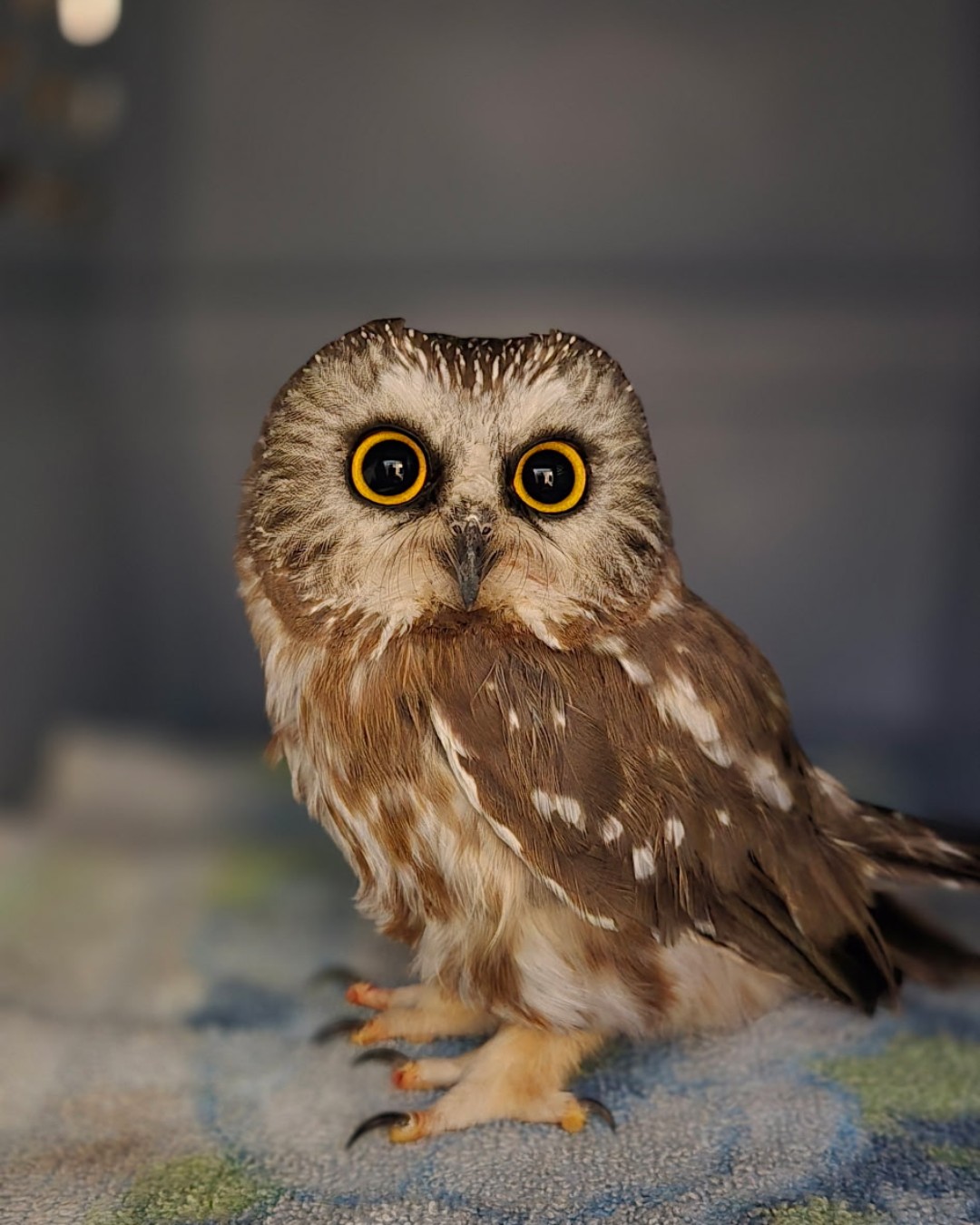
- The recent rescue and rehabilitation story of a Saw-whet owl.
- Understanding the physiological and behavioral aspects of the Saw-whet owl.
- The role of wildlife rescue organizations in animal rehabilitation.
- Guidelines for the public when encountering distressed wildlife.
- The importance of community involvement in wildlife conservation.
The story of the little Saw-whet owl’s fresh start is more than just a feel-good tale; it highlights the intricate relationships between wildlife and human intervention. This owl was found in distress, under attack from other birds, and brought to the Wildlife Rescue and Drop-off Centre at Assiniboine Park Zoo. Here, the veterinary team assessed the owl’s condition and transferred it to Wildlife Haven, a dedicated wildlife rehabilitation organization.
Upon initial examination, although disoriented, the Saw-whet owl was determined to be in relatively good health. Migration is a challenging process for many birds, and disturbances can lead to exhaustion or temporary disorientation. This particular owl likely experienced a stressful moment in its migratory path, prompting the need for a reset. Fortunately, after a period of care, this little creature was safely released back into the wild, where it can once again thrive.
Understanding the physiology and behavior of the Saw-whet owl offers insight into why this species is particularly vulnerable during migration. Saw-whet owls, part of the Strigidae family, are small, nocturnal birds, often weighing only 5 to 6 ounces. Their compact size aids in navigation through dense forests, and their ability to remain camouflaged by their brown and white plumage helps them avoid larger predators. However, this adaptation may also make them susceptible to attacks from other birds when they are spotted on the ground, as was the case with our little owl.
Saw-whet owls are known for their distinctive call, which sounds like a mechanical saw being sharpened—a feature that gives them their name. They primarily feed on small mammals, particularly deer mice, but will also eat insects and small birds. Their predatory skills, including acute hearing and silent flight, make them effective hunters during the night. Despite these abilities, stress factors such as habitat loss and environmental changes can disrupt their populations, leading to increased challenges during migration.
The role of wildlife rescue organizations cannot be overstated when it comes to helping animals like the Saw-whet owl. The Wildlife Rescue and Drop-off Centre at the Zoo operates as a temporary haven for injured or ill wildlife. This facility provides essential medical care and rehabilitation services to animals in distress, enabling them to return to their natural habitats. Every effort is made to educate the public about the importance of wildlife rehabilitation and the various factors that affect wildlife health.
When members of the public find distressed animals, there are critical guidelines they should follow. If a Saw-whet owl or any other wildlife appears injured or in distress, the first step is to contact a professional organization, such as Wildlife Haven, at 204-202-3806. They can offer guidance on whether the situation requires immediate intervention. Sometimes, young or resting owls can appear to be in danger, but they do not necessarily need help. Patience and caution are paramount in these scenarios.
If an injured owl is found, it is advisable to gently place it in a cardboard box with air holes, ensuring it is in a quiet and safe location while awaiting professional assistance. Making sure that pets and small children are kept away from the owl alleviates additional stress on the animal. Human intervention should always be carefully considered, as sometimes the best approach is to let nature take its course.
Community involvement plays a significant role in wildlife conservation efforts. Engaging local citizens in education about the flora and fauna in their area can foster a deeper connection to and respect for wildlife. Various outreach programs run by organizations like Wildlife Haven encourage participants to assist in wildlife observation and reporting, thus contributing to conservation data collection efforts.
A healthy ecosystem relies on the balance between various species, all of which serve specific roles within their environments. When people take the time to learn about animals such as the Saw-whet owl, they become advocates for conservation efforts. Understanding the importance of native species not only protects individual animals but also promotes biodiversity and the overall health of ecosystems.
In urban settings, it is increasingly common for wildlife to interact with human populations. This proximity often leads to conflicts between humans and wildlife, making education crucial. Understanding behavior and habitats protects both animals and people. In places like Assiniboine Park Zoo and Wildlife Haven, initiatives to increase public awareness are essential.
Education programs are instrumental in teaching citizens about the signs of distress in wildlife. Workshops and community presentations can equip individuals with the knowledge needed to aid animals effectively. These initiatives also highlight the legal protections many species receive, fostering respect for wildlife and the need for conservation.
As with the Saw-whet owl that recently received a fresh start, stories of wildlife recovery serve as inspiration for ongoing conservation efforts. Each animal saved represents an opportunity to educate, engage, and advocate for wildlife care and natural habitat protection. The partnership between wildlife rescue organizations and the community can amplify the message of conservation, creating a united front against threats to wildlife.
In summary, the experience of the little Saw-whet owl encapsulates the essential work being done in wildlife rehabilitation. The support provided by the Assiniboine Park Zoo’s Wildlife Rescue and Drop-off Centre, along with organizations like Wildlife Haven, is vital for the health of local wildlife populations. This story serves as a reminder that community involvement and knowledge sharing are key to fostering a world where wildlife can thrive alongside urban development.
By respecting wildlife, understanding their needs, and advocating for their protection, everyone can play a role in conservation. Whether it’s reporting a distressed animal or participating in local environmental initiatives, each action contributes to the health of ecosystems and the well-being of species like the Saw-whet owl.
*****
Source Description
This little Saw-whet owl just got a fresh start. 🦉
This owl was recently brought to the Wildlife Rescue and Drop-off Centre at the Zoo when a member of the public found it on the ground being attacked by birds. The Zoo veterinary team assessed its condition to ensure it was stable before transfer to our partners at @wildlifehaven_mb.
Though initially disoriented, the owl was in good condition. Migration can be a tough journey, and sometimes birds just need a reset. The owl was safely released back to the wild!
If you find an owl that appears to be in distress, please call the Wildlife Haven intake line at 204-202-3806 for help determining whether it truly needs intervention. Sometimes young or resting owls can be mistaken for those in distress.
If the bird is injured, you can gently place it in a cardboard box in a safe, quiet location while waiting to speak with the Wildlife Haven team. Keep your distance and ensure pets and children are kept away for the owl’s safety.
The Wildlife Rescue and Drop-off Centre, located at the Assiniboine Park Zoo, provides a safe place where sick or injured wildlife can receive temporary care. We’re proud to play an important role in supporting wildlife in our community!
