
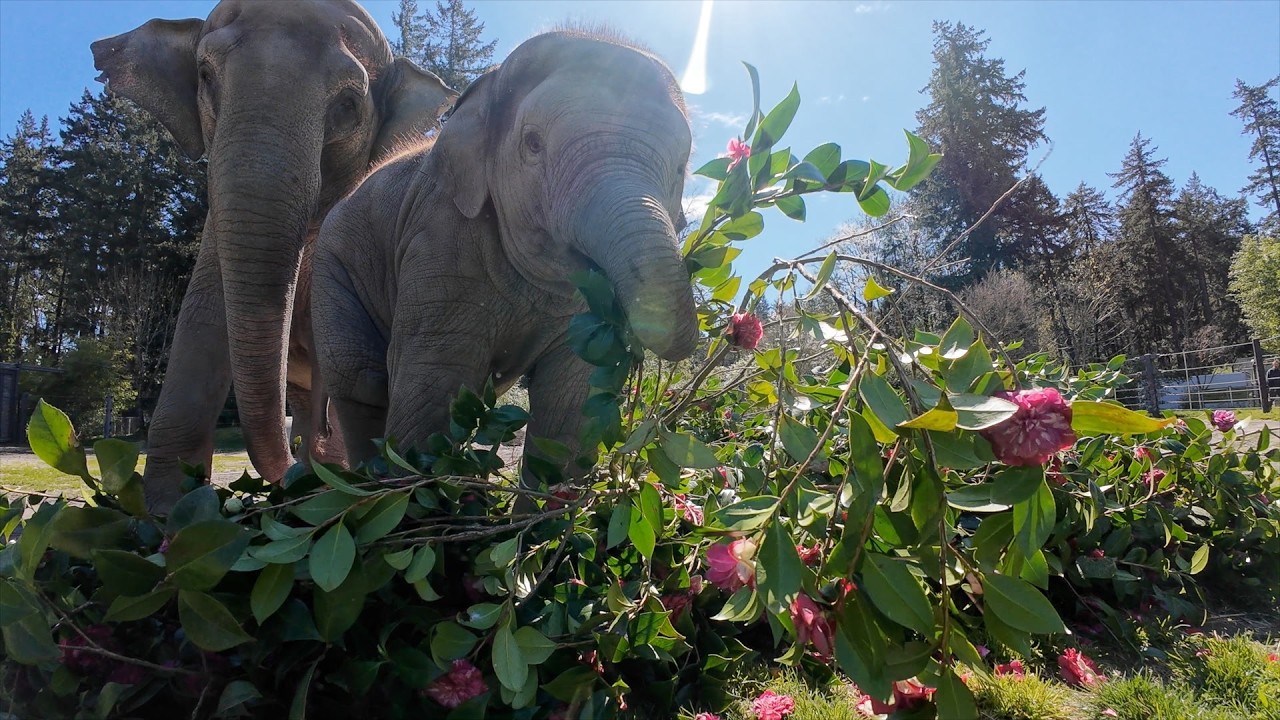
- Exploration of Tula-Tu’s behavior and the significance of elephants’ dietary habits.
- Insights into family dynamics within elephant herds and their social structures.
- The role of modern zoos in elephant conservation and education.
- Challenges and strategies in ensuring the welfare of elephants in captivity.
- The importance of public engagement and education for wildlife conservation.
Baby Elephant Tula-Tu Munches Flowers With Her Family captivates audiences with an adorable glimpse into elephant life, providing insights into the complex world of elephant behavior and conservation. This interaction is more than just a charming scene; it offers valuable lessons in wildlife ecology, family dynamics, and the initiatives crucial for conservation.
Elephants, belonging to the family Elephantidae, are known for their intelligence, memory, and social nature. Tula-Tu’s behavior, munching on flowers, is not just nourishment but an essential part of nutrient acquisition, impacting their health and well-being. Elephants are herbivores with a diverse diet that spans grasses, fruits, roots, and flowers. Their eating habits play a major ecological role. By feeding on various plants, they help seed dispersal and maintain habitat integrity.
Tula-Tu’s preference for flowers showcases a particular behavior where elephants might select plants for nutritional diversity or medicinal properties. Flowers can provide certain antioxidants or compounds beneficial for digestion or parasite control, thus contributing to their health.
The familial aspect of Tula-Tu’s life underscores the rich social fabric that elephants weave within their herds. Elephant herds are matriarchal; typically, the oldest female leads the group. This matriarch passes on vital knowledge about food, water sources, and migratory routes. The herd’s social structure is vital for survival, fostering cooperation, nurturing behavior, and collective memory.
In the video, we see Tula-Tu with her family, highlighting the bonds that keep the herd united. Young elephants learn essential life skills and communication within this tight-knit group. Such interactions demonstrate the importance of social structures and collective learning among elephants, which have implications on their survival in the wild.
Zoos play an instrumental role in conservation efforts. Modern zoos strive to create an environment that mimics natural habitats as closely as possible, encouraging natural behaviors in elephants like Tula-Tu. Zoos contribute to conservation through education, research, and captive breeding programs, which are crucial for species with dwindling populations in the wild due to habitat destruction and poaching.
Furthermore, zoos offer a platform for educating the public about conservation issues. By observing elephants like Tula-Tu, visitors can understand the importance of conserving these magnificent creatures and appreciate their role in the ecosystem.
However, ensuring the welfare of elephants in captivity presents unique challenges. Elephants require vast spaces, complex environments, and social interaction to thrive. Zoos must focus on providing extensive enrichment activities to stimulate their mental and physical health. This involves innovations in exhibit design, targeted nutrition plans, and veterinary care.
Efforts to enrich the lives of captive elephants have led to advances in understanding their needs. Rotating toys, puzzle feeders, and large, diverse enclosures allow elephants to express natural behaviors. Careful monitoring of their health and behavior is crucial to ensuring their well-being.
Public engagement is imperative in wildlife conservation. As visitors witness the close family interactions of Tula-Tu and her herd, it fosters a connection that can drive actions to support conservation initiatives. Education programs tailored for schools and the general public emphasize the importance of protecting elephants and their habitats, encouraging community involvement.
Tula-Tu’s charming display of munching flowers with her family serves as a poignant reminder of the intricate world of elephants. It highlights the significance of diet, family, and conservation efforts in safeguarding the future of these extraordinary animals. Through education, engagement, and dedicated resources, we can contribute to the survival and prosperity of elephants both in captivity and the wild.
*****
Source Description
flower girl 🌺
Tula-Tu enjoyed some fresh camellia flowers with her mom and aunties. Thank you to the zoo’s horticulture team for growing and sharing these beautiful blooms!
